






Europe stands at a pivotal crossroads. In the wake of geopolitical tensions, energy supply disruptions, and an intensifying climate crisis, the continent is racing toward a greener future while navigating the economic turbulence of a post-gas era. The ambition to become the first climate-neutral continent by 2050 is bold and necessary. However, achieving this vision requires careful balancing of environmental ideals and pressing economic realities.

As natural gas—once seen as a “transition fuel”—recedes in importance due to both political and climate-related pressures, Europe must manage the shift to renewable energy while ensuring energy security, economic competitiveness, and social stability. This delicate balancing act, complicated by inflation, war, and global supply chain challenges, has become one of the most significant policy dilemmas of our time.
The Decline of Natural Gas: A Turning Point for Europe
1. Geopolitical Shocks and the Gas Crisis
The Russian invasion of Ukraine in 2022 dramatically altered Europe’s energy landscape. For decades, many European nations, especially Germany, were heavily reliant on Russian natural gas. The sudden cutoff of these supplies exposed vulnerabilities in energy security and forced an urgent recalibration of energy strategies.
Natural gas prices soared to record levels, pushing inflation across the eurozone. Energy-intensive industries suffered, governments scrambled for alternative supplies, and the continent awakened to the strategic imperative of energy independence.
2. A Shift in Public and Political Attitudes
Public opinion has rapidly shifted toward sustainability. The energy crisis revealed not only the strategic risks of fossil fuel dependency but also the economic risks of inaction on climate change. European Union leaders have responded with stronger commitments to renewable energy, energy efficiency, and green technology.
The European Green Deal, Fit for 55 package, and REPowerEU plan all aim to accelerate the clean energy transition and reduce greenhouse gas emissions. However, the rapidity of these changes poses serious economic and logistical challenges.
The Economic Challenges of a Rapid Green Transition
1. Cost of Renewable Infrastructure
Building a clean energy system from the ground up—solar parks, wind farms, hydrogen pipelines, energy storage, smart grids—requires massive investment. While costs of renewable technologies have fallen, upfront capital needs remain high.
For countries with constrained budgets or high debt, financing this transition can strain public finances. Private sector investment is vital but sensitive to market conditions and regulatory certainty. Any hesitation can delay progress.
2. Impact on Industrial Competitiveness
Europe’s ambitious environmental standards risk placing its industries at a competitive disadvantage. High energy costs and stringent carbon pricing under the EU Emissions Trading System (ETS) could push manufacturers to relocate to countries with cheaper, dirtier energy—a phenomenon known as carbon leakage.
To counter this, the EU introduced the Carbon Border Adjustment Mechanism (CBAM), taxing imports from countries without equivalent carbon pricing. Still, uncertainty remains around its implementation and potential trade frictions.
3. Social Equity and Energy Poverty
Transitioning away from gas affects different segments of society in unequal ways. Rising energy prices hit low-income households the hardest, leading to widespread energy poverty. Governments must implement compensation mechanisms, subsidies, and just transition programs to ensure public support.
The gilets jaunes (yellow vest) protests in France, initially sparked by a fuel tax, are a stark reminder that even well-intentioned climate policies can backfire if they ignore social impacts.
Emerging Pillars of Europe’s Post-Gas Strategy
1. Accelerating Renewable Energy Deployment
Europe’s clean energy transformation hinges on scaling up solar, wind, and hydro power. The EU aims to generate 45% of its energy from renewables by 2030.
Key initiatives include:
-
Simplifying permitting for renewable projects,
-
Investing in offshore wind hubs (particularly in the North Sea),
-
Encouraging rooftop solar installations and community energy schemes.
Countries like Denmark and Spain are leading in wind and solar, while others lag due to bureaucracy or limited sunlight.
2. Green Hydrogen: A Promising Alternative
Green hydrogen, produced using renewable electricity, is gaining attention as a versatile clean fuel. It can decarbonize hard-to-abate sectors like steel, cement, and aviation. The EU’s Hydrogen Strategy aims to produce 10 million tonnes of renewable hydrogen by 2030.
However, challenges remain:
-
Electrolyzer technology needs scaling,
-
Infrastructure is underdeveloped,
-
Costs are currently much higher than fossil-based alternatives.
Still, hydrogen could become a cornerstone of Europe’s clean industrial future if supported by investment and innovation.
3. Electrification and Energy Efficiency
A post-gas Europe will increasingly rely on electricity as the primary energy carrier. Electrifying transportation, heating, and industrial processes is essential.
This includes:
-
Expanding EV (electric vehicle) charging networks,
-
Promoting heat pumps to replace gas boilers,
-
Retrofitting buildings to reduce energy consumption.
Energy efficiency, often overlooked, offers one of the fastest and cheapest ways to reduce emissions and bills.
Energy Security in a Renewable Era
1. Grid Resilience and Storage
Unlike fossil fuels, renewables are intermittent. The sun doesn’t always shine, and the wind doesn’t always blow. Ensuring a stable energy supply requires:
-
Upgrading grids to be more flexible and responsive,
-
Building large-scale battery storage,
-
Developing interconnectors between countries.
Europe’s transmission networks need to become more dynamic, allowing electricity to flow seamlessly across borders during supply fluctuations.
2. Diversifying Energy Sources
While moving away from gas, Europe still needs a diverse mix to ensure energy security. This may include:
-
Maintaining nuclear energy in countries like France,
-
Investing in geothermal and bioenergy,
-
Importing renewable energy (e.g., solar-generated hydrogen from North Africa).
Such diversification reduces dependence on any single source and enhances geopolitical resilience.
Innovation and Economic Opportunity
1. Creating Green Jobs
The green transition presents enormous opportunities for job creation across sectors:
-
Renewable energy engineers,
-
EV manufacturers,
-
Insulation installers,
-
Smart grid technicians.
Europe must invest in education, training, and labor mobility to ensure a skilled workforce that can meet the demand.
2. Technology Leadership and Exports
If Europe can lead in clean tech innovation, it can turn sustainability into a competitive advantage. Exporting green technologies, standards, and services to the rest of the world could offset the higher cost of transition.
The EU’s NextGenerationEU recovery plan allocates significant funds toward digital and green innovation, aiming to modernize the economy while addressing climate goals.
Policy Framework and Governance
1. Aligning National and EU-Level Policies
The EU sets overarching goals, but implementation rests with member states. Coordination is critical to avoid fragmentation. Countries must align:
-
Incentive schemes,
-
Grid development,
-
Permitting frameworks,
-
Climate targets.
The Energy Union framework and the European Semester process help align national plans, but political differences persist.
2. Public Engagement and Trust
Achieving sustainability goals requires democratic buy-in. Governments must:
-
Communicate clearly,
-
Combat disinformation,
-
Involve citizens in local energy planning.
Citizen assemblies and participatory budgeting can improve legitimacy and reduce opposition to green projects.
Navigating Uncertainty: The Road Ahead
1. Inflation and Green Investment
Rising inflation and interest rates threaten to dampen green investment. Projects become costlier, and consumers may delay clean energy purchases. Policymakers must balance:
-
Stimulus with fiscal responsibility,
-
Subsidies with long-term sustainability.
The European Investment Bank and national development banks will play a vital role in cushioning financial risks.
2. Global Cooperation or Competition?
Europe’s climate leadership is crucial, but its impact is global. Without coordination, green policies risk fueling trade disputes or resource bottlenecks.
Collaborating with global partners on:
-
Critical minerals,
-
Technology standards,
-
Carbon pricing mechanisms
can ensure a just and effective global energy transition.
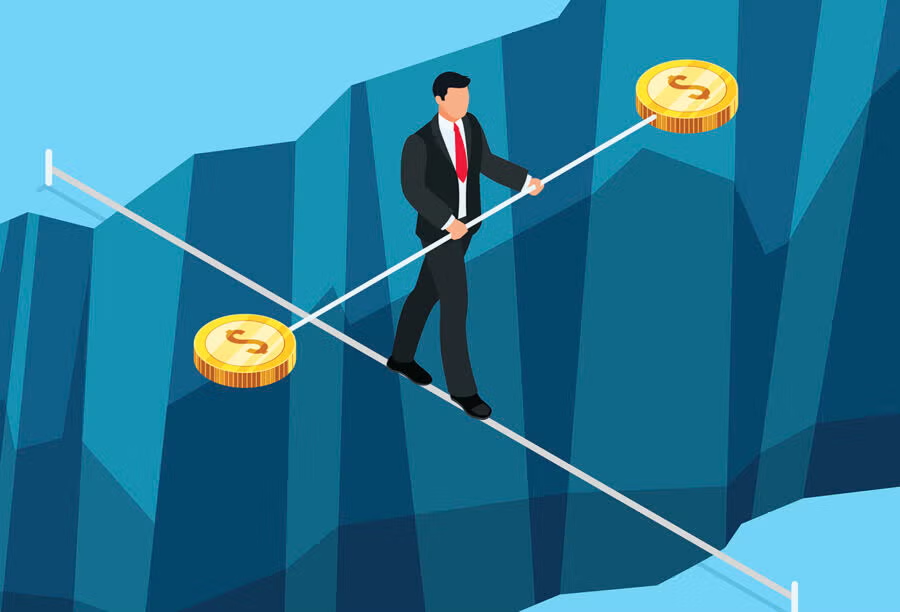
Conclusion: Walking the Tightrope of Transformation
Europe’s ambition to transition to a post-gas, sustainable economy is not only commendable but essential. However, the road to climate neutrality is fraught with economic, social, and geopolitical complexities.
Balancing sustainability goals with economic realities requires:
-
Strategic investment,
-
Policy coherence,
-
Social inclusion,
-
Technological innovation.
If managed wisely, Europe can become a global model for clean growth—showing that climate action and economic prosperity are not mutually exclusive but mutually reinforcing. In the post-gas era, resilience will come not from fossil fuels, but from unity, innovation, and an unwavering commitment to a greener, fairer future.








