





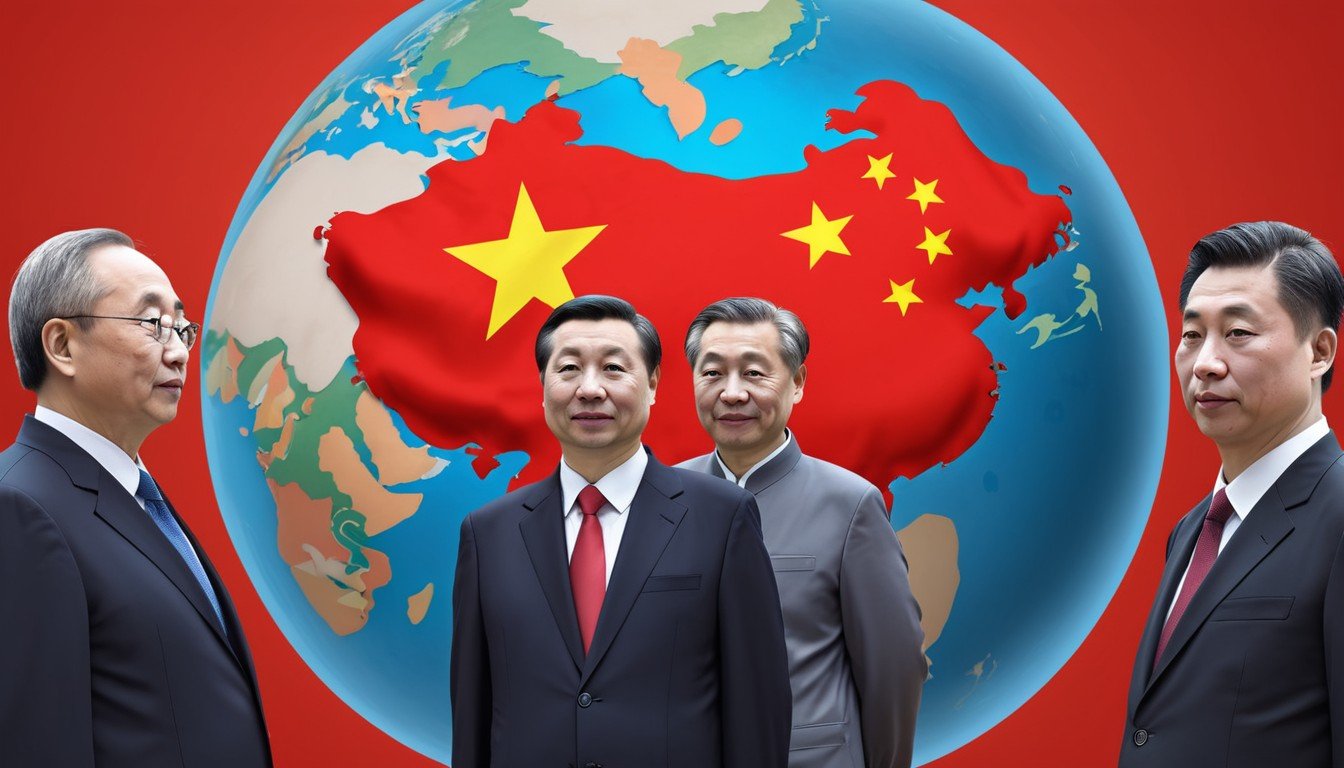


Over the past several decades, the People’s Republic of China has undergone a profound transformation—from a closed, impoverished country to the world’s second-largest economy, a technological powerhouse, and a formidable geopolitical actor. This meteoric rise has inevitably reshaped its role in the international system. Once a passive participant in global affairs, China now seeks to actively shape the norms, institutions, and frameworks that govern the international order.

As the 21st century unfolds, understanding China’s expanding role in global governance is crucial not only for grasping current geopolitical dynamics but also for predicting the future trajectory of international cooperation, conflict, and institutional evolution. This essay explores the motivations behind China’s increasing engagement in global governance, the strategies it employs, the institutions it influences, the reactions of other powers, and the implications for the world.

I. From Bystander to Shaper: China’s Strategic Shift
In the early years of the People’s Republic, China largely remained on the periphery of global governance institutions, adhering to a foreign policy rooted in non-alignment, self-reliance, and revolutionary solidarity. The Cold War and its ideological battles largely shaped China’s external posture, marked by suspicion of Western-led institutions like the United Nations (UN), International Monetary Fund (IMF), and World Bank.
However, China’s economic reforms in the late 1970s under Deng Xiaoping paved the way for gradual integration into the global system. China’s accession to the World Trade Organization (WTO) in 2001 marked a turning point—it not only signaled China’s embrace of global trade rules but also positioned Beijing within the very institutions it once critiqued.

Today, China views global governance not merely as an arena to participate in, but as one in which it can shape outcomes in line with its national interests, ideological preferences, and long-term strategic goals.
II. Motivations Behind China’s Expanding Role
Several interrelated motivations drive China’s deeper involvement in global governance:
1. Securing National Interests
As China’s global economic footprint grows, so does its exposure to global risks—be it climate change, pandemics, supply chain disruptions, or financial volatility. Active engagement in global institutions helps Beijing safeguard trade routes, protect overseas investments, and ensure market access for Chinese companies.
2. Reforming the International System
China has often voiced dissatisfaction with what it sees as a Western-dominated international order. While it benefits from the existing system, it also seeks to reform global governance to better reflect the interests and values of developing countries, including itself. This includes challenging dollar dominance, promoting sovereignty-first principles, and reshaping development models.
3. Enhancing Global Influence
Global governance provides a stage on which China can assert itself as a responsible great power. Whether in peacekeeping, climate negotiations, or pandemic response, visibility on the global stage enhances China’s soft power, legitimacy, and normative clout.
4. Counterbalancing U.S. Hegemony
Beijing views U.S. dominance in global institutions with skepticism. By engaging in alternative frameworks or pushing for reforms in existing institutions, China seeks to dilute unilateralism and foster multipolarity in international affairs.
III. Strategies for Global Governance Influence
China employs a multi-pronged strategy to increase its sway over global governance mechanisms:
1. Leadership in Multilateral Institutions
China has actively sought leadership positions within existing international organizations. Chinese nationals now hold or have held senior roles in institutions such as:
-
The United Nations Industrial Development Organization (UNIDO)
-
The International Telecommunication Union (ITU)
-
The Food and Agriculture Organization (FAO)
Such roles enable China to shape agendas, influence policy, and boost its global profile.
2. Creating Parallel Institutions
One of China’s hallmark strategies is the creation of parallel institutions that provide alternatives to Western-dominated ones. The most notable examples include:
-
Asian Infrastructure Investment Bank (AIIB): A multilateral development bank headquartered in Beijing, the AIIB is seen as a counterbalance to the World Bank and Asian Development Bank.
-
New Development Bank (NDB): Launched by BRICS nations, the NDB aims to provide an alternative source of development financing.
-
Belt and Road Initiative (BRI): While not an institution per se, the BRI is a sprawling infrastructure and connectivity program across Asia, Africa, Europe, and Latin America, which also includes new legal, financial, and regulatory norms.
3. Normative Advocacy
China promotes alternative governance norms, particularly non-intervention, state sovereignty, and developmentalism. In contrast to liberal norms emphasizing human rights and democratic governance, China’s model focuses on economic development as the basis of stability and respect for national autonomy.
4. Financial and Technological Leverage
Through foreign aid, infrastructure loans, 5G technology, and digital platforms, China exerts influence over recipient countries, shaping governance choices and data standards. The Digital Silk Road, for example, exports Chinese models of internet governance, surveillance technology, and data management.
IV. Spheres of Global Governance: China’s Expanding Reach
1. United Nations System
China is the second-largest contributor to the UN budget and a permanent member of the UN Security Council (UNSC). It has expanded its role in UN peacekeeping, now ranking among the top contributors of personnel among P5 countries.
Beijing uses its UNSC veto power strategically—protecting allies such as Syria or Myanmar, while also advancing initiatives like peaceful development, poverty reduction, and climate cooperation through UN platforms.
2. Climate Governance
Once seen as an obstacle in climate negotiations, China is now a central actor. As the largest emitter of greenhouse gases, it faces global scrutiny but also sees an opportunity to lead.
-
China played a critical role in the Paris Agreement.
-
It has pledged to achieve carbon neutrality by 2060.
-
It dominates global production of solar panels, electric vehicles, and green tech—key tools in the energy transition.
However, critics point to China’s continued reliance on coal and opaque climate finance promises.
3. Global Health Governance
The COVID-19 pandemic tested China’s credibility in global health governance. Initially criticized for its lack of transparency, Beijing pivoted to “mask diplomacy” and vaccine distribution, especially to developing countries.
China supports the World Health Organization (WHO) and has proposed reforms to strengthen pandemic preparedness, often emphasizing multilateral cooperation and avoiding politicization.
4. Trade and Economic Rules
Through its role in the WTO, Regional Comprehensive Economic Partnership (RCEP), and Belt and Road networks, China influences global trade rules. While accused of mercantilism and state subsidies, Beijing also positions itself as a defender of free trade amid rising Western protectionism.
V. Reactions and Resistance: Global Responses to China’s Rise
China’s assertiveness in global governance has elicited mixed reactions:
1. Western Skepticism
The United States and several European countries are wary of China’s intentions. Accusations include:
-
Undermining democratic norms
-
Exporting authoritarian technology
-
Using debt diplomacy
-
Seeking to “rewrite the rules” in its favor
Washington has responded with strategic competition, trade barriers, and efforts to revitalize alliances and counter Chinese influence in institutions.
2. Developing World Ambivalence
Many countries in Asia, Africa, and Latin America welcome Chinese investment, infrastructure, and development finance, especially where Western aid is conditional or scarce. However, concerns over debt dependency, lack of transparency, and environmental impacts are growing.
3. Institutional Pushback
Some global institutions are beginning to reform governance structures to better balance emerging and established powers. However, reaching consensus is difficult, and power struggles between China and Western countries often result in gridlock or polarization.
VI. Challenges Ahead for China
China’s rise in global governance is not without risks and limitations:
-
Trust Deficit: Many international actors remain skeptical of China’s motives, particularly in light of censorship, repression in Xinjiang, and Hong Kong’s autonomy erosion.
-
Overreach: Expanding too quickly or aggressively may lead to backlash, resistance, or the formation of counter-coalitions.
-
Domestic Constraints: Economic slowdown, demographic pressures, and internal political tightening may limit China’s bandwidth for global leadership.
-
Contradictions in Approach: China’s defense of sovereignty can clash with its own extraterritorial economic behavior, creating inconsistencies in its foreign policy narrative.
VII. Conclusion: Toward a Multipolar Global Governance?
China’s expanding role in global governance reflects a broader transformation in international relations. As a civilizational state with its own vision of order, China does not seek wholesale rejection of the global system but rather selective reform, pragmatic adaptation, and incremental influence.
Whether this leads to a cooperative multipolar order, a bifurcated global system, or prolonged contestation remains to be seen. Much will depend on how China manages its rise—balancing ambition with responsibility—and how the rest of the world chooses to respond: with engagement, containment, or a nuanced mix of both.
Understanding China’s role in global governance is thus not merely an academic exercise; it is a window into the future of world order in the 21st century.








