





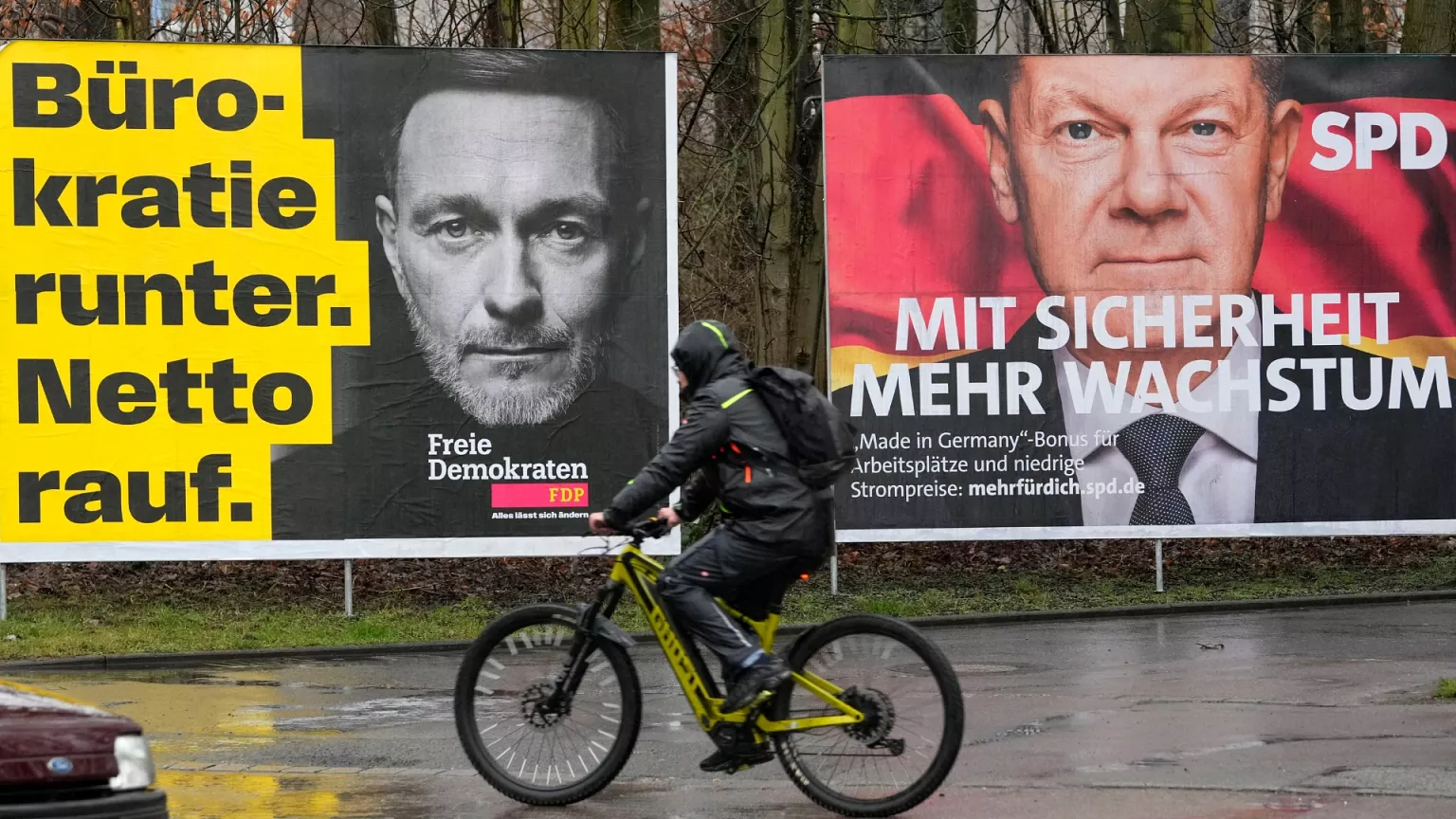

Germany, long recognized as a global leader in environmental policy, is undergoing a significant political transformation. At the heart of this shift is an evolving public consciousness about climate change, energy transitions, and ecological responsibility. As environmental issues become increasingly urgent, they are no longer confined to the sidelines of political debate. Instead, they now occupy center stage, influencing elections, government coalitions, economic decisions, and even Germany’s role in international diplomacy.


This essay explores how environmental policy is reshaping the German political landscape—examining the rise of the Green Party, shifting voter priorities, controversial energy decisions, climate activism, and the tensions between ecological goals and economic realities. In doing so, it highlights how environmental concerns are no longer a single-issue cause but a powerful force transforming the very structure of German governance.

Germany’s Environmental Legacy
Germany’s environmental journey began in the late 20th century, shaped by concerns over nuclear energy, acid rain, and industrial pollution. The anti-nuclear movement of the 1970s and 1980s laid the foundation for a national environmental consciousness. In 1980, this momentum led to the formation of Bündnis 90/Die Grünen (The Greens), a political party that fused ecological principles with left-wing politics.
Germany subsequently became a pioneer in renewable energy policy, particularly with the introduction of the Renewable Energy Sources Act (EEG) in 2000, which spurred massive investments in wind and solar power. The country also committed to phasing out nuclear energy—a policy accelerated after the 2011 Fukushima disaster in Japan.

However, in recent years, climate change has evolved from a technical policy concern into a defining political issue, influencing party platforms, shaping coalition dynamics, and mobilizing new generations of voters.
The Rise of the Green Party
One of the most visible signs of environmental policy’s political influence is the meteoric rise of the Green Party. Once considered a niche or protest party, the Greens are now a central player in national politics.
Key Milestones:
-
In the 2019 European Parliament elections, the Greens surged to second place, especially among younger voters.
-
In 2021, the Greens joined the federal government as part of the “traffic light coalition” with the Social Democrats (SPD) and the liberal Free Democrats (FDP).
-
Green Party co-leaders Annalena Baerbock and Robert Habeck now hold key ministries, including Foreign Affairs and the Economy & Climate Action.
Their platform centers on:
-
Achieving carbon neutrality by 2045.
-
Expanding renewable energy infrastructure.
-
Phasing out coal and fossil fuels.
-
Supporting sustainable agriculture and transport.
The Green Party’s presence in government has institutionalized environmental priorities, pushing the climate agenda from fringe activism to official state policy.
Voter Shifts and Youth Mobilization
Environmental issues have reshaped German voting patterns. Climate concerns are now among the top issues for the electorate, particularly for voters under 35. Surveys consistently show that young Germans consider the climate crisis a defining issue of their generation.
Movements like Fridays for Future, inspired by Swedish activist Greta Thunberg, have gained significant traction in Germany. Massive climate marches have taken place in Berlin, Hamburg, and Munich, often involving hundreds of thousands of participants demanding more ambitious action from politicians.
This youth mobilization has created pressure across party lines:
-
The Christian Democratic Union (CDU) and SPD have had to revise their environmental platforms to remain relevant.
-
Even the pro-business FDP has embraced aspects of green innovation and sustainable entrepreneurship.
As climate consciousness becomes intergenerational, the traditional political calculus is shifting—forcing all parties to engage seriously with environmental demands.
Energy Transition: Ambitions and Contradictions
Germany’s energy transition, or “Energiewende,” is the centerpiece of its environmental policy. It aims to:
-
Replace fossil fuels and nuclear power with renewables.
-
Modernize the power grid.
-
Promote energy efficiency.
However, the transition has not been without contradictions and setbacks.
Nuclear Phaseout vs. Coal Dependency
After deciding to phase out nuclear energy by 2022, Germany initially turned to coal and natural gas to fill the gap. This move drew criticism from climate scientists and environmental groups, who argued that coal was a more harmful energy source in terms of emissions.
Russian Gas and Geopolitical Tensions
Germany’s reliance on Russian natural gas exposed vulnerabilities during the Ukraine war, forcing a rapid pivot in energy strategy. The government sought alternative sources, including liquefied natural gas (LNG) and increased domestic renewables deployment.
Balancing Growth and Green Goals
While Germany has invested heavily in wind and solar, bureaucratic hurdles, land use conflicts, and grid expansion delays have slowed progress. Moreover, industrial sectors worry about energy security and competitiveness, particularly during times of global economic uncertainty.
These challenges highlight the complexity of implementing green policy at scale. Environmental ambitions must be balanced against economic stability, social fairness, and international realities.
Climate Policy and Foreign Affairs
Germany’s environmental policies are not just domestic—they influence its foreign policy and global leadership.
As Foreign Minister, Annalena Baerbock has emphasized climate diplomacy, integrating environmental goals into development aid, trade agreements, and international cooperation. Germany played a key role at COP26 and COP27, pushing for stronger global emissions targets and climate financing for vulnerable nations.
Yet, Germany’s credibility has at times been questioned:
-
Critics point to the coal phaseout timeline (set for 2038, later moved to 2030) as too slow.
-
Germany’s auto industry continues to lobby against stricter EU emissions regulations.
-
The country’s climate footprint per capita remains high compared to other European nations.
Despite these critiques, Germany is seen as a normative power on climate issues, advocating for a “just transition” that combines environmental integrity with social equity.
The Political Cost of Going Green
While environmental policy is reshaping politics, it also comes with political risks. The Green Party has found that governing is more complicated than campaigning, especially when difficult trade-offs must be made.
Controversial Policies and Public Backlash:
-
Heating Law Reform: A proposal requiring new home heating systems to use 65% renewable energy faced backlash from homeowners and small businesses, who feared high costs and unclear guidance.
-
Agricultural Regulations: Attempts to reduce nitrogen use and protect biodiversity led to protests from farmers, who warned of rising costs and declining food production.
-
Car Culture vs. Public Transport: Initiatives to reduce car use in urban areas have triggered tensions in car-centric regions, particularly in southern Germany.
These examples underscore the political fragility of environmental reform. Policymakers must navigate a minefield of competing interests, misinformation, and economic anxieties.
Green Industry and Economic Innovation
Germany’s environmental policy is also transforming its economic model, creating opportunities in the green tech sector.
Green Hydrogen, Electric Vehicles, and Battery Tech
-
Germany has invested heavily in green hydrogen as a future energy source.
-
Its auto industry is transitioning to electric mobility, spurred by EU regulations and Chinese competition.
-
Battery gigafactories are emerging across the country, with companies like Tesla and Northvolt establishing operations.
Job Creation and Green Investment
The government has committed billions of euros in climate funds and green bonds to finance renewable infrastructure, building retrofits, and sustainable transportation. Green jobs are being promoted as the future of German employment, offering new career pathways in clean energy, circular economy, and environmental services.
These investments signal a paradigm shift in how Germany envisions growth—not as a tradeoff with ecology but as inseparable from it.
Right-Wing Pushback and Political Polarization
However, not everyone supports the green transformation. The far-right Alternative für Deutschland (AfD) has gained traction in polls by opposing climate policies, framing them as elitist and economically damaging.
In rural areas and former East Germany, the AfD has exploited fears that environmental regulations will lead to job losses, rising costs, and loss of local autonomy. The party has called for:
-
Scrapping the energy transition.
-
Reopening coal plants.
-
Prioritizing national sovereignty over global climate commitments.
This polarization reveals the cultural dimension of climate politics. While urban, educated voters embrace ecological values, others see them as disruptive and imposed from above. Addressing this divide is crucial to ensuring democratic consensus around climate policy.
Looking Ahead: Environmental Policy as Political DNA
Environmental issues are now embedded in the core DNA of German politics. They shape:
-
Electoral campaigns and party platforms.
-
Coalition negotiations and government programs.
-
Economic strategies and international diplomacy.
This transformation reflects a broader recognition that climate change is not just an environmental issue—it is a societal one, touching every aspect of life: health, security, housing, jobs, and justice.
The German political landscape is no longer divided simply by left and right, but increasingly by visions of how to manage ecological transition, who benefits, and who bears the cost.
Conclusion
Germany stands at a pivotal moment in its history. As the climate crisis intensifies, the country’s environmental policies are reshaping not just energy systems and transportation networks, but the very fabric of its political institutions and democratic values.
The rise of the Green Party, the mobilization of youth, the challenges of energy transition, and the tensions within a diverse electorate all signal that ecology is the new axis of political debate. Germany’s ability to navigate this transformation—balancing ambition with inclusiveness, urgency with pragmatism—will determine not only its own future, but also its credibility as a global leader in the climate era.
Environmental policy is no longer an option or an agenda item. In Germany, it is the defining force of 21st-century politics.








