





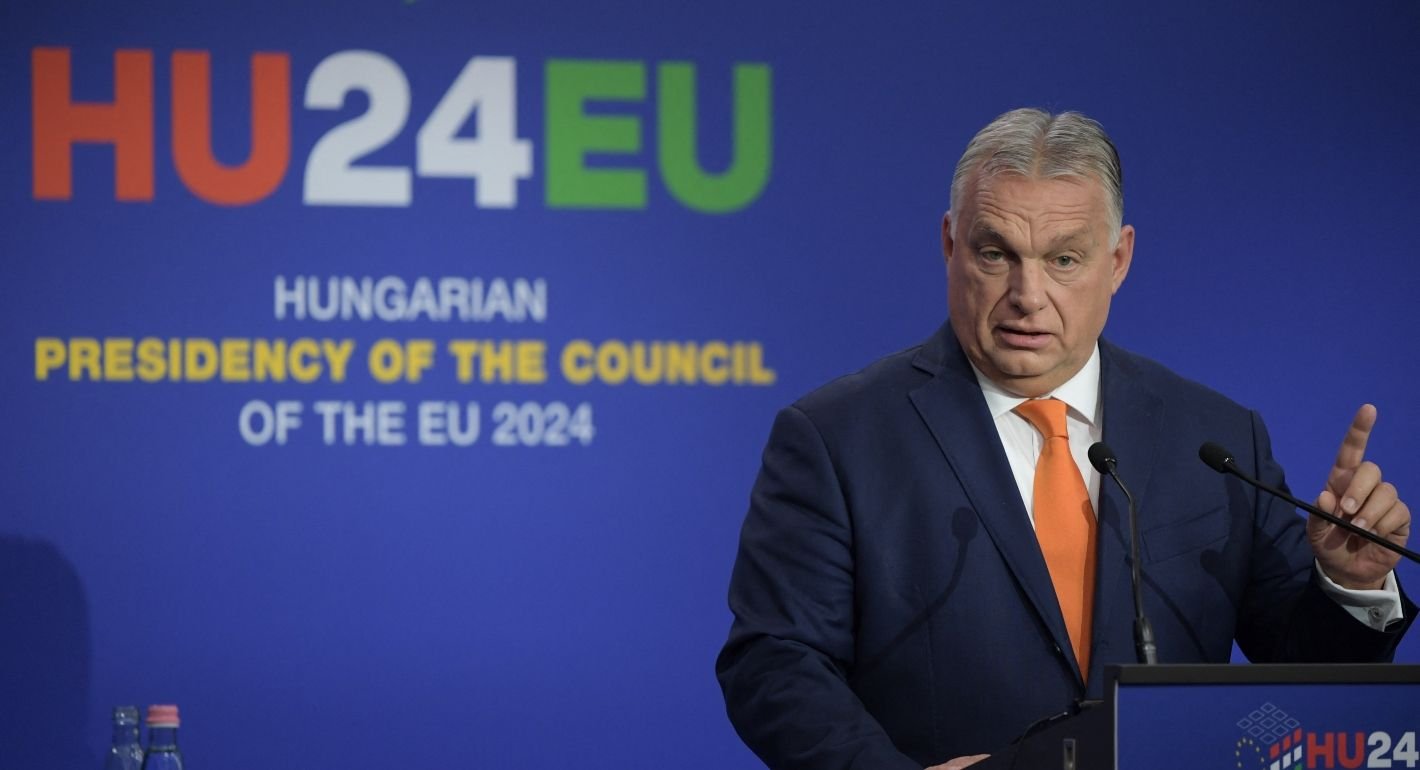

In the heart of Central Europe, Hungary has become a case study in how democratic backsliding can occur within the European Union (EU) framework. Under the leadership of Prime Minister Viktor Orbán and his Fidesz party, Hungary has gradually shifted from a liberal democracy toward what Orbán himself has termed an “illiberal democracy.” Despite multiple warnings, sanctions, and infringement procedures initiated by the EU, Orbán continues to consolidate power, reshaping Hungary’s political, media, and judicial landscape to suit his long-term goals. This essay explores how Orbán has managed to maintain and even expand his control in the face of EU pressure and examines the implications for the European project as a whole.


The Rise of Viktor Orbán and the Illiberal Vision
Viktor Orbán’s political journey began in the late 1980s, as a young liberal reformist challenging the remnants of communist rule. However, his ideological transformation over the decades has been striking. Since returning to power in 2010, Orbán has openly criticized liberal democratic values and positioned himself as a defender of national sovereignty, Christian identity, and traditional values against what he portrays as a globalist liberal elite.

His model of “illiberal democracy” has drawn inspiration from leaders such as Vladimir Putin and Recep Tayyip Erdoğan. In this model, democratic institutions exist, but they are hollowed out, subordinated to a single dominant party and leader. Through legal reforms, control over media, and economic centralization, Orbán has ensured that political opposition remains marginal and fragmented.
Legal Engineering and Constitutional Overhaul
One of the first steps Orbán took upon regaining power in 2010 was to alter Hungary’s constitutional framework. With a supermajority in parliament, Fidesz was able to rewrite the constitution in 2011, renaming it the “Fundamental Law.” This new constitution reduced the checks and balances that might restrain executive power. It changed electoral laws, restructured the judiciary, and altered the rules for future constitutional amendments, making it easier for Fidesz to entrench its policies.

Subsequent constitutional amendments have further cemented Fidesz’s control. The government has reshaped the judiciary by lowering the mandatory retirement age for judges (later ruled unlawful by the EU Court of Justice), expanding the Constitutional Court, and filling it with loyalists. It created a new administrative court system under executive influence—although that reform was paused due to EU objections.
These legal maneuvers have created an environment where elections still occur, but the playing field is heavily tilted in favor of Fidesz. Gerrymandering, state media dominance, and campaign finance rules ensure that opposition parties struggle to compete on equal footing.
Media Control and Narrative Management
A key pillar of Orbán’s power is control over information. Since 2010, the Hungarian government has either acquired or pressured pro-government oligarchs to acquire major media outlets. By 2018, hundreds of these outlets were centralized under the Central European Press and Media Foundation (KESMA), a conglomerate openly supportive of Fidesz. The foundation’s creation raised alarm bells in Brussels, as it effectively eliminated meaningful independent media at the national level.
Meanwhile, public broadcasting has become a tool for government propaganda. Opposition voices are marginalized, and narratives critical of the government are often portrayed as foreign-influenced attacks on Hungarian sovereignty. Journalists face intimidation and limited access, and self-censorship is widespread in privately owned media.
The control of media allows Orbán to shape public discourse around key issues such as migration, EU relations, and national identity. The infamous 2015 refugee crisis was instrumentalized to construct a xenophobic narrative that portrayed Orbán as a protector of European civilization, in contrast to Brussels’ “softness.”
Economic Nationalism and Patronage
Orbán has also built a loyal economic elite through strategic patronage. Oligarchs closely tied to Fidesz—such as Lőrinc Mészáros, a former gas fitter turned billionaire—have benefited immensely from state contracts and EU development funds. These individuals in turn fund pro-government institutions and media.
While the EU has disbursed billions in development aid to Hungary, much of this funding has allegedly been misused or channeled into projects that serve Fidesz’s political objectives. This has prompted the European Commission to suspend portions of Hungary’s allocated funds under the Rule of Law Conditionality Mechanism. However, these financial pressures have yet to compel systemic change.
Orbán’s economic policies also stress sovereignty: key sectors such as banking, retail, and energy have been “re-nationalized” or transferred to Hungarian ownership. This allows the government to maintain leverage over both economic and political actors, and to insulate itself from foreign (especially Western) influence.
Cultural and Educational Reengineering
Orbán’s strategy goes beyond economics and legal structures. His government has launched a comprehensive cultural reengineering project to shape the Hungarian national identity along conservative lines. This includes reshaping school curricula to emphasize nationalism, Christian values, and traditional family roles.
One of the most controversial moves was the expulsion of the Central European University (CEU) from Hungary. Founded by Hungarian-American philanthropist George Soros, CEU represented liberal academic values and had been critical of the government. Through legal changes that targeted the university’s operating license, Hungary forced CEU to relocate most of its operations to Vienna by 2018.
Moreover, the government has taken control of numerous universities by transferring them to state-run foundations, whose boards are filled with Fidesz allies. This ensures ideological alignment in higher education and limits dissenting academic voices.
EU Resistance and Its Limits
Despite numerous confrontations, the European Union has struggled to contain Hungary’s democratic erosion. The Article 7 procedure, often described as the EU’s “nuclear option” for rule-of-law violations, was initiated against Hungary in 2018. However, it requires unanimity among member states to impose sanctions, and Orbán has shielded himself through alliances, notably with Poland, which faces similar criticisms.
The EU has also used financial tools to pressure compliance. In 2022, the Commission recommended freezing €7.5 billion in cohesion funds due to corruption concerns and rule-of-law breaches. Hungary responded with superficial reforms that critics argue were cosmetic rather than substantive. Although some funds remain withheld, Orbán has proven adept at delay tactics and symbolic concessions that allow continued access to key resources.
Part of the EU’s difficulty lies in its own institutional limitations. The Union was designed under the assumption that member states would uphold shared democratic values. It lacks robust mechanisms to deal with internal subversion. Furthermore, Orbán has often framed EU criticisms as neocolonial interference, which resonates with his base and strengthens his domestic position.
Strategic Alliances and International Positioning
Orbán has also cultivated international alliances outside the EU framework. He maintains strong ties with Russia, even after the 2022 invasion of Ukraine. While most EU countries supported sanctions and military aid for Kyiv, Hungary has taken a cautious, often obstructive approach. Orbán continues to purchase Russian energy and has criticized Western policies as prolonging the conflict.
Similarly, Orbán has developed closer ties with China and Turkey, diversifying Hungary’s geopolitical options. These relationships provide economic and diplomatic alternatives to the EU and help Orbán portray himself as a global statesman pursuing Hungary’s national interest.
His participation in conservative international gatherings, such as CPAC (Conservative Political Action Conference), and his praise for figures like Donald Trump further signal a transnational illiberal movement. In this sense, Orbán’s Hungary becomes both a laboratory and a model for others who wish to challenge liberal democratic norms from within.
Domestic Support and Electoral Strength
Despite EU condemnation, Orbán enjoys substantial domestic support. In the 2022 parliamentary elections, Fidesz secured a landslide victory, winning 135 out of 199 seats. This success was attributed to a combination of favorable electoral laws, media dominance, welfare spending, and a divided opposition.
Orbán’s nationalist messaging resonates with many Hungarians who feel alienated by globalization, Brussels, and progressive social values. His ability to frame himself as a bulwark against foreign influence, especially on issues like immigration and LGBTQ+ rights, ensures continued appeal in conservative and rural communities.
The lack of a unified and credible opposition further weakens challenges to Fidesz’s rule. Attempts at coalition-building among opposition parties have often failed due to ideological differences and lack of resources.
Conclusion: A Cautionary Tale for Europe
Viktor Orbán’s continued centralization of power despite EU pressure highlights the limitations of supranational governance in enforcing democratic norms. Through a combination of legal manipulation, media control, economic patronage, and nationalist rhetoric, Orbán has crafted a resilient political system that subverts democratic institutions while maintaining the veneer of legality.
For the EU, the Hungarian case is a warning: membership alone is no guarantee of democratic fidelity. If illiberal regimes can flourish within the Union without facing serious consequences, the credibility of the EU’s core values is at stake.
To effectively address this challenge, the EU must consider reforms to its enforcement mechanisms, strengthen support for independent civil society and media within member states, and confront the ideological appeal of illiberal governance head-on. Otherwise, Orbán’s Hungary may not be an outlier but a precursor of broader democratic decline across the continent.








