





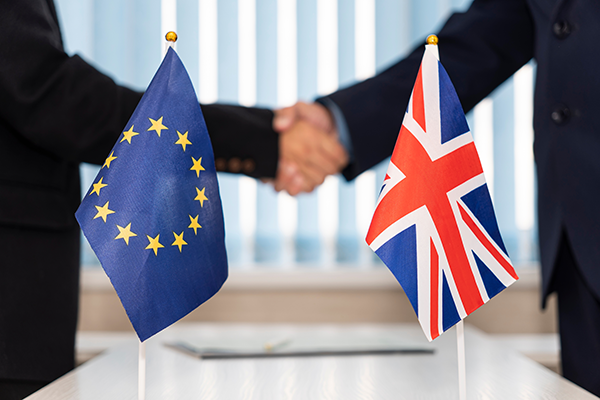

Since officially leaving the European Union (EU) on January 31, 2020, the United Kingdom has embarked on a complex and transformative journey to redefine its place in the world. Brexit marked the end of nearly five decades of political and economic integration with Europe and opened a new chapter in Britain’s foreign, trade, and security policies. No longer bound by EU rules and obligations, the UK now seeks to craft a new global identity as a sovereign power capable of forging independent trade deals and taking a more autonomous role in global security affairs.


This essay explores the multidimensional efforts by Britain to establish new trade and security roles outside the EU. It examines the strategic pivots in British policy, assesses the successes and challenges faced so far, and discusses the broader implications for Britain’s global standing.

I. The End of an Era: Brexit and Its Aftermath
Brexit was driven by a combination of economic, political, and cultural factors—chief among them, a desire to “take back control” of borders, laws, and trade. While the campaign emphasized sovereignty and freedom, the reality of post-Brexit governance has required Britain to reconfigure its relationships with both the EU and the wider world.
Following years of negotiations, the UK and the EU agreed on a Trade and Cooperation Agreement (TCA) in December 2020, which allowed for tariff-free trade but introduced new customs checks, border regulations, and restrictions on services—particularly financial and legal services. In parallel, Britain also withdrew from EU foreign policy, defense structures, and security databases such as Europol.

With its ties to the continent redefined, the UK now faces the dual task of rebuilding its global trade relationships and crafting an independent security strategy.
II. Global Britain: A New Foreign Policy Vision
The British government has championed the concept of “Global Britain”—a vision meant to position the UK as an agile, outward-looking country with global influence. This policy framework was laid out in the Integrated Review of Security, Defence, Development and Foreign Policy, published in March 2021. The document highlighted several goals:
-
Strengthening trade partnerships beyond the EU
-
Deepening ties with allies such as the US, Australia, and Japan
-
Expanding Britain’s presence in the Indo-Pacific region
-
Investing in defense and technological innovation
-
Promoting democratic values and development assistance
Global Britain is an ambitious vision, one that requires careful balancing of historical alliances, emerging challenges, and domestic political pressures.
III. Trade Diplomacy in the Post-Brexit Era
One of the UK’s main objectives after Brexit has been to secure free trade agreements (FTAs) to replace the frictionless access it once had to the EU single market. The government has aggressively pursued bilateral and multilateral trade deals, with a focus on diversifying markets and enhancing economic resilience.
1. Trade Deals Secured
As of 2024, the UK has signed more than 70 trade agreements, most of which are rollover deals replicating previous EU arrangements. However, there are several significant new agreements:
-
UK-Japan Comprehensive Economic Partnership Agreement (CEPA): Signed in 2020, it was the UK’s first major trade deal post-Brexit and includes provisions for digital trade, financial services, and intellectual property.
-
UK-Australia and UK-New Zealand FTAs: These agreements eliminated tariffs on most goods and included chapters on digital trade, labor rights, and environmental standards.
-
Accession to the CPTPP (Comprehensive and Progressive Agreement for Trans-Pacific Partnership): In 2023, the UK became the first non-founding member to join this influential Asia-Pacific trade bloc, providing access to a combined GDP of over £11 trillion.
2. Negotiations in Progress
The UK continues negotiations with other major economies:
-
India: Talks with India have focused on reducing tariffs and increasing services access, though issues like immigration and agricultural subsidies remain contentious.
-
United States: Despite the “special relationship,” a comprehensive UK-US trade deal remains elusive, partly due to political changes in Washington and concerns over food safety and regulatory standards.
3. Trade Challenges
Despite these advances, the UK has faced several trade-related hurdles:
-
Loss of EU market access: British exporters, especially in agriculture and fisheries, have struggled with border delays and increased paperwork when trading with the EU.
-
Services sector exclusion: Financial services, a cornerstone of the UK economy, were largely left out of the TCA. London’s role as a global financial hub is being challenged by cities like Paris and Frankfurt.
-
Northern Ireland Protocol: The arrangement to avoid a hard border in Ireland has caused political tension and disrupted trade within the UK, prompting a renegotiation of key provisions.
IV. Security and Defense: Redefining Strategic Alliances
While trade has dominated the headlines, security and defense form another crucial pillar of Britain’s post-EU strategy. Brexit excluded the UK from the EU’s defense framework, but it has not diminished the country’s military capabilities or ambitions.
1. NATO and Transatlantic Relations
The UK remains a core member of NATO, with one of the largest defense budgets in Europe. British forces participate in NATO operations, contribute to deterrence missions in Eastern Europe, and maintain nuclear capabilities through the Trident program.
The UK has also sought to reinforce its security relationship with the United States, emphasizing cooperation on intelligence (through the Five Eyes alliance), defense procurement, and military deployment.
2. AUKUS and the Indo-Pacific Pivot
One of the most high-profile developments was the formation of the AUKUS pact in 2021—a trilateral security agreement between Australia, the UK, and the US. The deal includes cooperation on nuclear-powered submarines, cyber security, artificial intelligence, and maritime defense.
AUKUS signaled a strategic pivot toward the Indo-Pacific, a region increasingly seen as the center of geopolitical competition. The UK has deployed naval forces, including the HMS Queen Elizabeth aircraft carrier, to the region, underscoring its commitment to regional stability and freedom of navigation.
3. European Defense Cooperation
Despite leaving the EU, the UK has maintained bilateral security ties with key European countries:
-
The Lancaster House treaties with France provide for joint operations and defense cooperation.
-
The Joint Expeditionary Force (JEF)—a UK-led multinational force—includes Nordic and Baltic partners and is designed for rapid deployment.
However, the lack of formal structures for UK-EU defense coordination remains a gap, especially in counterterrorism and intelligence sharing.
V. Soft Power and Global Influence
Britain’s global role is not limited to trade and military strength; its soft power also plays a vital role in its foreign policy toolkit.
-
The British Council promotes cultural exchange and education worldwide.
-
The BBC World Service remains a trusted international news source, especially in authoritarian countries.
-
UK universities attract hundreds of thousands of international students each year, creating long-term diplomatic and economic ties.
Moreover, London continues to host major global institutions and events, from climate summits (COP26) to the Commonwealth Games, enhancing the UK’s visibility and influence.
VI. Domestic Pressures and Strategic Constraints
While the UK projects an image of global ambition, it must contend with significant domestic constraints:
-
Economic uncertainty: Brexit, combined with global inflation and the COVID-19 pandemic, has weakened economic growth. Many small businesses have struggled to adapt to new trade rules.
-
Political division: Brexit remains a polarizing issue, and calls for Scottish independence and a border poll in Northern Ireland have reignited debates about the UK’s own internal union.
-
Public skepticism: Although “Global Britain” is a popular slogan, public support for foreign interventions or expansive trade deals may wane if economic benefits fail to materialize.
These factors may limit the extent to which Britain can act independently or aggressively on the world stage.
VII. The Road Ahead: Strategic Flexibility or Identity Crisis?
Britain’s quest to redefine itself post-Brexit is a high-stakes endeavor. The UK has sought to pivot toward a more flexible, network-based diplomacy—leveraging alliances, innovation, and historical relationships. Its ability to conclude trade deals, project military strength, and sustain soft power will determine the success of this new trajectory.
However, critics argue that the UK risks becoming geopolitically adrift, caught between past imperial nostalgia and future uncertainty. Some fear that leaving the EU has diminished Britain’s influence in both Brussels and Washington, and that its pivot to the Indo-Pacific may stretch resources too thinly.
To succeed, Britain must reconcile its global ambitions with domestic realities. A more pragmatic, inclusive, and multilateral approach may ultimately prove more effective than an overreliance on sovereignty rhetoric and bilateral deals.
Conclusion: A Nation Redefined
The post-Brexit era has forced the United Kingdom to reimagine its role in the world. No longer shielded by the collective strength of the EU, Britain is taking bold steps to chart an independent course in trade and security. Its successes—such as joining CPTPP, forming AUKUS, and securing trade deals with key partners—are significant. Yet, challenges remain, including economic disruptions, diplomatic frictions, and the risk of strategic overreach.
Whether “Global Britain” becomes a lasting doctrine or a transitional slogan depends on how effectively the UK navigates an increasingly complex and competitive global landscape. For now, one thing is clear: Britain’s journey outside the EU is far from over—and its evolving role will continue to shape not only its own future, but the future of global diplomacy and trade.








