





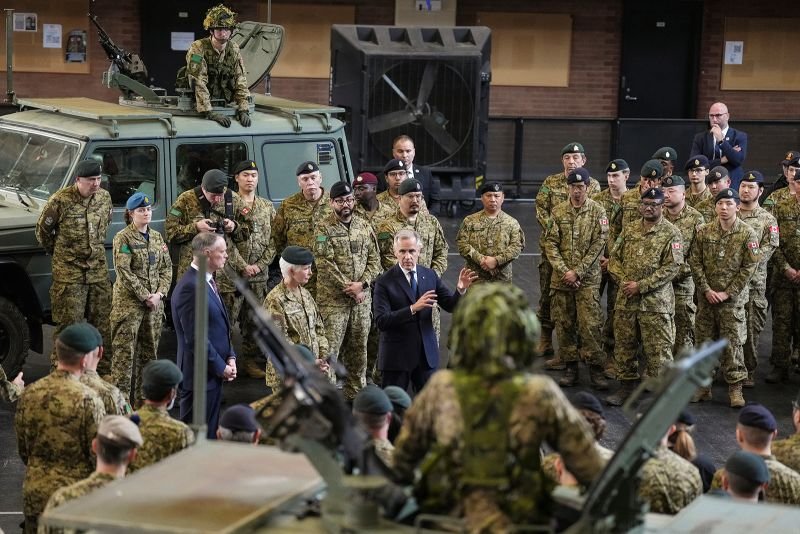

In a significant strategic shift, Canadian Prime Minister Mark Carney has announced that Canada will reach NATO’s defense spending target of 2% of its gross domestic product (GDP) by early next year—five years ahead of its original schedule. This historic policy change signals Canada’s intent not only to bolster its military readiness but also to reduce its longstanding defense reliance on the United States.


With growing geopolitical instability and heightened global security concerns, particularly following Russia’s invasion of Ukraine, this move positions Canada as a more assertive and independent player on the world stage. Carney emphasized the need to modernize Canada’s aging military infrastructure and to redefine its international defense partnerships, particularly by strengthening ties with the European Union.
I. Canada’s Military Spending and NATO Commitments
1. Meeting the 2% NATO Benchmark
For years, Canada has faced international criticism for falling short of NATO’s defense spending target. Until recently, Canada spent only 1.45% of its GDP on military expenditures, far below the 2% benchmark agreed upon by NATO members. Prime Minister Carney’s latest announcement confirms that Canada will achieve this target by early next year, accelerating its defense commitments by half a decade.
“Our military infrastructure and equipment have aged, hindering our military preparedness,” Carney said in a speech at the University of Toronto. “Only one of our four submarines is seaworthy. Less than half of our maritime fleet and land vehicles are operational.”
This renewed commitment to NATO is particularly timely, given the upcoming Group of Seven (G7) summit in Alberta and the NATO summit in Europe. It also reflects a broader trend among NATO allies who are significantly ramping up their military spending in light of global threats.
2. Going Beyond the 2% Goal?
While the current NATO guideline remains at 2% of GDP, Secretary-General Mark Rutte recently acknowledged that many U.S. allies support increasing the benchmark to 5%, a move heavily encouraged by U.S. President Donald Trump. Carney, while confirming Canada will meet the current requirement, also noted, “We will need to spend more.”
He indicated that discussions around the possible expansion of defense investments would be addressed at the upcoming NATO summit, signaling Canada’s openness to adapting its strategy to meet evolving alliance standards.
II. Reducing Dependency on the United States
1. Diversifying Defense Procurement
One of the most notable aspects of Carney’s announcement was his commitment to reduce Canada’s reliance on the United States for military procurement. He pointed out that 75% of Canada’s defense capital spending currently goes to American suppliers—a dependency he views as strategically limiting.
“We should no longer send three-quarters of our defense capital spending to America,” Carney declared. He outlined plans for Canada to invest in a variety of defense equipment, including:
- New submarines
- Aircraft and ships
- Armed land vehicles and artillery
- Advanced radar systems, drones, and sensors for Arctic and seafloor monitoring
2. Exploring European Alternatives
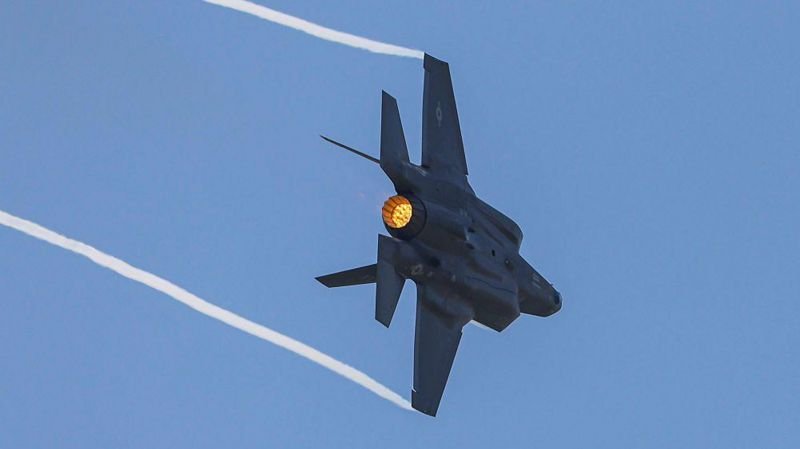
In pursuit of this diversification, Canada has begun discussions with the European Union to explore alternatives to American-made defense products. The government is currently reviewing its planned purchase of U.S. F-35 fighter jets to evaluate European options, aligning with a broader EU initiative to reduce defense dependence on the United States.
Carney also emphasized building a stronger transatlantic defense partnership. This includes not only equipment procurement but also operational and strategic coordination with European forces, particularly in response to Russia’s growing military aggression.
III. A Shift in Global Alliances
1. A New Era in U.S.-Canada Relations
Carney’s speech also marked a distinct shift in the tone of Canada’s relationship with the United States. While reaffirming historical alliances, he acknowledged that the global dominance the U.S. once held is waning.
“Today, that predominance is a thing of the past,” Carney said, noting that Washington is now “monetizing its hegemony” by charging allies for market access and reducing its security contributions. These changes have influenced Canada’s decision to pursue a more autonomous defense policy.
The political tension between the two nations has intensified, especially following inflammatory remarks by U.S. President Donald Trump suggesting that Canada should become the 51st U.S. state. Carney campaigned for office on a platform of standing up to what he described as “increased aggression” from the U.S. administration.
2. The Growing Threat of Global Instability
Carney also issued a stark warning about emerging threats, referring to “a new imperialism” on the global horizon. He criticized the outdated belief that Canada’s geographic isolation offers natural protection. With rapid advancements in missile technology, cyber warfare, and globalized conflicts, this assumption is no longer valid.
To counter these threats, Carney announced an additional $9 billion Canadian (approximately $6.6 billion USD) in military spending this year. He also declared that the Canadian Coast Guard will now be integrated into the national military, expanding its operational capacity in both Arctic and maritime defense.
IV. NATO and Canada’s Evolving Role
1. Responding to Russia’s Aggression
Since Russia’s full-scale invasion of Ukraine in February 2022, NATO countries, including Canada, have significantly increased defense expenditures. Canada’s current military realignment is part of a larger collective response among NATO allies to the growing threat posed by Moscow.
By committing to meet—and potentially exceed—NATO’s defense spending guidelines, Canada is not only reinforcing its own military capabilities but also contributing to the stability of the broader alliance.
2. Strengthening Canada-EU Defense Ties
As part of its diversification strategy, Canada is also enhancing its military ties with the European Union. These efforts include joint procurement initiatives, shared defense research, and cooperative intelligence gathering—particularly in the Arctic, a region of growing strategic interest for Russia, China, and NATO alike.
Such moves reflect Canada’s intent to become a more independent, agile, and globally integrated defense actor.
Conclusion
Canada’s decision to meet NATO’s 2% defense spending target ahead of schedule marks a significant turning point in the nation’s military and geopolitical strategy. Prime Minister Mark Carney’s declaration is not just about numbers—it reflects a broader recalibration of Canada’s global role, military preparedness, and international alliances.
By reducing its reliance on the United States and strengthening ties with the European Union, Canada is preparing for an increasingly complex and unstable global security landscape. The modernization of its armed forces, integration of the Coast Guard into the military, and expanded defense budget all signal a nation ready to assert itself on the world stage.
As NATO members reevaluate their collective commitments in a rapidly changing world, Canada’s proactive stance may serve as a model for other nations balancing tradition, sovereignty, and strategic necessity.








