





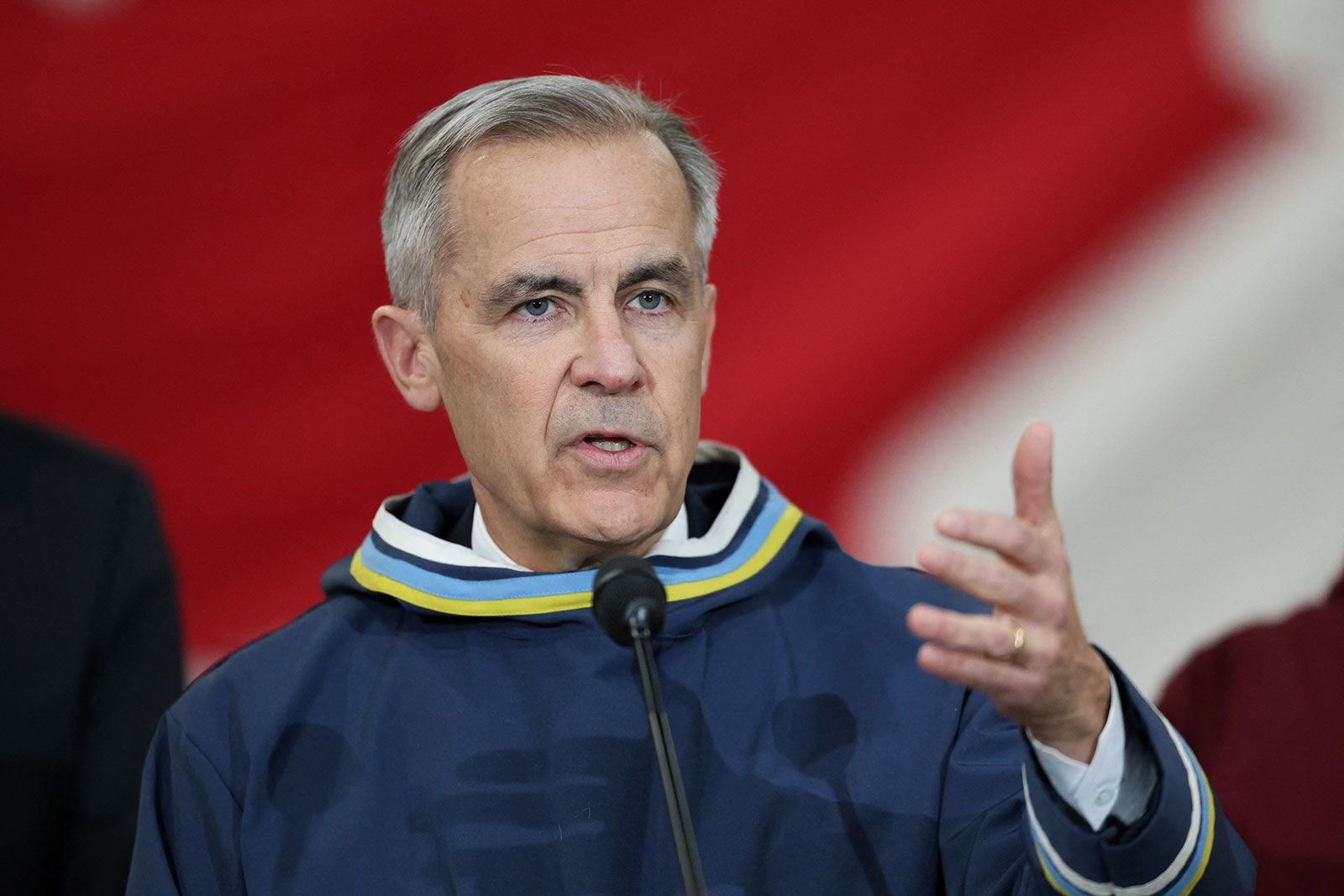


In a surprising yet clarifying statement during the NATO summit in the Netherlands, Canadian Prime Minister Mark Carney announced that former U.S. President Donald Trump is no longer interested in annexing Canada. The assertion, delivered during a conversation with CNN’s Christiane Amanpour, effectively puts to rest a long-running narrative that gained traction through repeated social media commentary and diplomatic chatter. Carney’s comments signal a shift in tone between the two North American nations and reaffirm Canada’s stance on sovereignty and independent diplomacy.


This article explores the implications of Carney’s statement, the background of the annexation remarks, and how Canada’s foreign and defense policies have evolved in response to Trump-era provocations.
I. Trump’s “Annex Canada” Remarks: A Brief Background
1. The Origins of the Controversy
Speculation over Donald Trump’s desire to make Canada the 51st U.S. state has been circulating for years, often fueled by Trump’s offhanded remarks and provocative social media posts. The idea, while never formal policy, gained symbolic traction and concern within diplomatic circles, especially after Trump suggested that Canada would benefit more from integration with the U.S., particularly regarding military systems such as missile defense.
2. Reassurances from U.S. and Canadian Officials
On May 22, former U.S. Ambassador to Canada Peter Hoekstra stated during an interview with CBC that Trump was no longer discussing annexation. While Trump posted soon after that Canada “ought to become the 51st state,” the comment was widely interpreted as political bravado rather than serious policy.
Prime Minister Mark Carney’s recent statement now appears to provide the final word: “No, he is not,” Carney said when asked directly if Trump still wanted to annex Canada.
Carney added with a touch of diplomacy that Trump “admires Canada,” and may have once “coveted” it, but those sentiments no longer shape current U.S.-Canada relations.
II. Canada’s New Foreign Policy Approach Under Carney
1. A Shift Toward Europe and the Pacific
Carney’s tenure has been marked by a strategic pivot away from dependence on the United States. Early in his leadership, he began strengthening ties with European partners, especially the United Kingdom and France, and forming strategic alliances with Australia, notably for Arctic security.
This approach aligns with Canada’s recent push to diversify defense procurement, invest in radar technologies, and collaborate on maritime surveillance independent of American involvement.
2. Meeting NATO Commitments
One notable byproduct of past tensions with Trump was Canada’s accelerated efforts to meet NATO’s defense spending benchmark of 2% of GDP. Carney acknowledged that Trump played a role in pushing Canada toward this goal: “The president is focused on changing a series of bilateral relations… He’s been focused on making sure that all members, Canada included, pay their fair share. I think we’re doing that now,” Carney stated.
III. Trump’s Influence on Middle East Affairs
1. A Decisive Role in Ongoing Conflicts
Despite differences over sovereignty and diplomacy, Carney recognized Trump’s influence on the Middle East peace process. In his interview with Amanpour, Carney said that Trump had “the potential to be decisive” in efforts to de-escalate violence in the region.
The Canadian prime minister emphasized the need for fundamental goals:
- A ceasefire,
- Full resumption of humanitarian aid,
- And the release of hostages in conflict zones.
2. Iran’s “Proportionate” Response
Carney also commented on recent developments involving Iran, particularly its response to U.S. airstrikes on three nuclear facilities. He described Iran’s retaliatory strike as a “proportionate” and “de-escalatory” move. According to Carney, the action appeared calculated more as diplomatic signaling than an act of open hostility. “It was proportionate, it was de-escalatory, it appears to have been previewed,” Carney noted, underscoring the complex interplay of diplomacy and military action.
IV. The End of Annexation Talk: A Strategic and Diplomatic Win
1. Sovereignty Reaffirmed
By directly addressing and dismissing annexation claims, Carney reasserted Canada’s sovereignty in a way that resonates with both domestic and international audiences. The move distances Canada from any perception of subordination to U.S. influence and strengthens its standing as an independent player on the global stage.
2. Canada’s Global Identity
This moment also serves as a symbolic redefinition of Canada’s foreign policy identity. Carney has made it clear that Canada is not merely a junior partner to the United States but a strategically autonomous nation forging its path through alliances with Europe, Asia-Pacific democracies, and international institutions.
His call to explore new radar systems, Arctic defenses, and multilateral military cooperation sends a message that Canada intends to lead, not follow.
Conclusion
Prime Minister Mark Carney’s clear and measured response to ongoing annexation rumors marks a pivotal moment in Canada–U.S. relations. While former President Donald Trump once floated provocative suggestions about making Canada the 51st state, such rhetoric now appears to be firmly in the past.
At the same time, Carney’s administration is actively working to reshape Canada’s global partnerships—pushing for defense independence, NATO compliance, and diplomatic diversification. His acknowledgment of Trump’s strategic role in NATO and the Middle East reflects a nuanced understanding of international power dynamics without compromising Canada’s national interests.
In doing so, Carney sets a tone for a future defined not by reaction, but by strategic vision and sovereign leadership—solidifying Canada’s place on the world stage as a confident, capable, and globally engaged democracy.








