



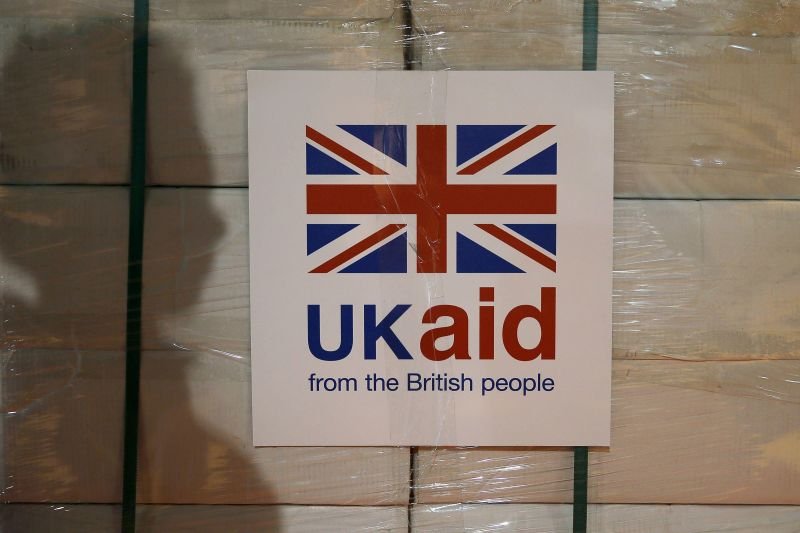


Western nations are drastically cutting foreign aid budgets, a trend that is already taking a toll on some of the world’s most vulnerable populations. According to a recent analysis by the Center for Global Development (CGD), countries including the United States, United Kingdom, Germany, and Canada are reducing bilateral aid—direct funding to developing nations—at alarming rates. These cuts are projected to deepen in 2026, with Ethiopia, Jordan, Afghanistan, and the Democratic Republic of Congo among the hardest hit.

The CGD report, shared exclusively with CNN, warns that unless global aid policies shift direction, the consequences will be devastating for millions relying on Official Development Assistance (ODA). From food insecurity to healthcare shortages, these reductions threaten to undo decades of poverty-reduction efforts and jeopardize global humanitarian goals.
I. Bilateral Aid Cuts: Who’s Pulling Back the Most?
1. United States Leads in Reductions
The United States is expected to make the largest reduction, with a projected 56% cut in foreign aid compared to levels two years ago. The decline is linked to the dismantling of the US Agency for International Development (USAID) under the Trump administration earlier this year. As the world’s largest economy pulls back, a significant vacuum is left behind—one that other countries are not stepping in to fill.
CGD’s Lee Crawfurd, one of the report’s authors, highlights the danger: “It’s some of the poorest, most fragile places in the world that are going to be hardest hit.”
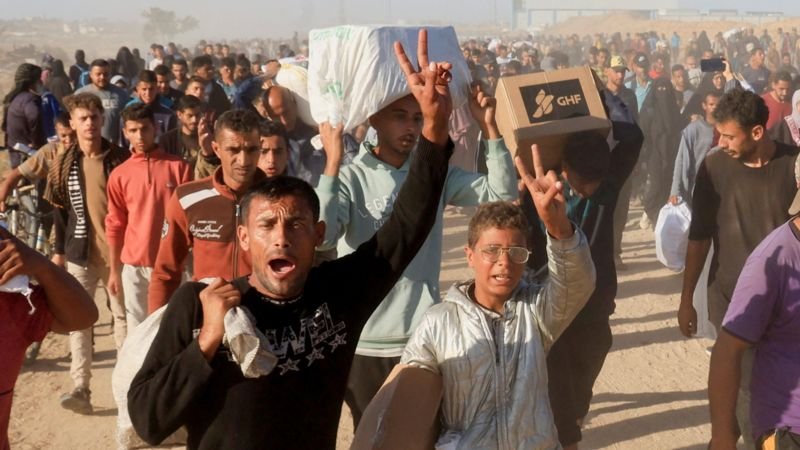
2. UK, Germany, and Canada Follow Suit
The United Kingdom’s aid budget is also shrinking, expected to fall by around 39% compared to 2023 levels. This comes after British Prime Minister Keir Starmer announced a redirection of funds toward increased defense spending, slashing the aid budget to 0.3% of gross national income by 2027—its lowest level since 1999.
Similarly, Germany is reducing its aid by 27%, Canada by 25%, and France by 19%, all contributing to a broader Western retreat from global development assistance.
II. Impact on Developing Countries: Where It Hurts the Most
1. Major Economies, Fragile States Affected
The most significant nominal losses are expected in Ethiopia, followed closely by Jordan, Afghanistan, and the Democratic Republic of Congo. These countries already face internal conflicts, food shortages, and unstable governments. The cuts are likely to exacerbate humanitarian crises and halt critical development programs.
In smaller countries like Lesotho, Micronesia, and Eswatini, foreign aid accounts for a substantial portion of national income. With cuts reaching up to 50%, the results could be catastrophic, particularly for essential services like education, health, and sanitation.
2. Aid Allocation: A Game of Chance?
Interestingly, the report notes that losses do not always reflect recipient countries’ needs. The extent of loss often depends on who the country’s main donor is. For example, while Yemen is expected to see a 19% drop, neighboring Somalia could lose as much as 39%. This inconsistency reveals the randomness of donor reliance, with no guarantee of program continuity or equitable distribution of remaining resources.
III. Why These Cuts Matter: The Human Cost
1. Aid vs. Defense: A False Dichotomy?
Aid experts and humanitarian organizations are warning that slashing aid to fund defense budgets is a dangerous and misleading trade-off. Halima Begum, head of Oxfam GB, criticized this shift: “Cutting the already lean aid budget is a false economy… It is a betrayal of the world’s most vulnerable people.”
Crawfurd reinforces this perspective, pointing out that bilateral aid forms only a small fraction of government expenditures. He argues that the necessary funding for security and defense could easily be sourced elsewhere, framing the cuts as a political choice—not a financial necessity.
2. UN Aid Appeals Go Underfunded
The UN Office for the Coordination of Humanitarian Affairs (OCHA) reports that only 11.9% of its 2024 emergency appeals have been met as of April. Without increased funding, the UN warns that efforts to address over 40 protracted humanitarian crises—from Sudan and Ukraine to Myanmar and Yemen—could fall short. “We won’t reach the level of funding in 2025 that we’ve seen in previous years,” said Anja Nitzsche, OCHA’s head of partnerships. “Vulnerable families are being left without food, clean water, healthcare, or protection.”
IV. What Can Be Done: Reducing the Fallout
1. Reallocating to the Poorest
The CGD urges that the remaining funds should be strategically reallocated to the poorest countries. By directing resources to where needs are most urgent, donor nations can minimize damage and preserve essential programs.
This would involve prioritizing fragile states, where even small budget cuts can have outsized consequences. The goal should be to maintain life-saving aid, even if the total aid envelope continues to shrink.
2. Improving Donor Coordination
Another recommendation is stronger coordination between donor nations, especially as countries pull out or reduce involvement. This ensures smoother transitions in aid programs and prevents service gaps when a new donor takes over. For instance:
- Portugal is projected to overtake the US in aid to Angola
- Japan may become Egypt’s top donor, surpassing France
However, these transitions take time and may not match previous aid strategies, which can disrupt ongoing projects.
3. Multilateral Aid as a Solution
Increasing contributions to multilateral institutions such as the World Bank or UN agencies may provide a more efficient and reliable form of aid. These organizations can pool resources and streamline responses, avoiding duplication and reducing administrative burdens. “The easiest way to improve coordination is to fund large multilateral programs,” Crawfurd stated.
Conclusion: A Crucial Crossroads for Global Aid
The decision by Western nations to reduce foreign aid marks a critical turning point in international development. While fiscal pressures and shifting political priorities may explain the cuts, the human cost is undeniable. With millions relying on ODA for basic needs, the steep reductions risk widening global inequality and reversing years of progress in poverty alleviation.
As the CGD analysis shows, not all hope is lost. By reallocating wisely, coordinating more effectively, and strengthening support for multilateral systems, donor countries can mitigate the damage. But without swift action, the world’s poorest—those living in fragile states with few alternatives—may be left with no safety net at all.
The future of global aid now hinges on whether governments treat this as a budget issue—or recognize it for what it truly is: a moral one.