




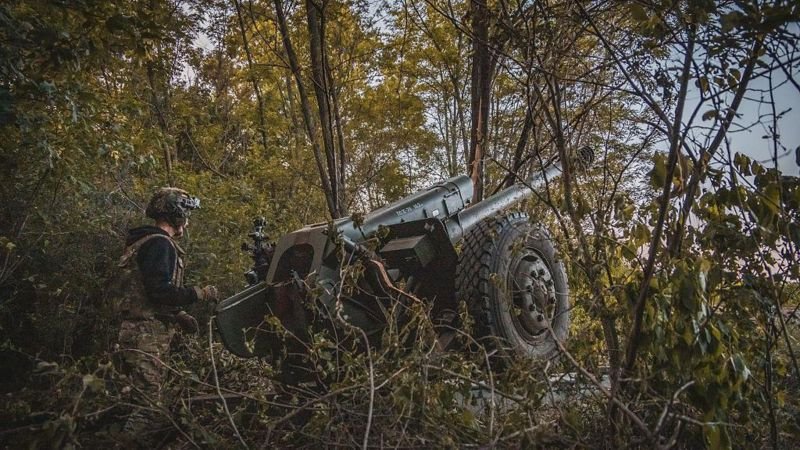


The ongoing war between Russia and Ukraine has entered a critical phase along the northeastern border, particularly in the Sumy region, where Ukrainian forces claim to have halted Moscow’s advances. General Oleksandr Syrskyi, the head of Ukraine’s military, recently visited the front lines and announced that the situation has been stabilized, even though challenges remain.

This update marks a pivotal moment in a conflict that has been evolving rapidly since Russia launched its full-scale invasion in February 2022. As new military strategies unfold and the geopolitical landscape shifts, the battle for Sumy reveals both Ukrainian resilience and the enduring threat posed by Russian forces.
I. Ukrainian Troops Stabilize the Front Line in Sumy
1. General Syrskyi Confirms Halt to Russian Push
During a Thursday visit to the combat zone, General Oleksandr Syrskyi declared that the Russian summer offensive in Sumy had been effectively choked off. His statement followed weeks of speculation about whether Ukrainian defenses could withstand the increasing Russian pressure along this strategic border.
Syrskyi emphasized that the front line has been stabilized, aligning with recent reports from Ukrainian officials that suggested Russian advances in the area were slowing. “The combat line has been stabilized,” said Syrskyi, “but we must urgently reinforce our fortifications.”
While his remarks were optimistic, he also warned that more work is needed to strengthen Ukraine’s defensive infrastructure—an issue that continues to generate public concern.
2. Border Guard: Situation Still Volatile
Despite the Ukrainian military’s success in repelling advances, Border Guard spokesperson Andriy Demchenko cautioned that the region remains volatile. Skirmishes and drone attacks continue, and unfortified areas pose ongoing vulnerabilities.
This balance of military progress and ongoing danger reflects the broader nature of the war: even when momentum shifts, uncertainty remains a constant.
II. Sumy’s Strategic Importance in the War
Sumy shares a border with Russia’s Kursk region, which became a hotspot during Ukraine’s surprise offensive in 2023. Ukrainian forces briefly occupied parts of Kursk before retreating, a development that embarrassed the Kremlin and prompted retaliatory measures.
In response, Russian President Vladimir Putin announced a new initiative in April to create “security buffer zones” along Russia’s borders with Kharkiv, Sumy, and Chernihiv. These zones were meant to prevent future Ukrainian incursions and reinforce Russian territorial control.
Putin later acknowledged that 8–12 km deep buffer zones had already been established, though he claimed capturing Sumy was not an official objective—while notably refusing to rule it out.
III. Ongoing Struggles with Fortifications
1. Public Concerns Over Weak Defenses
Criticism has mounted over the lack of sufficient fortifications in Sumy. Analysts and watchdog groups like DeepState, which tracks frontline developments, have raised alarm over delays and poor construction quality in several defense installations.
During his visit, Syrskyi attempted to reassure the public by highlighting ongoing efforts: “Additional fortifications, kill zones, anti-drone corridors, and secure logistics are being constructed,” he said.
Yet he admitted these projects need to be executed more efficiently and at greater speed, given the scale of the Russian threat.
2. A Missed Window of Opportunity
Experts say the best time to reinforce Sumy was in autumn 2024, when Ukraine had the upper hand in the Kursk region and Sumy was relatively untouched. That opportunity has now passed, and Russia likely knows exactly where the weak spots lie.
Several villages in the region have reportedly fallen to Russian forces in recent months, and the city of Sumy has endured devastating missile strikes. One such attack on April 13 killed at least 34 people and wounded 117, illustrating the deadly consequences of underprepared defenses.
IV. Broader War Efforts and International Support
1. Kyiv Faces Rising Drone Threats
Elsewhere in Ukraine, drone strikes on major cities have increased, including a barrage of attacks on the capital, Kyiv. These tactics appear aimed at overwhelming air defenses and inflicting civilian casualties to pressure the Ukrainian government.
The intensified drone campaign shows how Russia is adapting its warfare strategy, focusing more on remote attacks that are harder to intercept and more disruptive to civilian life.
2. NATO Pledges Support but U.S. Position Uncertain
On the international front, NATO Secretary General Mark Rutte recently announced that European and Canadian allies have pledged €35 billion ($41 billion) in support for Ukraine. This aid includes military assistance, economic support, and reconstruction funding.
However, concerns persist in Kyiv about the commitment of U.S. President Donald Trump, especially given his unpredictable relationship with Ukrainian President Volodymyr Zelensky. Despite a reportedly friendly meeting at the NATO summit in The Hague, questions linger about the future of U.S. support.
Trump told reporters that he was considering supplying Patriot air defense systems to Ukraine, but added, “They’re very hard to get.” His ambiguity has done little to reassure Ukrainians counting on U.S. military aid to bolster their defense.
3. Prisoner Exchanges Offer Glimmers of Diplomacy
In a rare sign of cooperation, recent talks between Ukraine and Russia led to large-scale prisoner exchanges. While these negotiations haven’t brought about any substantial steps toward a ceasefire, they do demonstrate that some channels of communication remain open.
However, without broader diplomatic breakthroughs, these exchanges are unlikely to shift the overall trajectory of the war.
Conclusion: Sumy Symbolizes Ukraine’s Determination and Risk
The stabilization of Sumy is a significant milestone for Ukraine’s military, showcasing its ability to repel Russia’s most powerful units even after years of grueling warfare. General Syrskyi’s confident statements offer reassurance, but they come with a clear warning: more must be done—and quickly.
The lack of sufficient fortifications, delayed construction efforts, and limited air defense resources highlight the ongoing challenges Ukraine faces. Meanwhile, Russia remains relentless, adapting its tactics and pressing for strategic advantage where Ukraine is weakest.
At the same time, the international community is watching—and wavering. While Europe is rallying resources, uncertainty in the United States poses a risk to the consistency of Ukraine’s support network.
Sumy now stands not only as a frontline battleground, but as a symbol of Ukrainian resolve—and a stark reminder that, in this war, time, preparation, and unity can mean the difference between stability and loss.