





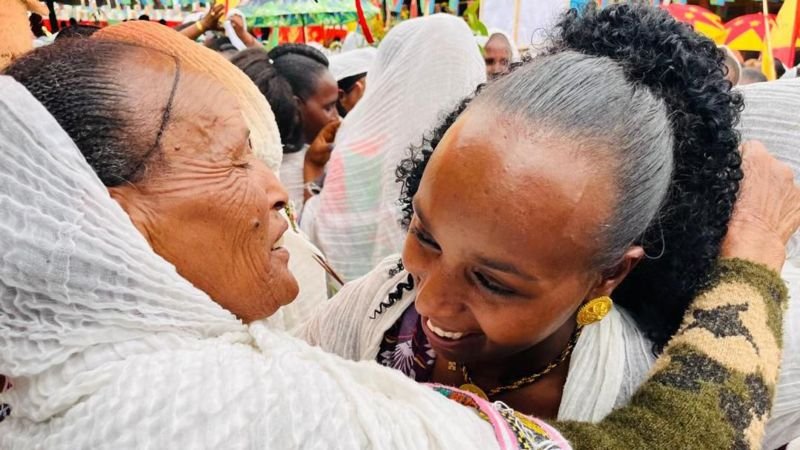


In a rare and powerful moment of unity, communities on the Ethiopia-Eritrea border came together in celebration after five years of enforced separation. The symbolic reunion, held in the Ethiopian border town of Zalambessa, marked the first meeting of relatives and friends since the outbreak of the Tigray conflict in 2020. Organized by local activists and supported informally by regional leaders, this grassroots initiative signaled renewed hope for peace and reconciliation in a region long fractured by war and political tension.


While not officially sanctioned by the governments of Ethiopia or Eritrea, the event reflected a genuine yearning for peace among ordinary citizens. Against a backdrop of broken infrastructure and deep emotional scars, the coming together of these border communities stood as a powerful testament to the human spirit and the enduring desire for unity.
I. The Tigray Conflict and Its Impact on Border Communities
1. Years of Isolation and Hardship
The conflict in Ethiopia’s Tigray region, which erupted in November 2020, triggered a humanitarian crisis and reignited tensions along the Ethiopia-Eritrea border. Zalambessa and neighboring villages were directly affected, with residents cut off from family members just across the border. For five long years, families could only imagine the lives of their loved ones on the other side.
During the two-year war, thousands were displaced. Over 55,000 people now reside in makeshift camps in Adigrat, just 30 kilometers from Zalambessa, depending heavily on relatives for support. The closed border compounded the suffering, leading to economic isolation, broken social ties, and community fragmentation.
2. Tensions Between Governments Continue
Despite the official end of hostilities in 2022, the border between Ethiopia and Eritrea remains formally closed. The reasons are rooted in deep political mistrust and unresolved territorial disputes. Yet the recent gathering in Zalambessa demonstrated that, even in the absence of government action, communities are willing to lead the charge for peace and normalcy.
II. A Grassroots Movement for Reconnection
1. Community-Led Peace Initiative
The weekend reunion, attended by elders, religious leaders, and citizens from both sides, was organized entirely at the local level. Activists and community leaders from the Tigray region and Eritrean frontier towns initiated the peace gathering with informal backing from local authorities.
The emotional atmosphere was palpable, with chants of “Enough of the past, let’s sit at the table of peace and build a better future” echoing throughout the town. For many, it was the first time in years they had seen their siblings, friends, or neighbors.
2. Restarting Trade and Cultural Exchange
In addition to social reunification, cross-border trade also resumed, with communities exchanging goods using both Eritrean and Ethiopian currencies. The gesture was both symbolic and practical, representing a return to normal life. “As people, we want to eat, trade, and attend social events as before. Their siblings are here, their siblings are there. What we need is peace,” said one woman from Tigray.
III. The Challenges of Rebuilding Zalambessa
1. Widespread Infrastructure Damage
Despite the emotional triumph of reunification, the physical landscape of Zalambessa tells a different story. The town’s infrastructure lies in ruins—electricity, telecommunications, and banking services have yet to be restored. Most of these systems fall under Ethiopia’s federal administration, meaning that significant investment will be required to rebuild them.
Water, healthcare, and education services are also in poor condition. However, local communities and aid donors are slowly working to restore essential services. Community members have taken the lead in rebuilding homes, schools, and clinics to accommodate returnees and displaced families.
2. Ongoing Humanitarian Needs
The scale of displacement remains significant. Thousands of families still live in temporary shelters, and many others hesitate to return due to concerns over destroyed homes, looted properties, and the lack of basic services.
One returning resident, Amleset, who had lived in a refugee camp in Adigrat for five years, said: “Today I came to see my locked house. From now on, I will return with my children and continue living on my land.”
IV. Historical Background of Ethiopia-Eritrea Relations
The tension between Ethiopia and Eritrea has its roots in the latter’s independence in 1993. For most of the time since, the two countries have maintained a strained relationship, punctuated by a full-scale war from 1998 to 2000. Although a peace agreement was signed in 2018 between Ethiopian Prime Minister Abiy Ahmed and Eritrean President Isaias Afwerki—earning Abiy the Nobel Peace Prize—the Tigray conflict soon undermined this progress.
During the war in Tigray, Eritrean troops supported Ethiopian federal forces, deepening suspicion and animosity in the region. As a result, the peace that once seemed within reach began to unravel.
V. A Glimmer of Hope for Long-Term Reconciliation
Despite lingering political challenges, community representatives at the Zalambessa event declared that “peace and reconciliation has begun.” They urged all displaced persons to return home and participate in rebuilding efforts.
Nebiat Woldegergis, who traveled from Senafe in Eritrea, expressed optimism: “I am confident that the peace and reconciliation we started today will continue to grow.”
The presence of religious and traditional leaders further underscored the cultural and spiritual importance of the event, signaling a broader hope that reconciliation could move beyond politics.
Conclusion: A Grassroots Path Toward Lasting Peace
The reunion at the Zalambessa border marks more than just a return of long-separated families—it symbolizes the power of people-driven peace. In the absence of formal political reconciliation, the actions of ordinary citizens show that healing can begin at the grassroots level.
However, sustainable peace will require more than symbolic gestures. Governments on both sides must take meaningful steps to reopen the border officially, restore vital services, and support reconstruction. International stakeholders and humanitarian organizations can also play a role in ensuring that this hopeful moment becomes a stepping stone toward permanent peace.
If the spirit shown in Zalambessa can ripple across other conflict zones in the Horn of Africa, it could set a precedent for how communities—rather than politicians—can lead the way in post-conflict recovery.








