





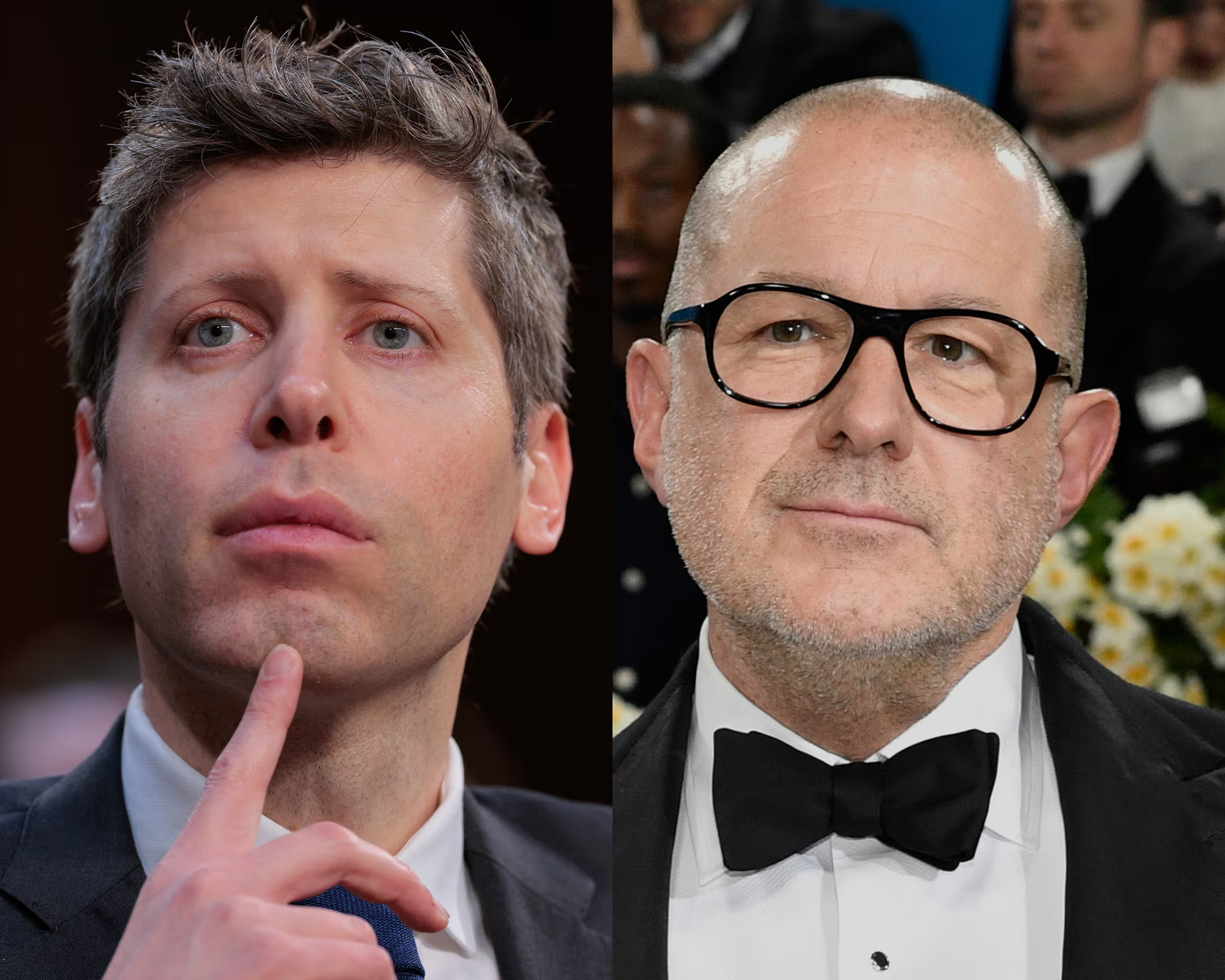


In a strategic leap toward integrating artificial intelligence into physical products, OpenAI has announced its largest acquisition to date—purchasing the hardware startup io for $6.4 billion. The company, founded by legendary Apple designer Sir Jony Ive, is now set to become an integral part of OpenAI’s growing ambitions to build the future of AI-powered devices. The collaboration between Ive and OpenAI CEO Sam Altman has been quietly developing for two years and is now emerging as a defining moment for both the AI and design industries. While the finer details of the deal remain under wraps, the implications are vast and signal a new era of innovation.


I. The Formation of a Visionary Partnership
1. A Friendship Turned Strategic Alliance
The roots of the acquisition go beyond business. According to a joint blog post by Altman and Ive, the partnership blossomed out of a shared curiosity, mutual respect, and aligned values. What began as casual brainstorming soon evolved into serious collaboration, leading to the conception of tangible product designs.

Their blog post reflects the organic growth of this relationship: “A collaboration built upon friendship, curiosity and shared values quickly grew in ambition.” This evolving connection has now matured into a full-fledged acquisition, promising to fuse the best of AI research with world-class product design.
2. Merging Talents Across Sectors
Ive founded io in 2023 alongside other Apple alumni as part of his broader creative collective, LoveFrom. Known for its emphasis on elegance, functionality, and emotional connection in design, LoveFrom brings a unique sensibility to OpenAI’s technological foundation. While io has yet to debut any consumer hardware, the team’s design pedigree is undisputed.

Though Ive will not become an OpenAI employee, LoveFrom will lead design efforts across OpenAI’s software and hardware ventures. According to Bloomberg, this includes all interface design responsibilities for OpenAI going forward, solidifying LoveFrom’s role in shaping the AI company’s user experience strategy.
II. Jony Ive’s Legacy and Future Impact
1. The Designer Who Shaped the Modern Tech Landscape
Jony Ive is one of the most iconic designers of the digital age. After joining Apple in the 1990s, he became the creative mind behind some of its most groundbreaking products—including the original iMac, iPod, iPhone, MacBook Air, Apple Watch, and AirPods. His minimalist, intuitive approach to product design revolutionized the tech industry and earned him a knighthood in 2012 for services to design and enterprise.
During his 27-year tenure at Apple, Ive developed a reputation for meticulous attention to detail, from hardware contours to the very fonts and packaging used in Apple products. After departing Apple in 2019, he focused on projects through LoveFrom, a company that brought together multidisciplinary talents, including architects, artists, engineers, and writers.
2. Building the Creative Foundations of io
The io startup, despite its low profile and lack of public product launches, has reportedly been involved with major brands such as Christie’s, Ferrari, and Airbnb. Ive’s latest focus has included designing LoveFrom’s headquarters in San Francisco—a space that also symbolizes the deeper creative environment he envisions for his collaboration with OpenAI.
Now, io will be fully integrated into OpenAI’s San Francisco-based operations, bringing LoveFrom’s design philosophy closer to the AI firm’s engineering and research teams.
III. OpenAI’s Strategic Expansion into Hardware
1. Signaling a New Direction
While OpenAI is best known for its software breakthroughs, particularly the widely adopted ChatGPT, this acquisition confirms the company’s intention to enter the hardware market. Though the company has yet to unveil a physical product, hiring moves and acquisitions point strongly in that direction.
The addition of Caitlin “CK” Kalinowski—formerly head of Meta’s augmented reality glasses program—is a notable example. Her role at OpenAI focuses on robotics and bringing AI into the physical realm, aligning with the broader goal of embedding AI capabilities into real-world tools.
2. Aligning Hardware with Advanced AI Capabilities
In addition to the io deal, OpenAI has made other substantial acquisitions in the past year. Earlier this month, it acquired Windsurf, a $3 billion AI-assisted coding tool. In 2023, it also purchased Rockset, a real-time analytics database firm. These moves suggest that OpenAI is building a comprehensive platform where advanced AI software is supported by robust data infrastructure and hardware integration.
The goal appears clear: to create a seamless ecosystem where AI can operate in both digital and physical spaces, delivering user experiences that feel natural, intuitive, and transformative.
IV. A Vision for AI in the Physical World
1. Robotics and the Future of Human-AI Interaction
OpenAI’s focus on robotics and physical applications of AI is underscored by its investments and staffing. In addition to Kalinowski’s appointment, the company has backed Physical Intelligence, a robotics startup aiming to bring general-purpose AI into the real world.
These developments suggest that OpenAI is positioning itself not only as a software powerhouse but also as a hardware innovator. By uniting world-class design with groundbreaking AI, the company hopes to redefine how people interact with intelligent machines—perhaps through devices that don’t yet exist but will soon become everyday essentials.
2. Funding and Market Momentum
OpenAI’s aggressive growth is backed by substantial investor confidence. The company is currently valued at around $300 billion, as reported by Bloomberg. In March 2025, OpenAI closed a $40 billion funding round led by SoftBank. Microsoft also maintains a significant stake in the company, holding 49% following a $13 billion investment made in 2023.
This massive financial support gives OpenAI the flexibility to pursue ambitious projects like the io acquisition, indicating investor belief in the company’s vision for AI beyond the digital screen.
Conclusion: A New Chapter in AI and Design Integration
OpenAI’s acquisition of Jony Ive’s io is more than just a business deal—it’s a signal of where technology is headed. As AI increasingly becomes part of everyday life, integrating it into physical devices will be key to user adoption and trust. With Ive’s celebrated design legacy and OpenAI’s leading-edge technology, the fusion has the potential to redefine how we engage with machines.
Although many questions remain about the nature of the devices they plan to build, one thing is certain: this partnership sets the stage for a new generation of AI-infused hardware that could reshape the future of human-computer interaction. With design elegance meeting AI intelligence, the next big thing may be just around the corner.








