




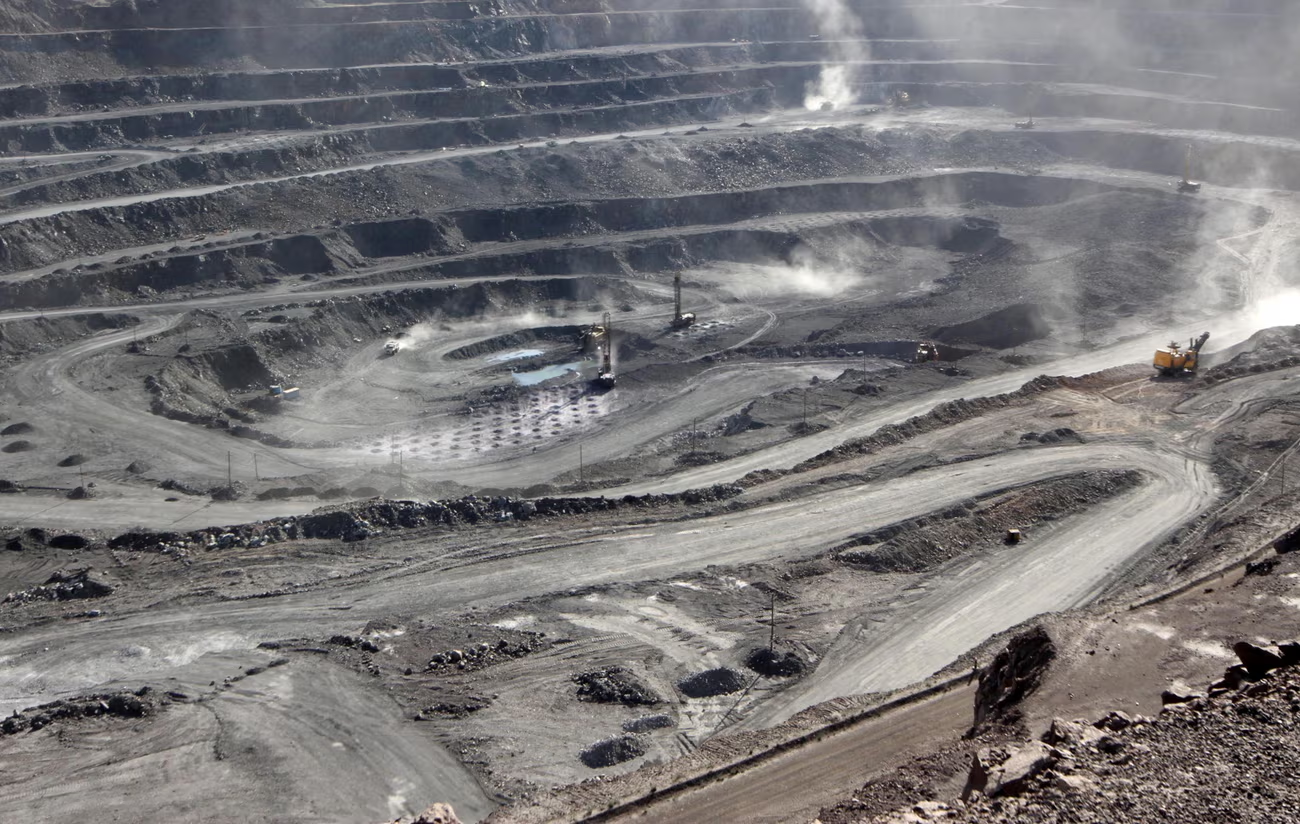


In a significant development that could reshape global trade dynamics, the United States and China have agreed to accelerate rare-earth shipments to American industries, signaling a cautious but notable step forward in their strained economic relationship. The announcement has sparked renewed optimism in financial markets and brought temporary relief to sectors heavily dependent on these critical materials. While challenges remain in the broader US-China trade relationship, this move may serve as a foundation for further negotiations aimed at resolving long-standing disputes.


I. The Rare-Earth Deal and Its Implications
1. A Strategic Breakthrough for Critical Supply Chains
The recent agreement between Washington and Beijing to expedite the flow of rare earth elements into the United States marks a pivotal moment in the ongoing trade conflict between the two global powers. These materials, essential to the production of electronics, electric vehicles, aerospace components, and military equipment, had previously been restricted as part of China’s countermeasures against earlier US tariffs.

According to a White House official, the understanding forms part of a broader framework agreed upon during trade talks in Geneva this past May. The key objective is to implement procedures that facilitate the swift movement of rare earths from China to the US, without the regulatory bottlenecks that had plagued trade over the last year.
2. Impact on US Stock Markets and Manufacturing Sectors
The trade announcement triggered a sharp rally in US markets, with both the S&P 500 and the Nasdaq reaching new highs. Investors interpreted the news as a sign that trade tensions were easing, at least temporarily. Industries that have been hardest hit by rare-earth shortages—such as automotive and semiconductor manufacturing—welcomed the development, as it offers hope for stabilizing their disrupted supply chains.

II. China’s Rare-Earth Monopoly and Strategic Leverage
1. China’s Control of Global Rare-Earth Resources
China has long dominated the global production and processing of rare earth elements. This dominance, established during the 1990s and 2000s, has given Beijing substantial influence over international supply chains. Currently, China accounts for a vast majority of both the mining and refining of these critical minerals, making many countries—including the US—heavily dependent on Chinese exports.
This reliance has raised concerns in Washington, especially since some of these materials are used in sensitive military applications. The recent agreement reflects the US’s urgent need to secure a stable supply of these inputs, not just for commercial reasons but for national security purposes as well.
2. China’s Export Policies and Technology Safeguards
Chinese authorities have reportedly increased scrutiny over how rare earths are exported, especially to ensure that materials are not diverted for military purposes in the US. Licensing processes have slowed due to strict vetting of buyers, and companies in China have been asked to report lists of technical personnel and, in some cases, surrender passports to prevent knowledge leakage abroad. These measures indicate how seriously China views its control over rare earths as both a commercial and geopolitical asset.
III. Broader Trade Negotiations and Political Maneuvering
1. Trump’s Trade Vision Beyond China
While highlighting the rare-earth deal with China, former President Donald Trump also hinted at future agreements with other major economies. He suggested that negotiations could soon begin with India to expand trade ties, although specifics remain vague. However, momentum was briefly disrupted after Trump canceled discussions with Canada over a digital sales tax, creating a temporary downturn in US markets.
Despite this hiccup, Treasury Secretary Scott Bessent expressed confidence in reaching trade deals with over a dozen countries by early September. The administration appears to have relaxed its earlier July 9 deadline for imposing new tariffs, signaling a more flexible timeline for achieving its trade objectives.
2. The Geneva Talks and the Return of Export Flow
Earlier negotiations in Geneva had faltered, particularly due to China’s restrictions on exporting critical minerals. The US had retaliated with export controls targeting semiconductor design software and aviation equipment, further straining relations. However, the renewed agreement now sets the stage for resolving those specific tensions, offering both sides a path toward incremental progress.
In June, China granted temporary export licenses to suppliers serving top US car manufacturers, a move that helped alleviate some immediate shortages. This was seen as a goodwill gesture during a sensitive phase in the Geneva talks.
IV. Repercussions in Key Industries
1. Auto Sector Still Facing Uncertainty
Automotive companies, especially those relying on magnets and other rare-earth components, have struggled with sporadic supplies. A Ford executive recently described their situation as “hand to mouth,” reflecting the precarious state of inventory management. Though the new agreement provides short-term relief, manufacturers are pushing for more permanent trade stability.
2. Semiconductor and Defense Sectors on Alert
The semiconductor industry, along with defense contractors, continues to keep a close eye on the flow of critical materials. With both sectors playing a crucial role in economic and national security, any disruption in rare-earth availability is treated as a significant threat. The US government’s insistence on easing these supply issues reflects pressure from these influential sectors.
3. Educational Exchange and Soft Power Dynamics
In an unexpected addition to the trade package, Trump indicated that Chinese students would once again be welcome to study at US universities. This clause is believed to be part of a broader effort to foster goodwill and re-establish soft diplomatic ties that had deteriorated during earlier phases of the trade war.
Conclusion
The agreement between the US and China to fast-track rare-earth exports represents a cautious but important thaw in their strained trade relationship. While many issues remain unresolved, especially regarding technology transfers and tariffs on other goods, this step provides much-needed relief to industries heavily dependent on critical minerals. As the Biden administration and global partners work toward broader trade reforms, the rare-earth deal could serve as a foundation for rebuilding trust and opening new channels of cooperation. However, until a comprehensive trade agreement is finalized, businesses and governments alike must continue to prepare for a volatile and competitive economic landscape.