





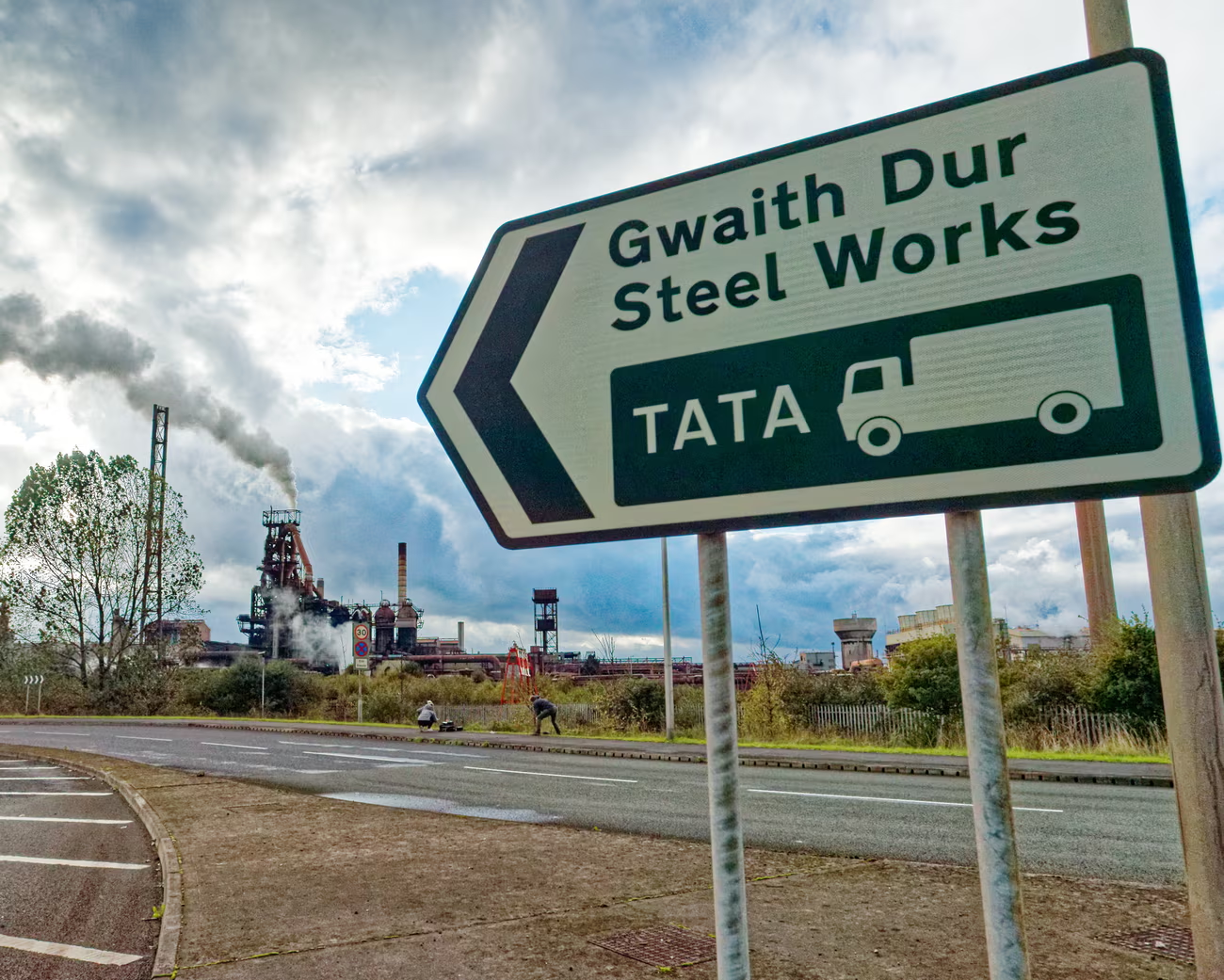


The UK government is racing to secure fair treatment for Tata Steel under a new trade agreement with the United States, fearing that the country’s largest steelmaker could be excluded from tariff exemptions. Although the deal, brokered by Prime Minister Keir Starmer and US President Donald Trump, has been agreed in principle, its final terms have yet to be confirmed. With new American tariffs now doubled on global steel imports, concerns are growing that Tata Steel’s cross-border production model could complicate its access to the US market, putting hundreds of millions in export revenue and local jobs at risk.


I. Tata Steel’s Uncertain Position Under the US-UK Trade Deal
1. Threat of Exclusion Due to Product Origin Rules
Tata Steel, which operates the UK’s largest steel facility in Port Talbot, may be blocked from benefiting from the new tariff-free agreement because of US regulations that require imported steel to be fully “melted and poured” in the country of origin. With Tata currently relying on imported steel from its sister operations in India and Europe due to its green transition, the company could inadvertently violate this requirement—making its products ineligible for duty-free status in the US.

2. Tariff-Free Access Hangs in the Balance
The US has temporarily suspended a planned 50% tariff hike on British steel and aluminium, leaving the current rate at 25% until at least 9 July. However, while the broader agreement promises to reduce those duties to zero, the lack of clarity around eligibility criteria—especially for companies like Tata with complex supply chains—has caused concern. Tata exports over $100 million in steel to the US annually, and any delay or exclusion could have significant financial implications.
II. Government Efforts and Diplomatic Challenges
1. Ongoing Talks to Secure a Carve-Out
UK negotiators are actively working to secure a special exemption for Tata Steel within the deal. According to reports from The Times, discussions have been described as “complex,” but there is optimism that a solution can be found. A government source suggested confidence in reaching an agreement that would protect Tata’s market access, though no final decision has been announced.

2. Political Pressure from US Concerns Over British Steel
Simultaneously, the US is scrutinizing British Steel, which is owned by China’s Jingye Group. Washington fears that Beijing could exploit this relationship to indirectly export Chinese steel into the American market. In response, the UK government took emergency measures in April to assume temporary control of British Steel’s Scunthorpe facility, aiming to prevent any move that might fuel US suspicions or jeopardize ongoing trade discussions.
3. Navigating National Security and Trade Relations
The dual scrutiny of Tata and British Steel places the UK in a delicate position—balancing the need to protect domestic industry while managing diplomatic sensitivities with two of the world’s largest powers. The intersection of national security, economic policy, and environmental commitments makes this more than just a trade issue—it’s a matter of strategic alignment.
III. Industrial Impacts of Delayed Tariff Relief
1. Business Losses Mounting for Steel Manufacturers
The continued uncertainty surrounding the finalization of the UK-US deal is already impacting British steel producers. Russell Codling, a senior executive at Tata Steel, informed MPs that delays have cost the company approximately £150 million in lost business. He emphasized the urgent need for the deal to be enacted swiftly to provide stability and allow for effective long-term planning, particularly with regard to customers in the US market.
2. Industry Calls for Clearer Quota Information
Another sticking point in the trade talks is the unclear size of the UK’s steel quota under the new agreement. While the suspension of the 50% tariff provides temporary breathing room, manufacturers require transparency to effectively forecast production and export volumes. Lack of clarity undermines confidence and puts strain on forward contracts and supply chain arrangements.
3. Transition to Green Steel Adds Complexity
Tata’s ongoing shift to electric arc furnace (EAF) production—a move designed to reduce carbon emissions—adds another layer of complexity to the negotiations. During the transition, the company has needed to import steel from other operations to meet demand. This sustainable pivot, while environmentally commendable, challenges traditional trade definitions, highlighting the need for modernized rules that reflect evolving industrial practices.
IV. What’s at Stake for the UK Steel Sector
1. Strategic Importance of Steel to the UK Economy
Steel remains a foundational industry for the UK, supporting tens of thousands of jobs directly and indirectly. Any threat to the competitiveness of major players like Tata or British Steel carries significant economic consequences, especially in regions such as South Wales and Northern England where industrial employment is central to local communities.
2. Future of Trade Relations Post-Brexit
The UK’s ability to navigate favorable trade terms with major powers like the US is a litmus test for its post-Brexit economic strategy. Securing equitable treatment for domestic firms in high-stakes negotiations such as this one is crucial to maintaining global relevance and fostering industrial resilience.
3. Lessons for Supply Chain Resilience
The challenges facing Tata Steel underscore broader lessons about supply chain vulnerability and the importance of local sourcing. As the UK moves toward more sustainable manufacturing models, aligning trade policy with industrial reality will be essential to safeguarding economic and environmental goals.
Conclusion
The potential exclusion of Tata Steel from tariff-free access to the US underscores the complexities inherent in modern trade negotiations—especially when environmental commitments, national security concerns, and international relations intersect. While the UK government is actively working to ensure Tata’s eligibility under the new deal, time is of the essence. Without swift action and a flexible framework that accommodates real-world production models, British steel producers could lose vital access to one of their most important markets. For the UK, ensuring fair terms for its steel sector is not only a matter of economic interest but of strategic importance to its global trade future.








