





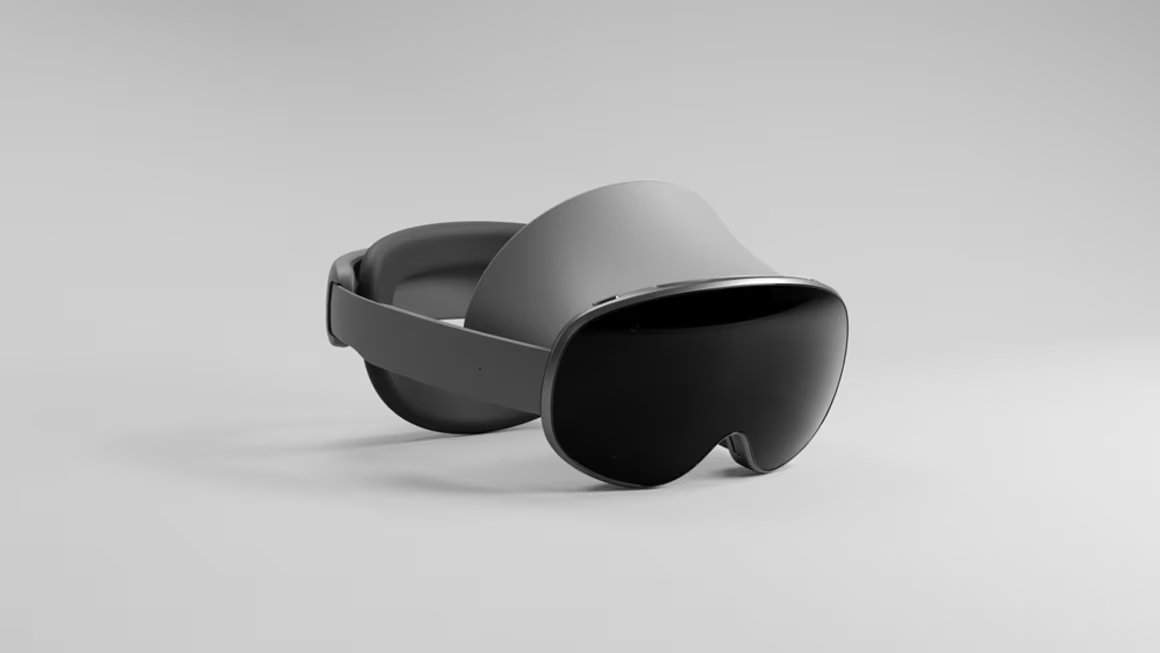


Google and Samsung are teaming up to enter the wearable headset market, launching a mixed-reality device codenamed Project Moohan in 2025. Built on the newly launched Android XR operating system and developed with Qualcomm, this headset looks to challenge Apple’s premium Vision Pro and Meta’s popular Quest 3—all while aiming to offer enhanced AI features and a more accessible price point.


I. A New Rival in the XR Space
1. Targeting Apple and Meta
Google and Samsung aim to disrupt the current headset duopoly—Apple’s Vision Pro priced at $3,499 and Meta’s ~$500 Quest 3. According to analysts, Samsung is expected to undercut Apple while offering a powerful alternative. As Ted Mortonson from Baird notes, “They’re doing a direct assault on Apple,” combining Google’s AI expertise and Samsung’s hardware reliability.

2. Android XR: A Platform for All
Announced in December 2024, Android XR is a new Android-based operating system for extended reality devices, co-created by Google, Samsung, and Qualcomm. Project Moohan will be the first commercial headset to run Android XR, laying the groundwork for future headsets, smart glasses, and AR wearables.
II. What’s Inside Project Moohan
1. High-End Specs: Display, Tracking, and Control
As detailed by Samsung and confirmed by leaks and demos, Project Moohan will run on Qualcomm’s Snapdragon XR2+ Gen 2 chipset—the same chip used by Meta’s Quest 3—paired with micro‑OLED screens reportedly exceeding 3,800 ppi, bumping past Vision Pro’s resolution. The headset will support eye and hand tracking, foveated rendering, optional wired battery, and first-party controllers—addressing criticisms of the Vision Pro’s controller-free design.

2. Gemini-Powered Smart Features
Project Moohan will integrate Google Gemini, offering voice‑based AI interactions, environmental awareness, language translation, and intelligent app navigation within the XR environment. This positions it as a smart assistant rather than merely a display device.
III. Market Context and Competitive Landscape
1. A Shifting Market
XR hardware sales are projected to jump from $21.4 billion in 2023 to $41.8 billion by 2028. Apple’s Vision Pro, despite being a high-end early entry, hasn’t fully met expectations—leaving an opening for more accessible yet feature-rich alternatives.
2. Meta’s Stronghold vs. Google’s Comeback
Meta’s Quest 3 leads the consumer VR market with mature hardware and developer support. Google’s previous attempts—such as Glass, Cardboard, and Daydream—didn’t gain traction. Developers are now cautious: at GDC 2025, concerns arose as Google offered little support for indie XR creators. With Android XR debuting and Project Moohan on the horizon, Google intends to reestablish itself in the XR landscape.
IV. Launch Timing, Price, and Ecosystem
1. Release Window and Cost Strategy
Mass production of Project Moohan is expected to begin in early 2025, with a release planned for mid‑year under an estimated $3,500 price tag. While pricier than the Quest 3, this could still appeal to consumers seeking premium capabilities without Vision Pro’s premium cost.
2. App Ecosystem and Developer Support
Android XR supports standard Android development tools—ARCore, Unity, OpenXR—making it easier for existing developers to port apps. Google and Samsung’s focus, however, will be tested at upcoming developer events like Google I/O 2025, aiming to foster broader ecosystem adoption.
V. What to Watch Going Forward
1. Catalyst Partnerships
Samsung might pair Project Moohan’s launch with new Galaxy devices, enhancing synergy across its ecosystem. Similarly, Google plans smart glasses via brands like Gentle Monster and Warby Parker—expanding XR beyond headsets to everyday wearables.
2. Consumer Acceptance & “Killer App”
Despite XR hardware advancements, the industry still awaits a “killer app” that moves XR from novelty to necessity. Until such a use case emerges, headsets remain “nice-to-have” tech rather than essential purchases .
Conclusion
Google and Samsung’s Project Moohan, powered by Android XR and Gemini AI, marks a major effort to challenge Vision Pro and Meta Quest 3 in the XR arena. With premium hardware, intelligent AI, and competitive pricing, this headset has the potential to make mixed reality more accessible. However, its success hinges on developer engagement, immersive experiences, and finding that defining “killer app” to drive mainstream adoption.








