




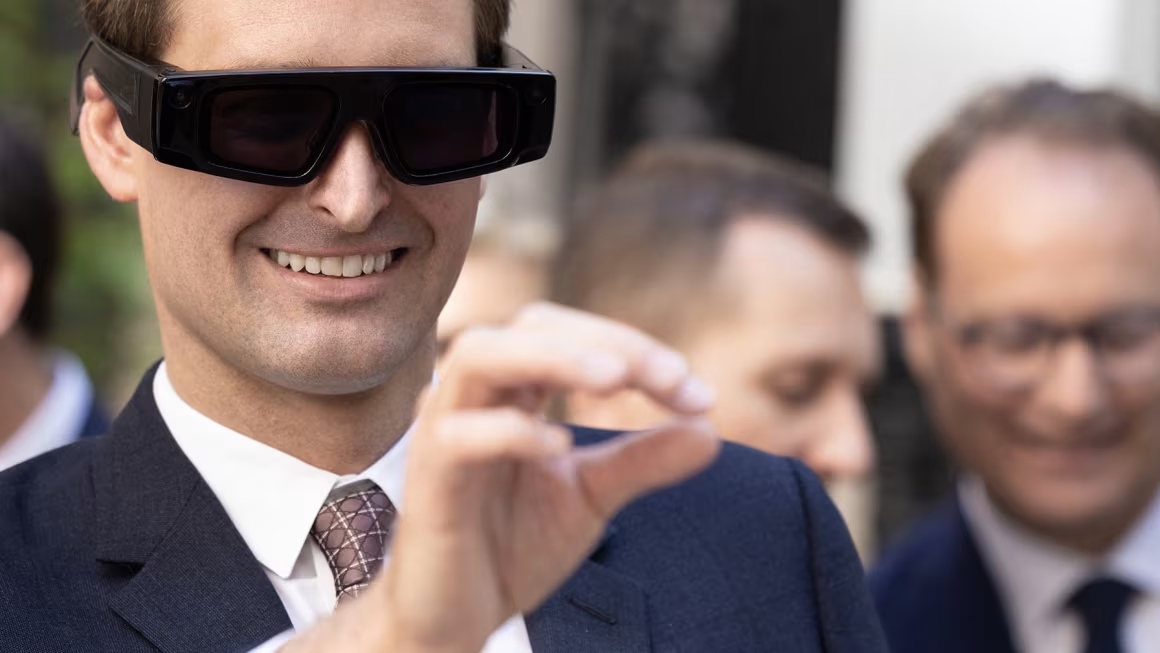


After years of false starts, smart glasses are making a major comeback—this time fueled by powerful artificial intelligence and user-ready design. Tech giants such as Snap, Apple, Meta, Google, and Amazon are racing to launch AI-powered eyewear between 2026 and 2027. With capabilities like real-time translation, AR overlays, and hands-free AI assistance, these devices promise to bridge the gap between digital and physical worlds.

I. Smart Glasses: A Comeback Story
1. What Went Wrong Before
A decade ago, Google Glass failed due to limited battery life, high cost, and privacy concerns. Subsequent versions from Amazon, Meta, and Snap improved comfort but offered little extra beyond smartphone features.

2. AI Shifts the Game
Today’s glasses, powered by AI—especially models that process images, voice, and video simultaneously—can do far more. Tasks like identifying objects, providing context, and translating speech in real time are now possible. As IDC’s Jitesh Ubrani says, “AI is making these devices a lot easier to use, and it’s also introducing new ways people can use them.”
II. The New Wave of Smart Glasses
1. Snap’s Specs: First of the Next Generation
Snap announced it will launch Specs in 2026—AI-powered glasses with see-through lenses. Featuring integrated machine learning and 3D spatial-awareness, Specs aim to be sleek, standalone, and robust—designed for everyday use.

The developer ecosystem is already strong: Snapshot’s AR lenses translate signs (“Super Travel”), assist in cooking (“Cookmate”), and even help with pool games (“Pool Assist”). They’ll run on Snap’s upgraded Snap OS with OpenAI and Google Gemini support, depth APIs, speech transcription, and spatial AR tools.
2. Meta’s Ray-Ban AI Glasses & Orion Prototype
Meta continues expanding its Ray-Ban smart glasses, selling over two million units since 2023. Updated features include real-time foreign-language translation, lifestyle reminders, and ambient audio control.
Simultaneously, Meta is building a high-end AR prototype codenamed Orion, targeting advanced AI integration—though production costs remain steep.
3. Google, Apple, and Amazon Weigh In
Google is deeply invested in advancing smart eyewear. Its Android XR platform, launched at Google I/O, enables Google and partners like Samsung and Warby Parker to build glasses equipped with Google Gemini AI.
Apple, too, is accelerating its effort: analysts expect smart glasses to launch by late 2026, with more devices between 2025 and 2028—including Ray-Ban-like models forecasted for 2027.
Amazon is also reportedly exploring camera-equipped Alexa glasses, continuing its strategy of integrating voice AI into mainstream wearables.
III. Market Outlook & Consumer Readiness
1. A Growing Market
ABI Research predicts smart glasses shipments will grow from 5.9 million in 2024 to over 114 million by 2030—a dramatic expansion of the market. IDC forecasts global sales of 12.8 million units for 2025—a 26% increase—fueled partly by China’s rapid adoption.
2. Overcoming Wearable Hesitations
Challenges remain: user privacy, social acceptance, and device fatigue. Early iterations like Google Glass faced derision (“Glassholes”) and security backlash. New transparent lights on frames may help, but devices must be affordable and functional.
Despite these hurdles, consumer readiness is improving. Ray-Ban smart glasses have already sold 1.8 million units globally across both Meta and Ray-Ban lines.
3. 2026–27: A Tipping Point
According to ABI, 2026–27 will be the inflection point for mainstream adoption, potentially turning AR eyewear into a $7.8 billion market. Within 18 months, ecosystems and supply chains will solidify, setting a competitive landscape for long-term winners.
IV. Why 2025–26 Could Define the Future
1. AI Is the Change Agent
What’s different this time? It’s AI. Speech, vision, and language models now allow glasses to seamlessly answer questions about the surroundings, perform tasks autonomously, and adapt to user context—all without needing a phone.
2. Hardware Finally Catches Up
Advances in micro-OLED displays, spatial computing chips, longer battery lives, and minimal designs have turned concept devices into everyday wearables. Prototypes boast camera-integrated Snapdragon chips, slim waveguides, and 45-minute battery life—all packaged in lightweight frames.
Conclusion
Smart glasses are back—and this time, they might stick. With tech giants doubling down on lightweight, AI-enabled eyewear and analysts forecasting tens of millions of shipments, the era of wearing your world through your lenses is dawning. Still, success hinges on overcoming trust issues, achieving sufficiency in design and value, and capturing “killer apps” that make these devices indispensable. The next 18 months will show whether smart glasses can finally shift from novelty to necessity.