





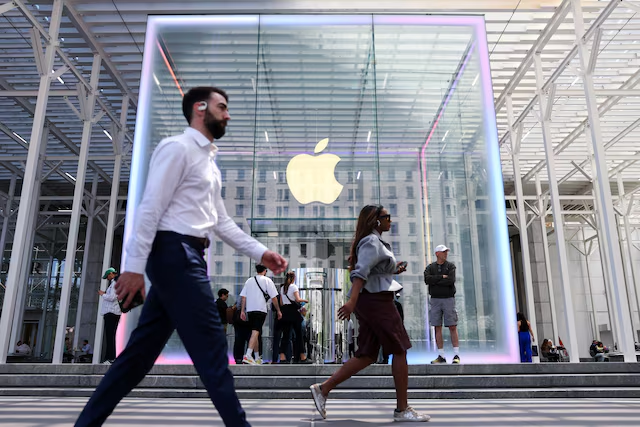


The U.S. Department of Justice (DOJ) is moving forward with a major antitrust case against Apple, accusing the tech giant of unlawfully monopolizing the smartphone market. A federal judge has denied Apple’s motion to dismiss the lawsuit, setting the stage for a potentially lengthy legal battle that could reshape the future of iPhone’s dominance in the mobile tech landscape.


I. Background of the Antitrust Case
1. Judge Allows DOJ Lawsuit to Proceed
In a ruling made by U.S. District Judge Julien Neals in Newark, New Jersey, Apple’s request to dismiss the DOJ’s lawsuit was rejected. The judge found sufficient grounds to move forward with the case, which centers on Apple’s restrictions imposed on third-party app and device developers. The DOJ claims these limitations unfairly hinder competition by making it difficult for consumers to switch from iPhones to alternative devices.

2. Apple’s Response to the Allegations
Apple maintains that the DOJ’s allegations are baseless both legally and factually. A company spokesperson stated that Apple plans to aggressively defend itself in court. The DOJ has chosen not to issue further public comments on the matter at this time.
II. Details of the Lawsuit
1. Apple’s Restrictions and Their Implications
The lawsuit, initiated in March 2024, argues that Apple uses various tactics to lock users into its ecosystem. These include imposing fees on app developers and creating technical barriers that limit the functionality of competing products like smartwatches, digital wallets, and messaging apps. The DOJ asserts that such measures are intended to suppress competition and reinforce Apple’s market control.

2. The Role of Third-Party Developers
One major point of contention is Apple’s treatment of third-party developers. The DOJ claims that by restricting access to vital technologies, Apple stifles innovation and undermines market diversity. Apple counters that its policies are designed to protect user privacy and ensure product security, arguing that forcing the company to share proprietary technology could deter future innovation.
3. The Economic Context
Apple remains the world’s top smartphone seller, generating $201 billion in sales in 2024 alone. The company launched a new budget iPhone model earlier this year, priced at $170 more than its predecessor, illustrating its continued control over premium market pricing. This dominance, the DOJ contends, has been achieved through exclusionary practices rather than superior products alone.
III. Broader Implications for Big Tech
1. A Pattern of Antitrust Enforcement
This lawsuit is part of a broader effort by U.S. authorities to rein in Big Tech. Other tech giants, including Meta Platforms, Amazon, and Google parent Alphabet, are also facing similar antitrust actions. The government aims to address what it perceives as monopolistic behavior that restricts consumer choice and stifles competition across the tech sector.
2. Impact on Future Market Dynamics
Legal experts note that if successful, this lawsuit could establish new precedents for how digital ecosystems operate. A ruling against Apple might compel the company to loosen its grip on the App Store, allow broader interoperability with third-party devices, and even reshape pricing models. It could also encourage innovation by leveling the playing field for smaller competitors.
3. Reactions From the Tech Industry
While some industry analysts agree with the DOJ’s stance, others caution that the outcome could have unintended consequences. Critics argue that mandating openness could jeopardize user security and undermine the seamless experience that Apple is known for. Proponents of the lawsuit, however, believe it is a necessary step toward more equitable competition.
Conclusion
The antitrust lawsuit against Apple represents a pivotal moment in the ongoing debate over Big Tech’s influence and market power. As the case progresses, it will test the limits of regulatory authority and may redefine the balance between innovation and competition in the digital age. For now, Apple remains resolute in its defense, but the outcome could have lasting implications for the entire tech industry.








