





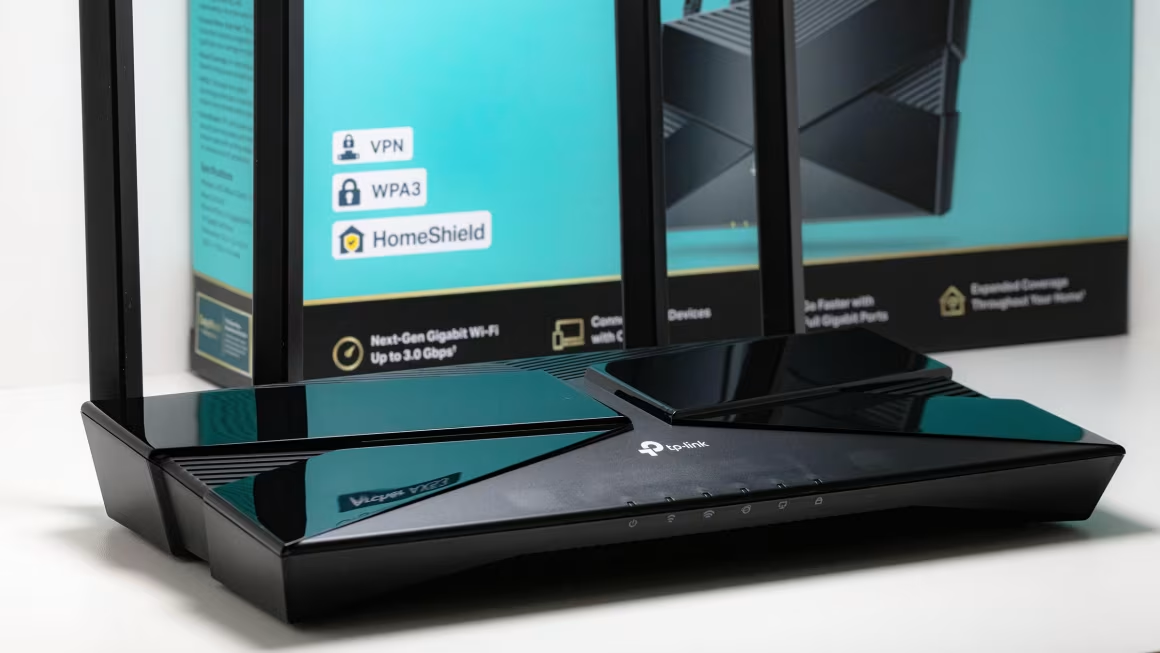


As tensions between the U.S. and China continue to grow in the digital and geopolitical arenas, a fresh investigation has emerged, highlighting concerns over national security. The U.S. government is currently examining the risks posed by a major Chinese-founded telecom equipment provider, TP-Link, whose low-cost routers are widely used across American households and institutions. While no accusations of wrongdoing have been made, the sheer scale of TP-Link’s market penetration has triggered a closer look into potential cybersecurity vulnerabilities, particularly in light of recent, high-profile cyber espionage campaigns allegedly orchestrated by China-backed hackers.


I. U.S. Probes Telecom Equipment Over Cybersecurity Concerns
1. TP-Link Routers Under U.S. Scrutiny
The U.S. Commerce Department has launched an early-stage investigation into TP-Link, a Chinese-founded company that has become a leading global manufacturer of internet routers. Despite establishing a U.S. headquarters in California and claiming adherence to American security standards, TP-Link faces skepticism from federal officials. Their primary concern is whether these routers, given their widespread adoption, could be exploited by China-based cyber operatives to infiltrate critical American infrastructure.

2. A Broader Push Against Chinese Tech Firms
This inquiry into TP-Link is part of a broader campaign by the U.S. government to reduce reliance on Chinese technology. A parallel investigation is already underway involving China Telecom’s U.S. subsidiary, with federal officials questioning the security implications of its continued presence in American telecommunications systems. The overarching objective is to strengthen the nation’s defenses against foreign espionage efforts, particularly those attributed to state-backed Chinese actors.
II. Rising Threats From State-Sponsored Cyber Operations
1. Persistent Intrusions Into U.S. Networks
Recent intelligence points to a prolonged and coordinated effort by Chinese hacking groups to penetrate U.S. telecom infrastructure. At least eight telecom providers have reportedly been compromised in a campaign that may have included the interception of phone calls and text messages from top American political figures, including former President Donald Trump and Vice President-elect JD Vance. While there is no direct evidence implicating TP-Link in these breaches, the incidents have spurred heightened awareness and swift governmental action.

2. Fallout from the Espionage Campaign
These cyber intrusions have had tangible consequences. Federal officials are now revising policies and proposing tighter cybersecurity regulations. The Federal Communications Commission (FCC), for instance, is considering new protocols to safeguard telecom networks. Senator Ron Wyden is also pushing legislation that would mandate independent security audits for telecom companies, marking a significant shift toward regulatory enforcement in an industry that has largely operated under voluntary compliance.
3. Efforts to Shield Communications
The impact of these hacking activities has forced major changes in operational behavior, particularly within Trump’s transition team. Staff members have been instructed to regularly change devices and rely more heavily on in-person meetings at secure locations like Mar-a-Lago to avoid potential surveillance. These defensive strategies reflect the serious nature of ongoing threats and the extent to which cybersecurity concerns now influence high-level political operations.
III. Cybersecurity Vulnerabilities in Telecom Infrastructure
1. Complexity of Telecom Systems
One of the challenges highlighted by officials is the intricate design of U.S. telecom infrastructure. The interconnected nature of software, hardware, and global supply chains makes it difficult to anticipate where threats might arise. While TP-Link’s routers are not explicitly linked to the current cyberattacks, the possibility of hidden vulnerabilities has fueled a sense of urgency to reevaluate the entire ecosystem.
2. Response From TP-Link and China
TP-Link has responded by emphasizing its compliance with U.S. industry standards and expressing a willingness to work with federal authorities. A spokesperson for the company affirmed that its American operations are independent of its Chinese roots. Meanwhile, Chinese officials have denounced the U.S. approach, accusing it of unfairly targeting Chinese businesses under the guise of national security.
3. Historical Context and Mutual Surveillance
It’s important to note that state-sponsored surveillance is not unique to China. Leaks from whistleblowers such as Edward Snowden revealed that U.S. intelligence agencies have previously exploited telecom systems to spy on foreign nations, including China. Still, the current wave of Chinese cyber activity appears to have reached new levels of scope and sophistication, prompting U.S. diplomats to confront their Chinese counterparts over what they see as disproportionate and excessive operations.
IV. The Future of Telecom Security in the U.S.
1. The Push for Mandatory Reforms
The current scenario marks a turning point in the U.S. approach to telecom security. Senator Wyden’s proposed legislation calls for more direct accountability, including signed compliance declarations from telecom executives. This marks a shift from voluntary best practices to mandatory measures aimed at fortifying the sector against sophisticated adversaries.
2. Industry’s Response to Government Pressure
Many telecom providers have expressed frustration over the government’s criticism, asserting that they have already invested significantly in cybersecurity measures. However, insiders acknowledge that the threat posed by skilled and well-resourced hackers may overwhelm even the most robust defenses. As a result, there is a growing consensus that more comprehensive and coordinated measures are needed to prevent future breaches.
3. The Path Forward
Experts stress that the U.S. cannot afford to maintain the status quo. As Marcus Sachs, former vice president of national security policy at Verizon, noted, prolonged undetected intrusions are the worst-case scenario. The longer adversaries remain hidden within networks, the more damage they can inflict. Moving forward, collaboration between government agencies and private sector firms will be essential to closing security gaps and restoring public trust in the safety of American communications.
Conclusion
The ongoing probe into TP-Link and other Chinese telecom entities reflects growing concerns over national security vulnerabilities within the U.S. communications sector. While no definitive wrongdoing has been uncovered, the potential for foreign exploitation of widely-used technology has pushed officials to take a more aggressive stance. As cyber threats become more advanced, the need for tighter regulation, transparency, and collaboration across all levels of the telecom industry is more pressing than ever. The future of secure communication in the U.S. depends on the ability to adapt to these emerging challenges with resilience and foresight.








