




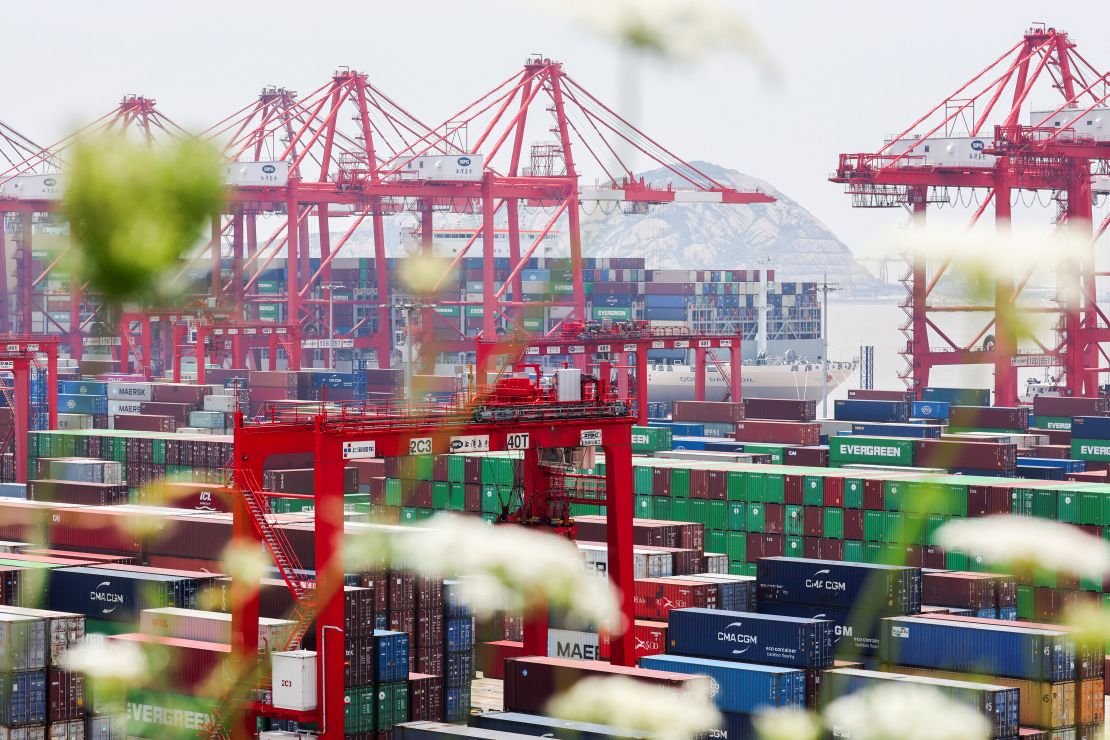


In the aftermath of the recent US-China trade negotiations in London, President Donald Trump has celebrated the outcome as a major win for America. However, closer analysis reveals that Chinese leadership may have emerged with a more advantageous position, signaling a shift in leverage in the long-standing economic rivalry. While the full text of the deal has not been made public, the agreement largely revives the terms of a truce originally brokered in May—one that had rapidly unraveled due to growing distrust. For Beijing, this latest round of talks marks a turning point, highlighting its ability to apply pressure where it matters most.

I. China’s Rising Confidence in Trade Negotiations
1. Beijing Recognizes Its Growing Bargaining Power
According to Liu Dongshu, a political expert at the City University of Hong Kong, China now sees itself holding more cards than expected. The recent talks have demonstrated that President Trump, often portrayed as unrelenting, can be swayed under pressure—an insight Beijing is likely to use in future negotiations.

2. U.S. Appears More Eager for Dialogue
While President Trump proclaimed the agreement online in capital letters and boasted about access to China’s rare earth minerals, China’s response was notably restrained. Chinese state media emphasized mutual respect and equality, with one CGTN host noting that “nations with 5,000 years of statecraft don’t fold to bullying.” This shift in tone reflects China’s belief that the United States initiated the talks and now seeks to preserve engagement more urgently than before.
II. The Framework Agreement: Details and Limitations
1. Return to the May Truce
The agreement reached in London serves more as a framework to revive the original May deal than a comprehensive reset of US-China economic relations. U.S. officials noted that the arrangement still requires approval from both President Trump and Chinese President Xi Jinping. Major sticking points—including the heavy tariffs on Chinese exports—remain unresolved, leaving much of the economic tension intact.

2. Rare Earth Minerals Take Center Stage
A key feature of the deal involves China accelerating the approval of rare earth mineral exports to the United States. These materials are critical for industries ranging from defense to consumer electronics. China’s move came in response to heightened US concern, especially after Beijing included seven rare earth elements in its dual-use export control list in April.
III. China’s Leverage: Rare Earths and Regulatory Power
1. Rare Earths as a Strategic Asset
China’s dominance in rare earth production has emerged as a powerful bargaining chip. The US was alarmed when rare earth exports plummeted earlier this year, disrupting multiple industries. After the London talks, US Commerce Secretary Howard Lutnick confirmed that China agreed to accelerate export licenses, and in return, the US would roll back punitive measures enacted during the shortage.
2. Export Controls as a Policy Tool
Experts believe the slowdown in exports may have been due to bureaucratic adjustments to China’s new licensing system. Regardless, the message was clear—China can wield control over key materials as a strategic weapon. According to Bert Hofman, a former World Bank official, China has now confirmed that it possesses real leverage and that the US is highly reactive when that leverage is used.
3. Expanding the Arsenal
Beijing is also ramping up its regulatory reach in other areas. This week, China added nitazenes—a class of synthetic opioids—and several other chemicals to its controlled substances list, a move likely aimed at addressing US criticism over fentanyl trafficking. Chinese academics, such as Yao Yang from Peking University, note that China is building its own toolkit of retaliatory measures, matching Washington’s longstanding use of export restrictions.
IV. The Unpredictable Role of President Trump
1. A Volatile Negotiator
Chinese policymakers are keenly aware of Trump’s erratic approach to foreign policy. The acronym “TACO”—Trump Always Chickens Out—has gained traction in Chinese political discourse, reflecting the perception that Trump’s tough rhetoric often gives way to sudden reversals. This pattern may embolden China to stand firm, especially if Trump continues to shift positions mid-negotiation.
2. A Favorable Diplomatic Optic
Beijing also sees an opportunity in the way Trump publicly elevates President Xi Jinping. Trump’s admiration for Xi—calling him “very tough” and “hard to make a deal with”—has not gone unnoticed in China. Yun Sun, director of the China Program at the Stimson Center, suggests that China views any summit or cooperative appearance with the US as an opportunity to showcase its global stature.
3. Optics Over Outcomes
While Trump declared the deal “done,” many key elements remain unsettled. The US continues to maintain tariffs on roughly 55% of Chinese imports, including new levies introduced earlier this year in response to fentanyl-related concerns. On the Chinese side, existing tariffs on US goods remain largely intact, despite Trump stating they would be capped at 10%.
V. What Comes Next for US-China Economic Relations
1. Broader Goals Still on the Table
Chinese officials are not treating the recent agreement as a final resolution. They continue to push for broader reforms covering market access, currency stabilization, and the reduction of high-tech export barriers. The addition of more chemical substances to China’s regulatory list could be interpreted as a goodwill gesture, signaling an openness to continued dialogue.
2. Negotiation Through Pressure
Beijing’s strategy remains clear: respond firmly to confrontation, but stay open to negotiation. According to Yao Yang, the ultimate goal is not conflict but a seat at the table. “If the US wants to fight, we will fight back; if they want to talk, we’re ready,” he stated, emphasizing China’s willingness to strike a larger, more comprehensive agreement under the right conditions.
Conclusion
While President Trump may have hailed the latest deal as a triumph for America, the real outcome suggests a more complex dynamic. China has quietly but effectively asserted its leverage, particularly through its control over rare earth exports. With a more confident posture and a better understanding of Washington’s vulnerabilities, Beijing is now in a stronger position to shape future negotiations. As both nations prepare for the next round of talks, the balance of power continues to evolve, with China playing a longer and increasingly strategic game.