




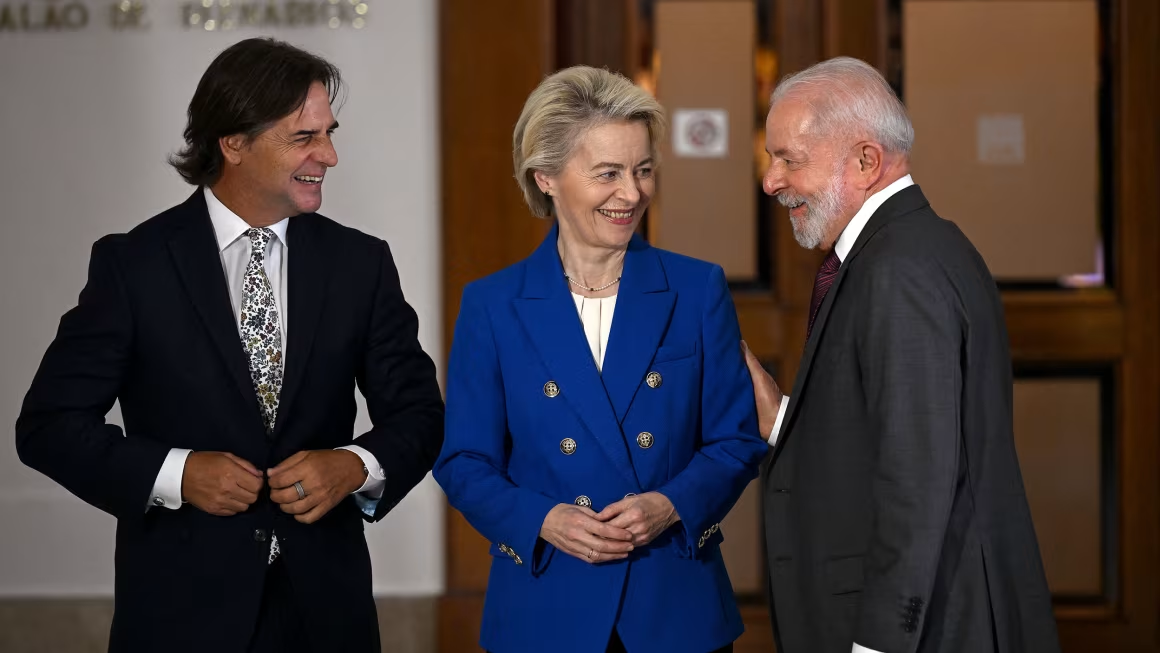


The European Union and the Mercosur bloc have reached a landmark free trade agreement after more than two decades of intermittent negotiations. While celebrated as a historic step toward economic integration, the deal remains controversial, particularly in France and other European nations with powerful agricultural sectors. If ratified, this agreement would create one of the world’s most extensive free trade zones, encompassing a market of over 780 million people—nearly 25% of global GDP.

I. The Significance of the EU-Mercosur Pact
1. A Deal 25 Years in the Making
Negotiations between the EU and Mercosur—comprising Brazil, Argentina, Uruguay, Paraguay, and recently Bolivia—have spanned 25 years. The recent breakthrough follows years of failed talks due to conflicting economic policies, trade priorities, and political shifts. The initial discussions began during a 1999 summit in Rio de Janeiro but repeatedly stalled amid disagreements over tariffs and sustainability standards.

2. Potential Economic Gains
Proponents of the agreement argue it could save approximately $4.26 billion annually in trade duties for businesses. The deal aims to remove tariffs on a broad range of goods such as Brazilian citrus fruits, Argentine beef, German automobiles, and Italian wines. The agreement also promises simplified customs procedures and better market access, positioning it as a counterweight to rising global protectionism.
II. Political Resistance and Environmental Concerns
1. French Opposition and Agricultural Fears
French President Emmanuel Macron remains a vocal critic of the deal, citing insufficient protections for European farmers and inadequate commitments to sustainability. The French government, under pressure from its agricultural lobby, insists on stronger safeguards and has not ruled out vetoing the agreement. France has rallied Austria, the Netherlands, Poland, Belgium, and Italy to scrutinize the deal, potentially blocking its ratification if they gather enough collective opposition.

2. Environmental Standards Under Scrutiny
Past concerns about environmental degradation—particularly deforestation in the Amazon under former Brazilian President Jair Bolsonaro—delayed the deal’s implementation. Critics argue that South American producers are not subject to the same animal welfare and pesticide regulations as their European counterparts, risking unfair competition and ecological harm.
III. Political Momentum and Strategic Shifts
1. A Turning Point in Brazil and Argentina
Political changes in Brazil and Argentina have revived enthusiasm for the pact. Brazilian President Luiz Inacio Lula da Silva’s pledges to reduce illegal logging reassured EU leaders of a more environmentally conscious administration. In Argentina, President Javier Milei has advocated for opening the country’s economy, aligning with the EU’s liberal trade vision.
2. EU’s Strategic Response to Protectionism
European Commission President Ursula von der Leyen welcomed the deal as a necessary step against the rising tide of global economic isolation. She emphasized that the agreement would benefit approximately 60,000 European businesses by lowering tariffs, easing access to raw materials, and reducing dependency on China.
Von der Leyen also sought to address farmers’ concerns, stating that Brussels has acknowledged and is responding to their fears. She reassured stakeholders that stricter sustainability requirements would be enforced as part of the agreement’s final provisions.
IV. Next Steps and Ratification Challenges
1. Legislative Hurdles Ahead
Although the agreement has been signed, it still awaits ratification by the European Parliament and approval from all EU member states. In France, the Macron administration has clarified that the deal, as it stands, is not yet acceptable. Germany, while cautiously optimistic, only ratified a similar EU trade deal with Canada in 2022—six years after it was signed.
2. Skepticism Rooted in Past Experience
Experts remain cautious. Brian Winter of the Council of the Americas warned that similar agreements, like the EU-Canada CETA pact, faced prolonged delays due to domestic political opposition. The French Senate, for instance, rejected CETA earlier this year, highlighting the unpredictable nature of trade ratification processes within the EU.
V. Economic Prospects and Global Reactions
1. Opportunities for Mercosur Nations
Mercosur leaders have hailed the agreement as a win for their economies. Brazil expects a $7 billion boost in exports to Europe, while Argentina sees the accord as a chance to expand its beef and agricultural sales. President Lula described the text as “balanced and modern,” highlighting its provisions for sustainable trade and investment growth.
Argentina’s Milei called the deal consistent with his libertarian economic ideals and a major step toward revitalizing the country’s trade potential.
2. Support from European Economies
German Chancellor Olaf Scholz noted that the deal removes a significant obstacle and could greatly benefit German automotive exports. Spanish Prime Minister Pedro Sánchez referred to it as “an unprecedented economic bridge,” underscoring its potential to deepen transatlantic economic cooperation.
European officials say the agreement represents the first comprehensive trade pact for Mercosur, which until now had only secured deals with countries such as Egypt, Israel, and Singapore.
Conclusion
The EU-Mercosur trade agreement represents a monumental achievement in global economic diplomacy, signaling a shared commitment to economic integration despite protectionist headwinds. While it offers enormous opportunities for trade and investment, its final implementation faces political hurdles, particularly in Europe. Environmental concerns and domestic opposition in key EU states may slow down or reshape the deal’s eventual ratification. Nonetheless, the agreement marks a turning point in global trade relations and could serve as a blueprint for future international economic cooperation.