




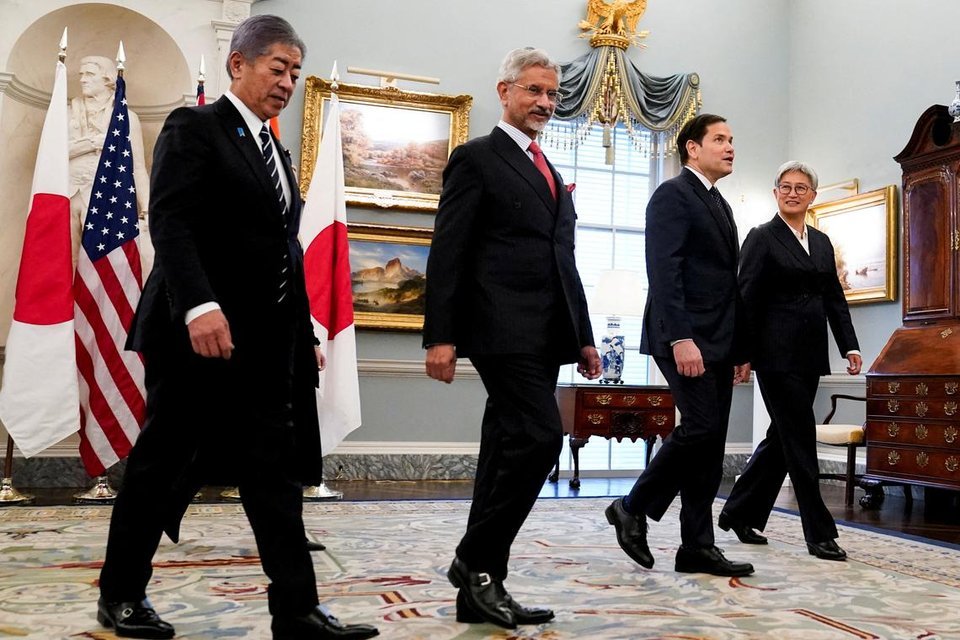


On July 1, US Secretary of State Marco Rubio convened his counterparts from Australia, India, and Japan in an effort to revitalize the Quad alliance and reaffirm their shared strategic interests in the Indo-Pacific. The meeting aims to counterbalance China’s growing influence while navigating growing bilateral challenges that have emerged under President Donald Trump’s second term, including tariff disputes and defense spending disagreements.


I. Diplomatic Goals Amid Friction
1. The Quad’s Unified Focus on China
Despite ongoing disagreements, the Quad countries maintain a common concern over China’s increasing assertiveness in the region. The gathering underscores their intent to promote a “free and open Indo-Pacific,” a theme reiterated by State Department spokesperson Tammy Bruce.

2. Strains from Trump-Era Policies
While unity is the goal, unresolved tensions remain. All Quad members have been impacted by Trump’s aggressive trade strategies. Additionally, disagreements over defense contributions and political overtures have added complexity to the alliance.
II. Individual Member Perspectives
1. Japan: Frustrations Over Defense Demands
Japan, a key regional ally, postponed a planned ministerial meeting with US defense officials, reportedly due to US pressure to increase defense spending beyond previously agreed levels. Concerns have also been raised regarding the lack of deliverables from recent US-Japan leadership engagements.
2. Australia: Aukus Uncertainty and Strategic Priorities
Australia is navigating uncertainty related to the Aukus nuclear submarine program, following a review initiated by Pentagon official Elbridge Colby. Former ambassador Arthur Sinodinos highlighted Australia’s interest in understanding the future of Aukus and potential new trade arrangements.
3. India: Diplomatic Sensitivities and Strategic Alignment
India has expressed reservations about Trump’s narrative around preventing conflict in Kashmir, a claim made without consultation with New Delhi. Despite this, Indian Foreign Minister Subrahmanyam Jaishankar emphasized that resilient diplomatic ties depend on the ability to manage differences constructively.
III. Broader Objectives of the Ministerial
1. Reinforcing Security and Maritime Cooperation
The Quad reaffirmed its commitment to regional sovereignty and enhanced maritime security. This includes bolstering naval partnerships and infrastructure to deter aggressive moves in contested waters.
2. Building Supply Chain Resilience
Another priority is establishing robust and diverse supply chains to reduce dependence on any single country, particularly in critical sectors such as semiconductors and medical supplies.
3. Enhancing Technology and Education Collaboration
The ministers also explored greater cooperation in advanced technologies, pandemic preparedness, and educational exchanges, identifying them as key areas for sustainable Indo-Pacific development.
IV. Looking Ahead
1. Preparations for the 2025 Summit in India
The July 1 meeting set the stage for a larger leaders’ summit to be held in India later in 2025. Quad officials have committed to meeting regularly in the lead-up, with the goal of ensuring cohesive strategic planning.
2. Concerns About Momentum and Engagement
Experts warn that bilateral issues could overshadow the Quad’s collective goals. Nicholas Szechenyi from CSIS noted that despite proclamations of a “golden age” in US-Japan relations, tangible progress has stalled.
3. Staffing Gaps in US Diplomacy
The US has yet to fill several critical diplomatic positions, including ambassadors and senior defense officials. Richard Rossow of CSIS highlighted that this undermines the effectiveness of day-to-day cooperation with India and other partners.
Conclusion
The July 1 Quad ministerial in Washington served as both a reaffirmation of shared interests and a reminder of the diplomatic hurdles that lie ahead. While China remains a common concern, internal disagreements and policy missteps could limit the alliance’s strategic impact. Nevertheless, continued dialogue and preparation for the upcoming 2025 summit may provide an opportunity to solidify long-term collaboration in the Indo-Pacific.