




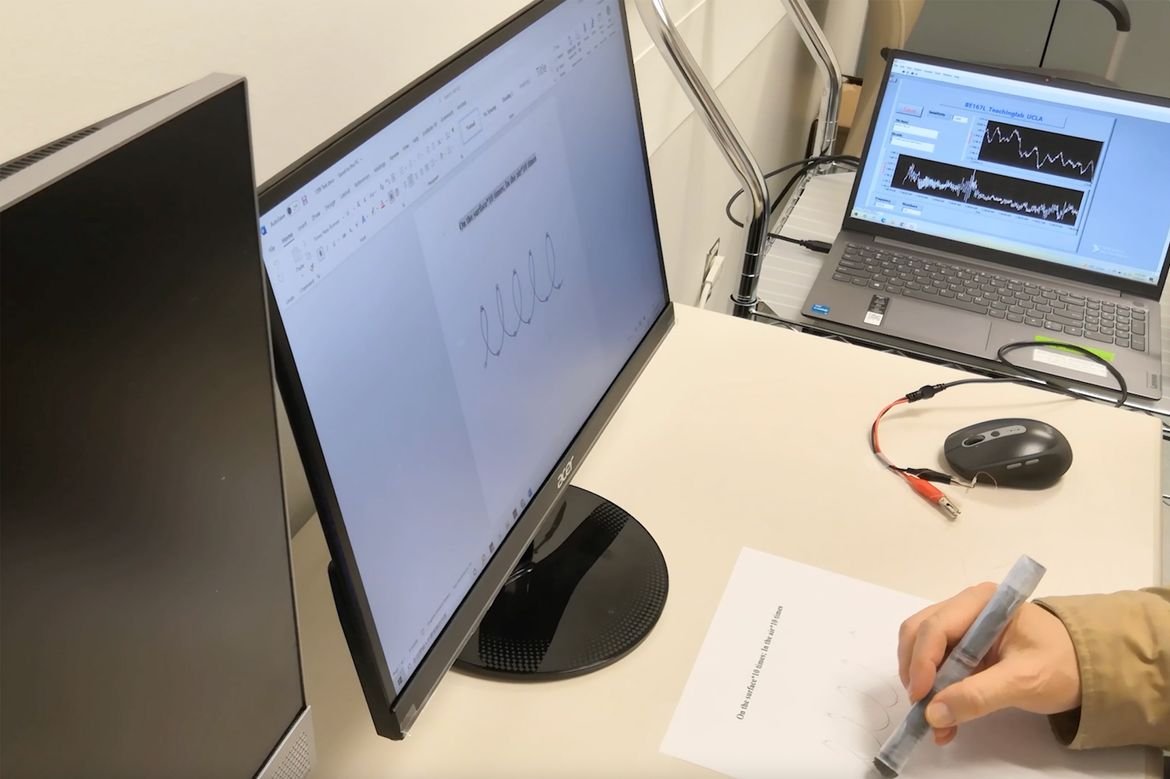


A groundbreaking study suggests that a 3D-printed pen infused with magnetic ink might become a powerful, low-cost tool for identifying Parkinson’s disease in its early stages. While the pen isn’t designed for jotting down notes, its ability to detect subtle motion changes during handwriting could revolutionize how this neurodegenerative disorder is diagnosed—especially in low-resource settings. With Parkinson’s affecting over 10 million people worldwide, innovations that support earlier and more accessible diagnosis are urgently needed.


I. Rethinking Diagnosis: The Need for New Tools
1. The Challenges of Current Diagnostic Methods
Traditional methods for diagnosing Parkinson’s typically rely on observing motor symptoms such as tremors, muscle stiffness, and slowed movements. However, these signs often appear after the disease has already progressed, and assessments can be subjective and inconsistent. Meanwhile, tests based on biological markers, such as cerebrospinal fluid analysis, require invasive procedures and access to expensive equipment, limiting their use in many parts of the world.

2. A Simple Tool with High Potential
Researchers at the University of California, Los Angeles (UCLA) have taken a novel approach to this problem by developing a low-cost pen equipped with magnetic sensors. Designed to be paired with a smartphone app for data analysis, the pen records hand movements and converts them into electrical signals that may reveal early symptoms of Parkinson’s. According to Professor Jun Chen, co-author of the study, the pen could be especially valuable in low-income countries due to its affordability and ease of use.
II. How the Pen Works: Science Behind the Innovation
1. Engineering a Pen That Captures Movement
The innovative device is constructed with a soft silicone tip embedded with magnetic particles. When filled with specially-formulated magnetic ink, the tip magnetizes the ink during writing. As the pen moves across a surface—or even through the air—its magnetic properties shift, producing small voltages in a built-in metal coil. These voltages generate electrical signals that capture fine motor control data, including tremors and inconsistencies typical in individuals with Parkinson’s.
2. Machine Learning Enhances Diagnostic Accuracy
To assess the pen’s effectiveness, researchers conducted a pilot study involving 16 participants, including three diagnosed with Parkinson’s. The participants were asked to draw spirals, waves, and write text both on paper and in the air. The generated electrical signals were then processed using various machine learning models. One of the models, after training, was able to distinguish Parkinson’s patients from healthy individuals with an impressive average accuracy of 96.22%.
III. Reactions from the Medical and Research Communities
1. Support from Neurology Experts
Dr. Chrystalina Antoniades, an associate professor of clinical neuroscience at the University of Oxford who was not involved in the research, found the results intriguing. She noted that smaller handwriting is often a visible sign in Parkinson’s patients, though it typically appears after other symptoms emerge. Antoniades emphasized that while the pen offers a unique and promising approach, it should be viewed as a complementary tool rather than a standalone diagnostic method.
2. Caution Around Early Findings
Becky Jones, research communications manager at Parkinson’s UK, also welcomed the innovation but highlighted the study’s limitations due to its small sample size. She stressed the importance of larger and more diverse clinical trials to validate the pen’s accuracy and real-world applicability. Nevertheless, Jones acknowledged that handwriting changes could serve as an early indicator and that this pen could pave the way for earlier and more precise diagnosis.
3. The Case for Multiple Diagnostic Tools
Both Antoniades and Jones agreed on one point: Parkinson’s is a complex condition, and no single biomarker can capture its full scope. Handwriting analysis may detect one type of symptom, but combining this approach with other diagnostic strategies could significantly improve outcomes. The pen, therefore, may become part of a broader toolkit for clinicians aiming to diagnose Parkinson’s at its earliest—and most treatable—stage.
IV. Future Applications and Broader Impacts
1. A Breakthrough for Low-Income Regions
One of the most notable aspects of the new pen is its potential to make advanced neurological screening available in parts of the world with limited healthcare infrastructure. Unlike traditional diagnostic tools that require hospital visits, the pen’s low cost and smartphone compatibility make it feasible for remote or underserved communities to benefit from early detection.
2. Expanding the Use of Wearable and Portable AI Tools
The development also reflects a broader trend in healthcare innovation: integrating AI with wearable or handheld devices to monitor and diagnose medical conditions in real time. As AI continues to evolve, tools like this magnetic pen may soon become standard in telemedicine kits, routine checkups, or even home use for people at risk of neurological disorders.
3. Next Steps in Research
The researchers at UCLA emphasized the need for further study. Future phases will likely involve larger cohorts, longer observation periods, and exploration of how the pen performs across different age groups, hand dominance, and stages of Parkinson’s. These studies will help determine how soon the pen could be rolled out in clinical settings or public health programs.
Conclusion
The development of a 3D-printed pen with magnetic ink offers an exciting glimpse into the future of non-invasive, accessible healthcare diagnostics. While the current findings are based on a small pilot study, the results show strong potential for identifying Parkinson’s disease through simple handwriting tasks. As more comprehensive research is conducted, this innovative tool could become a vital part of early intervention strategies—particularly in communities where traditional medical resources are scarce. In the quest for better, faster, and fairer diagnostics, the pen may indeed prove mightier than the scan.