




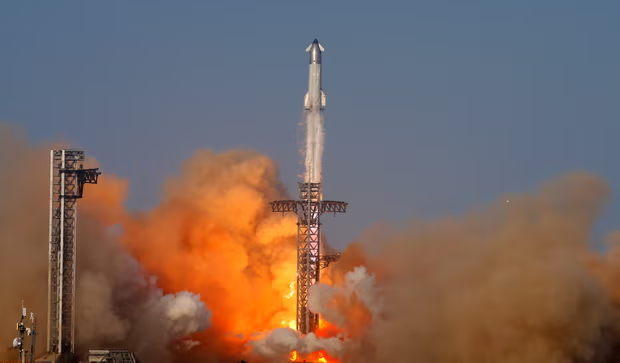


Mexico’s president, Claudia Sheinbaum, has raised concerns about environmental contamination caused by debris from SpaceX rocket launches in the United States near the Mexican border. The Mexican government is investigating possible violations of international laws to pursue legal measures aimed at protecting the environment and public safety.


I. Rising Tensions Over SpaceX Rocket Launches
1. SpaceX Starship Explosion and Its Aftermath
Last week, a SpaceX Starship rocket detonated during a ground test at the company’s Starbase facility in southern Texas, close to the Mexico–U.S. border. The blast created a massive fireball and sparked worries about environmental damage spilling over into neighboring Mexican territories. The explosion represents another setback for Elon Musk’s ambitious Mars colonization plans, intensifying scrutiny over SpaceX’s operations near the border.
2. Mexico’s Environmental Concerns and Response
President Sheinbaum disclosed that Mexico is conducting a thorough evaluation of the environmental consequences of these rocket launches, particularly for Tamaulipas, the Mexican state adjacent to the launch site. The government suspects that falling debris and pollution from the launches are causing cross-border contamination, prompting calls for accountability and possible litigation under international environmental agreements.
II. Regulatory and Legal Dimensions
1. FAA Approval and Environmental Debates
Earlier this year, the U.S. Federal Aviation Administration (FAA) approved increasing Starship rocket launches from five to twenty-five annually. The FAA concluded that this escalation would not significantly harm the environment, despite protests from conservation groups concerned about local wildlife, including sea turtles and shorebirds. These groups had warned that the higher frequency of launches could threaten vulnerable species along the Gulf Coast.

2. Potential International Legal Action
President Sheinbaum indicated that Mexican authorities are reviewing which international laws might have been violated by SpaceX’s activities. The government is prepared to file lawsuits to address the contamination issues, signaling a readiness to escalate the dispute through diplomatic and judicial channels. This would mark a significant step in holding U.S.-based private companies accountable for environmental impacts affecting neighboring countries.
III. Broader Context of Mexico–U.S. Corporate Disputes
1. Previous Legal Clashes with U.S. Firms
This emerging legal conflict with SpaceX adds to Mexico’s growing list of disputes with American corporations. In May, Mexico filed a lawsuit against Google for altering the name of the Gulf of Mexico to the “Gulf of America” on Google Maps for U.S. users, a change that Mexico’s government claimed was politically motivated following a Trump administration executive order.
2. Implications for Cross-Border Relations
The SpaceX controversy highlights the challenges of managing environmental and regulatory issues in border regions, where industrial activities in one country can directly affect the other. Mexico’s firm stance on protecting its environment reflects broader concerns about cross-border pollution, corporate responsibility, and national sovereignty.
Conclusion
As SpaceX prepares for more frequent rocket launches along the U.S.–Mexico border, Mexico’s government is actively scrutinizing the environmental repercussions and exploring legal avenues to address contamination caused by rocket debris. The dispute underscores the complexities of space exploration activities near international borders and raises important questions about environmental protection, bilateral cooperation, and the accountability of private aerospace ventures.