




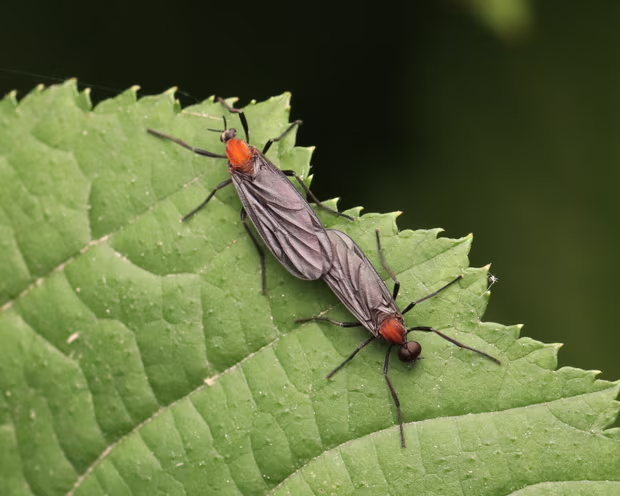


Residents across Seoul are currently contending with an overwhelming influx of insects nicknamed “lovebugs,” which have spread widely across hiking trails and urban zones. These insects, known scientifically as Plecia longiforceps, have become an unexpected nuisance this summer, drawing widespread attention online and prompting concerns from the public and environmental authorities. Experts believe the ongoing climate crisis, combined with urban development and rising temperatures, is accelerating the migration of these insects into more temperate regions like Seoul.


I. A New Pest in the Capital
1. Lovebugs Blanket Hiking Trails
Videos widely circulated on social media have shown once-popular outdoor spaces transformed by the insects’ presence. One notable example includes Gyeyangsan Mountain in Incheon, west of the capital, where hiking paths and viewing decks appear almost entirely covered in swarms of the bugs. Their sudden proliferation has alarmed both city residents and officials, sparking an urgent need to address the growing infestation.

2. Mating Habits That Gave Them a Name
The nickname “lovebugs” comes from their peculiar mating behavior: the insects are frequently seen flying while joined together in copulation. Males typically die after three to four days, while females survive about a week, during which they lay hundreds of eggs in moist soil before also dying. Though short-lived, their sheer numbers make their presence hard to ignore.
II. The Science Behind the Spread
1. Originating in Subtropical Asia
Plecia longiforceps are native to warmer regions of Asia, including southeastern China, Taiwan, and the Ryukyu Islands of Japan. They were first formally documented in South Korea during a large outbreak in 2022. Their recent northward migration has surprised many scientists, but climate data suggests the movement is part of a larger pattern influenced by warming trends.

2. Climate Crisis Accelerates Insect Expansion
Environmental researchers have pointed to climate change as a major driver of the insects’ spread. Rising temperatures in South Korea, especially in urban environments like Seoul, have created favorable conditions for their survival and reproduction. The “urban heat island” effect, where cities are significantly warmer than surrounding rural areas, appears to be amplifying this trend.
III. Public Response and Government Warnings
1. Surge in Complaints and Frustration
The number of public complaints filed about the lovebugs has increased dramatically. In 2023, Seoul authorities received 4,418 reports related to the insects. That number more than doubled to 9,296 last year. In Incheon alone, over 100 complaints were lodged in a single day this year, reflecting widespread public irritation and concern.
2. Officials Urge Caution with Pesticides
Despite the public outcry, Seoul’s environmental authorities have urged residents not to panic or resort to excessive pesticide use. In official statements, they have acknowledged the insects’ unsettling appearance but emphasized their ecological value. Lovebugs contribute positively to the environment by pollinating flowers and breaking down organic matter through their larvae, which enrich the soil.
IV. Managing the Infestation Without Harming Ecosystems
1. Recommended Control Measures
To limit the nuisance without damaging local ecosystems, authorities have issued specific guidelines. These include washing surfaces with water to remove bugs, using light traps and sticky pads near outdoor lighting, and wearing darker clothing when outside, since the insects are drawn to bright lights and colors.
2. Avoiding Chemical Sprays
Experts warn that widespread pesticide use could harm beneficial organisms and even pose health risks to humans. Spraying toxic chemicals in public areas may offer short-term relief but could disrupt urban biodiversity and impact pollinators, including bees and butterflies.
V. Shifting Perceptions and Natural Control
1. Public Still Views Lovebugs as Pests
A recent survey conducted by the Seoul Institute revealed that 86% of city residents consider lovebugs to be a public nuisance. Despite expert reassurances about their harmless nature, they now rank as the third most disliked insect in the city, trailing only cockroaches and bedbugs. This perception complicates public messaging around tolerance and ecological balance.
2. Nature Steps In
Interestingly, local bird populations have started to help reduce the number of lovebugs naturally. Birds such as magpies and sparrows have begun feeding on the insects, contributing to a noticeable decline in some heavily affected areas. This suggests that natural predators may play a growing role in managing future outbreaks.
3. Development of Eco-Friendly Solutions
In response to the infestation, government-backed researchers are also exploring biological methods of control. One promising avenue involves developing fungal pesticides designed to target lovebug larvae specifically, thereby minimizing any broader ecological impact. These efforts are still in the experimental phase but represent a sustainable long-term strategy.
VI. Lovebugs’ Lifecycle and Outlook
1. Brief but Intense Seasonal Presence
Although their sudden appearance has startled many, the bugs have a limited adult lifespan. After emerging in large numbers, they typically disappear within two weeks. Most outbreaks subside by mid-July as adult populations decline sharply following their brief mating period.
2. Preparing for the Future
Given the likelihood of recurring infestations due to shifting climate patterns, city planners and residents may need to adapt. That could mean enhancing green infrastructure, improving soil moisture management, or increasing awareness of how to coexist with insects that, while inconvenient, play a beneficial role in the urban ecosystem.
Conclusion
The ongoing invasion of lovebugs across Seoul is more than just a seasonal nuisance—it is a visible sign of how climate change is reshaping ecosystems, even in major urban centers. While the insects do not pose any direct threat to humans, their overwhelming numbers have tested public patience and city management systems. As scientists and officials seek environmentally friendly ways to control future outbreaks, the situation also calls for greater public awareness of nature’s delicate balance. With natural predators beginning to step in and new solutions under development, Seoul may yet find harmony between its urban lifestyle and its increasingly diverse insect population.