




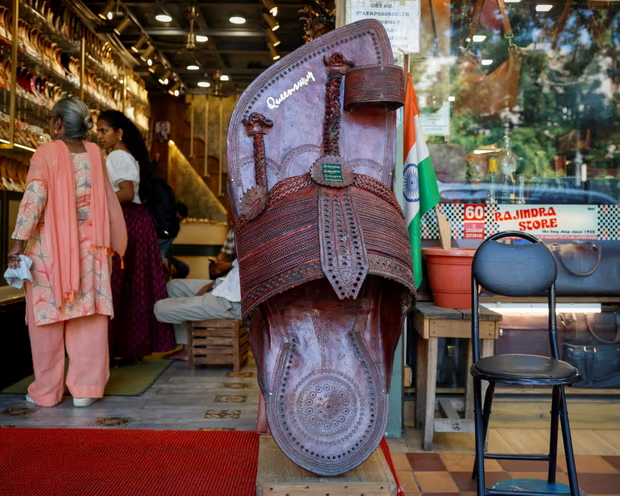


Italian luxury brand Prada has acknowledged that a new leather sandal showcased during its recent fashion show was inspired by India’s traditional Kolhapuri sandals—a handcrafted footwear known for its distinct toe-loop and heritage dating back centuries. The admission followed criticism from Indian artisans and industry advocates who accused the fashion house of failing to credit the design’s cultural roots. This controversy has reignited discussions around cultural appropriation in the fashion world, while unexpectedly boosting global interest in the iconic Indian footwear.


I. Acknowledging Indian Influence
1. Prada Responds to Criticism
Following a backlash from Indian artisans and industry bodies, Prada admitted that its leather sandal design drew inspiration from the traditional Kolhapuri chappal. In a letter addressed to the Maharashtra Chamber of Commerce, Lorenzo Bertelli, the head of corporate social responsibility at Prada, stated, “We acknowledge the sandals … are inspired by traditional Indian handcrafted footwear, with a centuries-old heritage.”

2. Kolhapuri Craftsmanship Goes Uncredited
The Maharashtra Chamber of Commerce, which represents thousands of artisans in India’s western state of Maharashtra, had criticized Prada for showcasing the sandals at its Milan runway show without acknowledging their origins. The models wore open-toe footwear that closely resembled the Kolhapuri design, yet they were simply labeled as “leather flat sandals.” The omission of credit to the original Indian artisans was viewed as cultural erasure by many in India.
II. The Heritage and Value of Kolhapuri Sandals
1. Centuries of Craftsmanship
Kolhapuri sandals are believed to have originated in the 12th century in Kolhapur, a city in Maharashtra. Traditionally made from buffalo hide, these sandals are renowned for their durability, unique braided T-strap, and cultural significance. They are worn by a broad demographic in India—from rural farmers to urban millennials and business professionals.

2. Geographical Indication Status
In 2019, the Indian government granted Kolhapuri sandals a Geographical Indication (GI) tag, legally recognizing their regional and historical significance. The GI status not only certifies the origin of the sandals but also protects the traditional knowledge and skills passed down through generations of artisans.
III. Cultural Appropriation and Global Fashion
1. From Craft to Couture
The controversy centers on the broader pattern of global fashion brands rebranding traditional, often affordable, cultural artifacts as luxury items without proper acknowledgment or benefit to the communities of origin. While authentic Kolhapuris retail in India for about $12 (£8.75), Prada’s version reportedly costs over $800. This stark disparity has fueled accusations that while Indian artisans labor in obscurity, multinational brands profit from their heritage.
2. A Call for Compensation and Collaboration
Lalit Gandhi, president of the Maharashtra Chamber of Commerce, urged Prada to explore collaboration or fair compensation that could directly benefit Indian craftsmen. Bertelli responded by stating that the sandals were still in early design development and expressed interest in initiating “a dialogue for meaningful exchange with local Indian artisans.”
IV. The Business and Cultural Impact
1. Economic Challenges for Indian Artisans
Dhanendra Kumar, a former World Bank executive, noted in the Economic Times that Indian artisans, despite their exceptional skill, often lack the capital and business infrastructure needed to position their products on the global luxury stage. He also criticized Prada’s decision to avoid labeling their sandals as “Kolhapuris,” suggesting it amounted to commodifying another culture without proper representation or benefit.
2. Possible Positive Outcomes
Despite the criticism, some industry insiders believe the controversy may inadvertently benefit the Kolhapuri sandal industry. Sales of the sandals had plateaued in recent years, but the global attention sparked by Prada’s runway may renew interest, particularly among young and style-conscious consumers. Shirin Mann, founder of the Indian footwear brand Needledust, remarked, “Until now, Kolhapuris weren’t considered aspirational in India’s luxury fashion space… I believe what Prada has done could have a ripple effect.”
V. Resurgence in Domestic and Global Demand
1. Rising Searches and Sales
Following the media coverage of Prada’s collection, Google Trends recorded a noticeable uptick in searches for Kolhapuri sandals. Local retailers in India also reported a sudden increase in interest and sales. The controversy has arguably elevated the sandals’ profile, repositioning them as a fashion-forward choice with rich cultural roots.
2. Reclaiming Heritage Through Modern Design
Designers like Mann have long worked to modernize traditional Indian footwear for contemporary tastes. With renewed attention on the Kolhapuri, there may be greater demand for updated interpretations that blend heritage craftsmanship with modern style. This could open up new markets and opportunities for India’s artisanal sector—if the artisans are included in the process.
Conclusion
Prada’s acknowledgment of Indian inspiration in its latest sandal design has reignited the conversation around cultural appropriation in the luxury fashion industry. While the brand has expressed willingness to engage in a dialogue with Indian artisans, the controversy highlights persistent imbalances in credit, compensation, and access to global markets. At the same time, the incident may serve as an unexpected catalyst for the revival of interest in Kolhapuri sandals both within India and abroad. For Indian craftspeople, this renewed spotlight could represent not just a challenge, but an opportunity—if their contributions are finally recognized and valued on the world stage.