




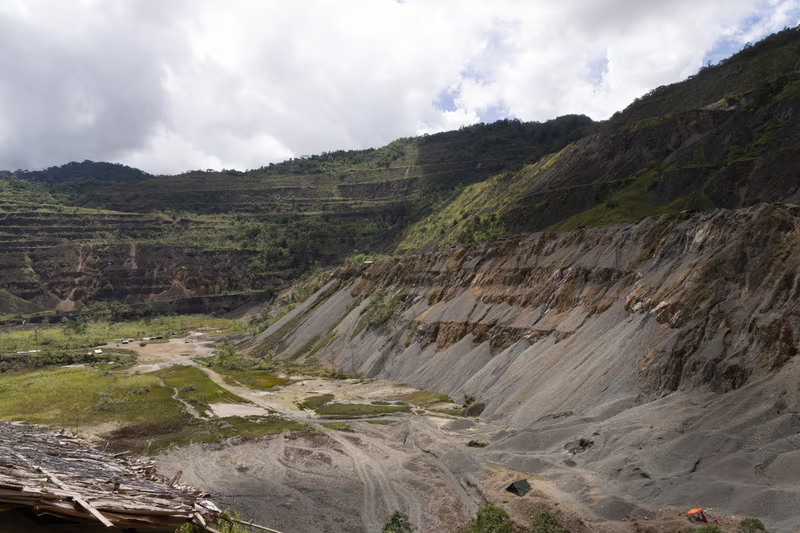
Seated among the ruins of what was once Panguna village, former rebel soldier Noah Doko gently traces a long-healed scar on his forearm. These hills in Bougainville once echoed with the sounds of conflict, where Doko and his fellow fighters resisted the very system they now face once more. Having survived a bullet wound inflicted by the Papua New Guinea Defence Force—his own countrymen—Doko has since traded arms for public office, now serving as a parliamentary representative for veterans. Yet, the irony of the moment is impossible to miss: Doko finds himself advocating for the reopening of the very mine that sparked the bloody conflict he once fought in.


I. Panguna’s Painful Legacy and Promise
1. The Wound That Never Healed
The Panguna mine, left abandoned for over thirty years after its closure by multinational mining company Rio Tinto, still looms large over Bougainville—both literally and symbolically. The mine, which had been central to the island’s descent into civil war, remains an unremediated environmental disaster. Twisted steel structures rot under the sun while nearby, children and their families scrape through the dirt by hand, searching for remnants of precious metals to sustain themselves.

2. A Source of Hope in the Wreckage
Despite its painful past, Panguna now represents something more than just trauma. It embodies potential. For many Bougainvilleans, the mine has transformed into a symbol of future independence and prosperity. “That mine should be reopened,” Doko asserts, gazing into the crater. For him and others, it is the foundation upon which an independent Bougainville could build its economy and secure its sovereignty.
II. The Drive Toward Independence
1. A Fixed Date, A Clear Goal
Bougainville’s quest for nationhood has reached its final stretch. “We are now at the final hurdle,” declared Ishmael Toroama, the president of Bougainville and a former commander in the Bougainville Revolutionary Army. Toroama has formally proposed 1 September 2027 as the date the region should gain full independence from Papua New Guinea. The target is not just symbolic; it represents decades of resistance, negotiation, and a growing belief in self-determination.
2. From Warrior to Statesman
Toroama’s transformation is a reflection of Bougainville’s evolving identity. Once celebrated for his skill in guerrilla warfare—armed with little more than a bow and arrow—he now travels globally, acting as a peaceful envoy for his people’s aspirations. Though more familiar in combat gear than a business suit, Toroama has committed his presidency to diplomatic engagement and international advocacy, striving to secure a peaceful, recognized path to independence.
III. Bougainville’s Strategic Dilemma and Global Attention
1. Superpowers Eye the Island
As Bougainville inches closer to sovereignty, global powers are beginning to take notice. The island’s vast untapped resources, particularly in the Panguna mine, make it a geostrategic gem. Doko, however, remains unmoved by the attention. He stresses that any foreign interest must align with Bougainville’s self-reliance. “Our independence should be built on our own wealth and resources,” he says, emphasizing economic autonomy over external dependency.
2. A Nation Shaped by Sacrifice
The Bougainville civil war left deep scars—both environmental and human. But the struggle also shaped a fiercely proud population, determined never to allow history to repeat itself. For veterans like Doko, the goal has always been more than territorial freedom; it’s about securing a dignified life for future generations. “When I’m gone,” he says with resolve, “I want to know that my children, and their children, will live in freedom and prosperity.”
IV. The Mine That Divides and Unites
1. History of Exploitation
Panguna’s past is fraught with exploitation. The mine, once operated by Rio Tinto, not only devastated the environment but also incited social and political unrest that escalated into a brutal civil war in the late 1980s. The destruction was total—entire villages were leveled, rivers were contaminated, and community trust was shattered.
2. A New Vision for Panguna
Today, many believe Panguna could be reopened under new terms—by Bougainvilleans, for Bougainvilleans. Rather than serve foreign corporations, the mine could become a national asset to support schools, hospitals, infrastructure, and public welfare. Reimagining Panguna as a tool for collective benefit has become central to Bougainville’s independence narrative.
V. Rebuilding the Nation Brick by Brick
1. Restoring Trust Through Leadership
As Bougainville’s leaders work to restore international confidence and internal unity, they face the enormous task of healing historical wounds. Toroama’s diplomatic approach is critical to ensuring that Bougainville’s second birth as a nation is peaceful, inclusive, and recognized by the global community.
2. Preparing for Sovereignty
Reopening Panguna is just one component of nation-building. Bougainville must also develop governmental institutions, education systems, and healthcare infrastructure. With limited international aid and deep-seated memories of colonial exploitation, the island’s leaders are navigating a complex web of diplomacy, development, and legacy management.
Conclusion
Bougainville’s journey from colonized territory to war-torn island, and now to a nation on the brink of independence, reflects a resilience forged in adversity. At the heart of this journey lies the paradox of Panguna—a once-hated mine now seen as a beacon of self-sufficiency and freedom. For veterans like Noah Doko and leaders like Ishmael Toroama, the vision of a sovereign Bougainville is no longer a distant dream. It is a future being carefully shaped by the past, powered by the land, and demanded by a people unwilling to surrender their right to self-rule.