





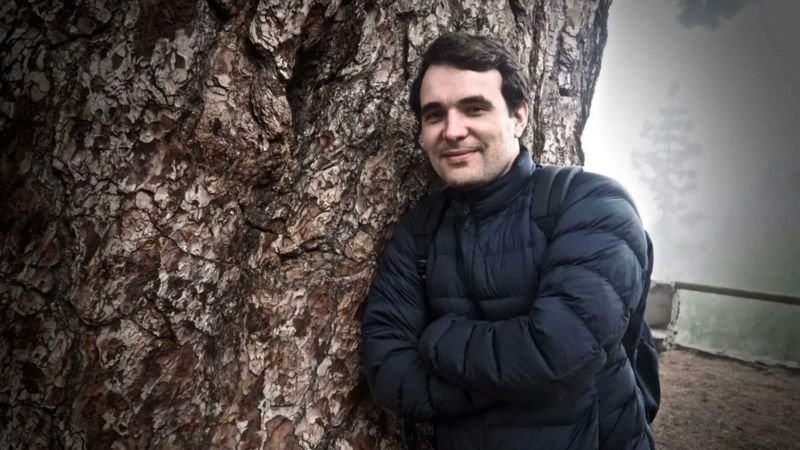


French journalist Christophe Gleizes has become the center of a growing international controversy after being sentenced to seven years in prison by an Algerian court. Gleizes, a football writer for France’s So Foot magazine, was found guilty of “supporting terrorism” due to his communication with a pro-Kabyle self-determination advocate. Press unions, human rights defenders, and his family have condemned the sentence, arguing it criminalizes journalistic work and violates press freedom. The case has further strained already delicate relations between France and Algeria.

I. Background of the Case
1. Detention and Trial
Christophe Gleizes, aged 36, traveled to Algeria in May 2024 to report on the storied football club JSK (Jeunesse Sportive de Kabylie), based in Tizi Ouzou. While pursuing his coverage, he was arrested in the same city, approximately 100 kilometers from Algiers. What followed was over a year of restricted liberty—Gleizes was not permitted to leave Algeria and had to report regularly to the police.
French diplomats reportedly advised Gleizes’ family and media colleagues to remain silent about his case, hoping a discreet approach might influence a favorable verdict. However, the verdict delivered on Sunday dashed those hopes. Gleizes was sentenced to seven years in prison for alleged ties with an individual affiliated with the Kabyle independence movement.
2. Allegations and Legal Context
According to Reporters Without Borders (RSF), the accusations against Gleizes stem from his contact with a former JSK official now leading the Movement for the Self-Determination of Kabylia (MAK), an organization designated as a terrorist group by the Algerian government in 2021. Supporters of the journalist argue that two of their three conversations occurred before the group was officially blacklisted and solely focused on football, not political issues.
II. Press and Public Response
1. Unified Statement from Journalistic Community
Following the sentencing, approximately 40 French media organizations issued a joint statement demanding Gleizes’ release. They emphasized that imprisoning a journalist for performing their professional duties constitutes a dangerous violation of press freedom.
“The act of locking up a journalist for doing his job is an unacceptable breach,” the statement read. “Christophe Gleizes deserves to be reunited with his family and return to his craft.”
2. Family’s Reaction
Gleizes’ family expressed heartbreak and disbelief at the outcome. In their public statement, they highlighted his deep and genuine interest in African football, a passion that had driven his reporting for years.
“He’s always written with empathy and insight about African players and their journeys,” the statement noted. “Is this the price he pays for caring?”
3. Employer’s Defense
Franck Annese, the founder of So Press, which publishes So Foot, described Gleizes as a dedicated journalist with no political agenda. He recalled Gleizes’ early exposure to African football through his coverage of the 2014 death of Cameroonian footballer Albert Ebossé. This tragedy inspired Gleizes to co-author Magic System: Modern Slavery of African Footballers, a book exposing how agents take advantage of young African athletes’ dreams.
“He’s full of curiosity and kindness. He’s never been politically driven,” Annese said. “His work speaks for itself.”
III. Broader Diplomatic Implications
1. French Government’s Response
The French Ministry of Foreign Affairs responded cautiously, expressing regret over the harsh sentence but stopping short of an explicit call for Gleizes’ release. This restrained approach likely reflects the fragile state of diplomatic ties between Paris and Algiers.
Relations between the two nations have been tense since French President Emmanuel Macron began warming relations with Morocco, Algeria’s long-standing regional rival. This geopolitical pivot has led to tit-for-tat diplomatic measures, including expulsions and suspended cooperation on extradition and visa arrangements.
2. The Boualem Sansal Precedent
Gleizes’ case mirrors that of another high-profile detainee: 80-year-old French-Algerian writer Boualem Sansal. Detained at Algiers airport in November 2023, Sansal was sentenced to five years in prison for “endangering state security” after an interview with a right-wing French outlet where he challenged the official Algerian narrative of the country’s colonial past.
Despite his age and cancer diagnosis, an Algerian appeals court upheld the sentence in July 2025. Some observers argue that Sansal’s imprisonment is part of a broader effort by the Algerian government to assert control over narratives related to national history and identity.
3. Political Dimensions and Allegations of Hostage Diplomacy
Supporters of Sansal and Gleizes argue that both men are being used as diplomatic pawns to pressure France. These claims are bolstered by the lack of transparent legal proceedings and the severe penalties imposed for actions considered part of legitimate journalism or free expression.
Algerian authorities insist the legal processes were properly conducted and that both convictions fall within the scope of national security law.
IV. Human Rights and Press Freedom Concerns
1. Alarm Among Watchdog Groups
International watchdogs such as Reporters Without Borders have denounced Algeria’s use of anti-terrorism laws to suppress journalistic activity. They argue that contacting a source—even one associated with a controversial group—should not automatically constitute support for terrorism.
“Criminalizing journalism undermines democracy and civil society,” RSF said in a statement. “Gleizes was doing his job, not inciting violence.”
2. Rising Authoritarianism in Algeria
Analysts note a growing trend of authoritarian behavior in Algeria, particularly toward dissenting voices and critical reporting. The use of legal tools to silence journalists and writers poses an escalating threat to free expression in the country.
Gleizes’ sentence, observers say, is part of a broader crackdown that aims to deter both domestic and foreign journalists from pursuing sensitive topics, especially those tied to regional identity movements like Kabylia’s.
Conclusion
The sentencing of Christophe Gleizes has drawn international concern and renewed debate over Algeria’s approach to press freedom and civil liberties. With accusations of political motivations behind the conviction, calls for his release are intensifying from media professionals, advocacy organizations, and human rights defenders.
As tensions between France and Algeria continue to mount, the fate of journalists like Gleizes and Sansal may remain entwined in broader diplomatic calculations. Meanwhile, defenders of press freedom insist that reporting—especially on marginalized regions and communities—must never be criminalized.








