





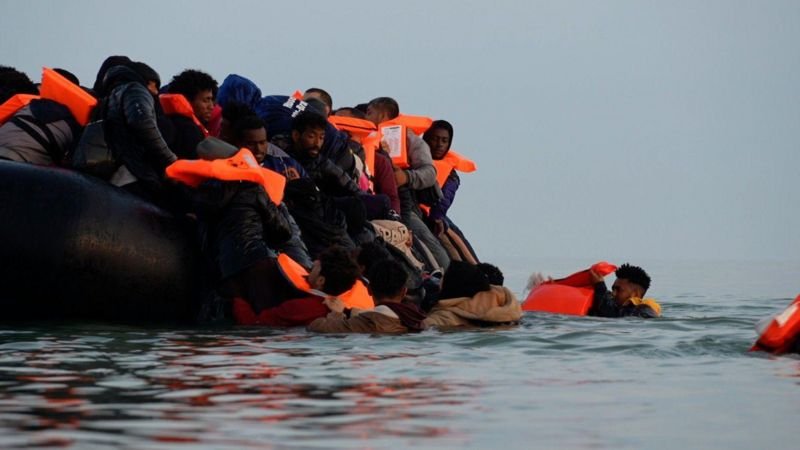


Despite intensified efforts by the UK and French governments to curb illegal Channel crossings, many migrants camped along northern France’s coastline remain committed to reaching British shores. As both countries prepare to unveil new strategies aimed at reducing small boat arrivals, the determination among migrants—driven by desperation and unsafe conditions—remains largely unchanged. The rising number of arrivals in 2025 underscores the complexity of the crisis and the limited effectiveness of current deterrence measures.


I. UK-France Talks Target Illegal Crossings
1. New Plans Underway to Reduce Channel Crossings
London and Paris are currently finalizing agreements to crack down on the increasing number of unauthorized migrants making their way across the English Channel. These plans are expected to be formally introduced at a high-level summit scheduled for July. One proposed measure includes allowing French police and coastguard teams to intervene earlier—specifically in shallow waters—to disrupt operations of “taxi boats” that collect migrants from beaches and ferry them into British waters.

2. Return Deals and Family Reunification Proposals
The UK is also negotiating a return policy with France, under which certain migrants arriving in Dover without legal grounds could be sent back. In contrast, Britain has signaled a willingness to accept migrants seeking legal family reunification. While this arrangement could ease political tensions, experts suggest its practical and humanitarian outcomes remain uncertain without detailed implementation plans.
II. Migrants in France Undeterred by Tougher Measures
1. Dire Living Conditions Fuel Determination
In the makeshift migrant camps scattered across northern France—particularly in areas like Dunkirk and near Calais—many remain resolute in their quest to reach the UK. Interviews conducted by the BBC reveal that individuals enduring poor sanitary conditions, insecurity, and a lack of basic services are desperate to escape. One African migrant, identifying only as John, described his surroundings as unbearable. “In Dunkirk, it’s really terrible—so much trouble,” he said. “I want to leave.”
2. Continued Crossings Despite Official Efforts
Even as negotiations continue, migrant crossings persist at high rates. Reports indicate that over 18,500 individuals have successfully crossed into the UK via small boats during the first half of 2025 alone—marking a record number. On a single day, hundreds more are believed to have made the dangerous journey, highlighting the limited deterrent effect of recent enforcement campaigns.
III. Responses from Humanitarian Organizations and Officials
1. Calls for Caution from the Refugee Council
Enver Solomon, Chief Executive of the Refugee Council, cautioned against premature assumptions about the success of any bilateral return agreement. “Until the details of any one-in one-out deal with France are released, it’s difficult to know if it would be workable, humane, or effective,” he stated. Solomon acknowledged the need for deeper UK-France cooperation but emphasized that past strategies overly reliant on enforcement have only emboldened smuggling networks.
2. Smuggling Gangs Adapting and Taking Greater Risks
Solomon further noted that harsher border enforcement has not curbed illegal crossings but instead pushed criminal organizations to adopt riskier methods. This shift has been linked to a rise in migrant deaths in the Channel. The increasing reliance on overcrowded, poorly equipped boats, often in treacherous sea conditions, has only made crossings more perilous.
3. Government Push to Tackle Organized Crime
In response, the UK Home Office has pledged to intensify international efforts to combat human smuggling networks. The department said it is working closely with global partners to improve intelligence sharing, track financial operations, and dismantle the criminal infrastructure behind these perilous journeys. While these actions target the logistical backbone of illegal crossings, they do little to address the underlying reasons migrants flee in the first place.
IV. Broader Implications of Border Strategy
1. Migrant Motivation Remains Strong
The determination of migrants camped in France suggests that even tighter security and potential return policies may not significantly alter the flow of crossings. For many, the prospect of life in the UK—even under legal uncertainty—is preferable to the hardship faced in their countries of origin or in European camps. This psychological and humanitarian reality presents a major challenge to policymakers relying solely on deterrence.
2. Need for Holistic Migration Solutions
Experts argue that the focus on enforcement must be balanced with more comprehensive, compassionate strategies. These may include expanded legal migration pathways, increased support for asylum processing, and improved living conditions in camps to reduce the urgency of escape. Without addressing the root causes driving migration, border control measures may continue to fall short.
Conclusion
As the UK and France prepare to launch new joint initiatives to reduce illegal Channel crossings, the resilience of migrants waiting in northern France remains evident. While governments seek to strengthen enforcement and crack down on smuggling operations, many of those living in desperate conditions are undeterred by the risks. The record-breaking number of arrivals in 2025 reflects the enduring push-and-pull dynamics of migration, where fear, hope, and human survival outweigh threats of deportation or delays. Ultimately, any long-term solution will need to consider not just border management, but the broader humanitarian realities driving the crisis.








