







After two days of severe disruption caused by multiple incidents on the LGV Nord line in France, Eurostar services have resumed. However, delays are expected to continue into the evening as the network works to stabilize schedules. The turmoil, triggered by two separate fatalities and an act of cable theft, caused widespread service interruptions across routes connecting London with Paris, Brussels, and Amsterdam.

I. Background of the Disruption
1. Two Fatal Incidents Prompt Immediate Shutdown
On Tuesday, the LGV Nord line—an essential rail corridor between Lille and Paris—was temporarily closed due to two unrelated deaths occurring on the same day. Authorities responded by halting all rail traffic in the affected area, severely disrupting Eurostar operations. Trains bound for Paris were cancelled, and services to Brussels and Amsterdam experienced substantial delays.
2. Cable Theft Adds to the Chaos
Further exacerbating the crisis, French media reported that around 600 meters of copper cable were stolen near Lille. This theft forced several trains to be rerouted, significantly extending travel times and creating scheduling challenges for both trains and crews. As a result, five London-to-Paris trains were cancelled, compounding passenger frustrations.
II. Eurostar’s Response and Passenger Experience
1. Official Updates and Apologies
Eurostar issued a public apology, acknowledging the inconvenience and stress caused by the disruptions. In a statement, the operator emphasized that its teams were working closely with French authorities and infrastructure partners to safely restore full service. While one track had been reopened early on, allowing limited train movement in both directions, full repair efforts concluded by Wednesday evening.

2. Service Center Overwhelmed by Travelers
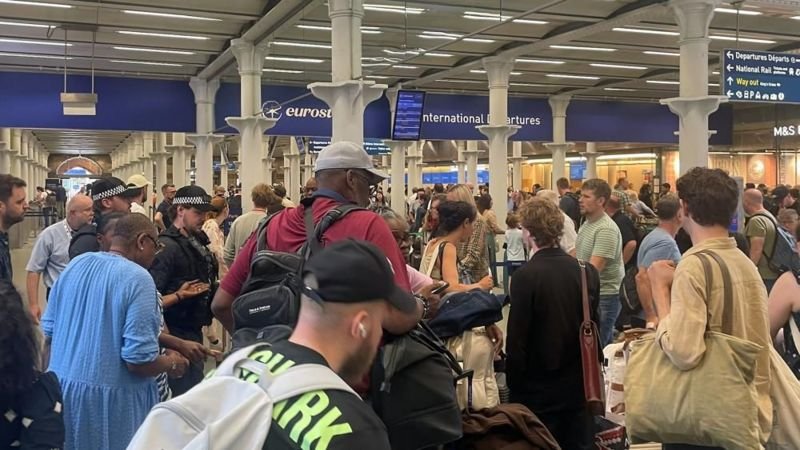
With widespread cancellations, stations like London’s St Pancras International were flooded with travelers seeking assistance. Long lines formed at customer service centers as passengers attempted to rebook tickets or seek information. Water was distributed onboard delayed trains, and station environments became increasingly tense due to overcrowding and confusion.
3. Voices from the Ground
Among the affected passengers was 75-year-old yoga instructor Elizabeth Romijn from the Netherlands, who had planned to return to Brussels after visiting friends in Surrey. Speaking to the PA news agency, Romijn described the atmosphere at St Pancras as “very chaotic,” with insufficient seating and staff appearing uninformed. “Nobody seems to know anything,” she remarked, expressing frustration over the lengthy queues and lack of clear guidance.
III. Restoration of Services and Passenger Options
1. Line Repairs Completed
By Wednesday evening, Eurostar confirmed that repairs to the affected line were completed and that further cancellations were not anticipated. However, the company cautioned that lingering delays would remain through the night as efforts to reposition trains and crews continued. This disruption ripple effect has been particularly hard to manage given the tight schedules and high volume of passengers using the service during summer travel season.
2. Flexible Travel Alternatives for Customers
To mitigate the disruption, Eurostar has offered passengers the option to rebook their trips at no additional cost or claim a full refund. The operator emphasized its commitment to resolving the situation and providing support to all affected travelers. These flexible measures are part of the company’s broader attempt to regain customer trust and restore operational confidence.
IV. The Broader Implications for Rail Infrastructure
1. Vulnerability to External Disruptions
This incident highlights the fragility of critical rail infrastructure and its susceptibility to both accidental and criminal disruptions. While the deaths on the line were tragic and unpredictable, the cable theft was a deliberate act with far-reaching consequences. The resulting chaos underscores the need for enhanced security and contingency planning in cross-border train operations.
2. Lessons for Crisis Management
The overwhelmed stations, delayed communication, and limited information available to passengers point to areas where Eurostar and its partners could improve their emergency response protocols. Clearer updates, more proactive staff engagement, and better crowd management could alleviate some of the stress experienced during such events.
Conclusion
Eurostar’s resumption of service after a chaotic two-day halt brings relief to many travelers, but the situation has shed light on deeper vulnerabilities within the European high-speed rail system. From accidental fatalities to theft-related disruptions, the chain of events has demonstrated how quickly operations can unravel. While full repairs have now been made and no more cancellations are expected, the knock-on delays and passenger dissatisfaction highlight the need for more robust operational safeguards. As summer travel ramps up, Eurostar faces the dual challenge of maintaining schedule integrity while restoring passenger confidence.








