




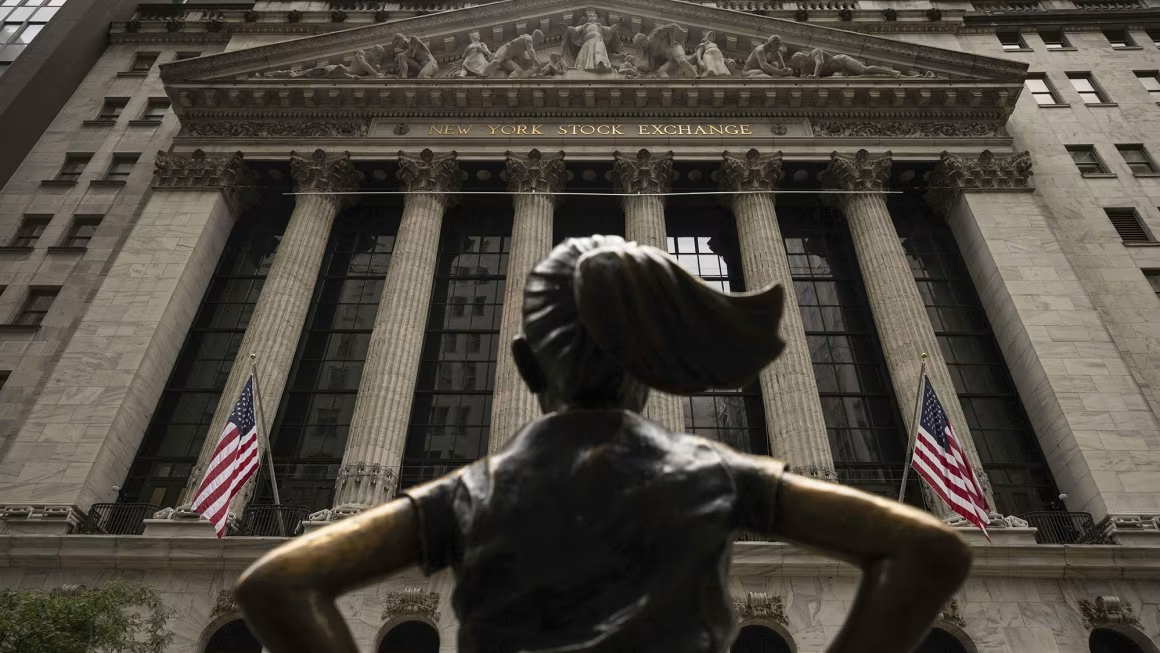


After months of turbulence, the S&P 500 is closing in on a new record, an impressive turnaround given that it nearly slipped into a bear market just weeks ago. On Wednesday, U.S. equities were mixed—while the Dow dipped 107 points (0.25%), the S&P 500 held steady, and the Nasdaq rose 0.31%. With the benchmark index less than 1% away from its all-time peak, investors are questioning how much higher the market can go—or whether more challenges lie ahead.


Markets recently rallied in response to a fragile ceasefire agreement between Israel and Iran, with the S&P 500 gaining 2.1% over the previous two sessions. But as geopolitical fears fade, attention is shifting back to fundamental issues like trade policies, earnings reports, and the looming federal deficit.

I. The Market’s Rebound From the Brink
1. A Dramatic Decline and Recovery
This year has been a rollercoaster for U.S. stocks. After beginning the year with a strong upward trend, the S&P 500 was knocked down in March and April amid aggressive new tariffs announced by President Trump. The index hit its lowest point of the year on April 8, falling nearly 19% from its February high. At its lowest, market capitalization losses exceeded $9.8 trillion, according to FactSet.
2. Rally Fueled by Tariff Relief and Investor Optimism
Markets began to recover when Trump dialed back his broad “reciprocal tariffs” in late April. May was particularly strong, with the S&P 500 jumping 6.15%—its best monthly performance since November 2023 and the strongest May rally since 1990. The momentum has continued into June, with the index gaining another 3% so far.

Despite the recovery, many analysts believe the rebound reflects hope that the worst of the tariff uncertainty has passed, even though formal trade deals remain limited. So far, the U.S. has only finalized an agreement with the U.K. and reached a temporary truce with China.
II. Tech and AI Fuel the Market’s Climb
1. Tech Sector Regains Leadership
With market sentiment improving, attention has returned to the tech sector and artificial intelligence. The Nasdaq 100 recently reached a new all-time high, driven by strong performance from major technology firms. Notably, Nvidia surged 4.33% on Wednesday, setting a new record high. The chipmaker had previously dropped nearly 37% from its January peak before rebounding dramatically.
2. Analysts Cautiously Eye a Possible Bubble
Ross Mayfield, an investment strategist at Baird, believes the resurgence of tech stocks is vital for the broader market, given its heavy weighting in tech. While he acknowledged the risk of a future bubble, Mayfield noted that current levels still appear justifiable. “We’re not there yet,” he said, “but these big tech names continue to be the engine.”
3. Disconnect From Economic Fundamentals
Keith Buchanan, a senior portfolio manager at Globalt Investments, expressed concerns that the recent rally might be outpacing underlying economic conditions. He warned that markets might be underestimating the potential impact of renewed tariffs and other risks on corporate profits and consumer spending.
III. What Comes Next for Investors?
1. Tariff Policy Remains a Central Focus
Although Wall Street appears to be moving past geopolitical worries, tariffs remain a significant source of economic uncertainty. According to Torsten Slok, chief economist at Apollo, the average U.S. tariff rate remains elevated—potentially the highest in nearly a century. Such levels, he said, could slow economic growth, raise inflation, and force interest rates to stay higher for longer.
2. Earnings Season May Provide Clarity
The upcoming corporate earnings season, beginning in mid-July, could offer valuable insights into how companies are coping with these conditions. Investors will be particularly focused on how businesses are managing cost pressures from tariffs, especially whether they are absorbing higher prices or passing them on to consumers.
Eric Freedman, chief investment officer at U.S. Bank Asset Management, highlighted inflation and profit margins as key factors in shaping future investor confidence. “The impact of tariffs on company earnings and how that translates into broader economic indicators is what we’ll be watching,” he said.
3. Economic Indicators to Watch
Beyond tariffs and earnings, other economic signals may influence market direction. Mohit Kumar, a strategist at Jefferies, pointed to job market trends and Treasury yields as critical metrics. Rising yields, often tied to concerns over the federal deficit, could lure investors away from equities and back into fixed-income assets.
4. Staying the Course Amid Volatility
Despite the many risks, analysts like Chris Brigati from SWBC advise investors to stick with long-term strategies and avoid overreacting to short-term fluctuations. “Timing the market is nearly impossible,” Brigati noted. “A disciplined approach tends to yield better outcomes over time.”
Conclusion
The S&P 500’s rapid rebound from near-bear market territory highlights just how resilient investor sentiment can be, even in the face of ongoing challenges. As the index hovers close to a new all-time high, the interplay between trade policies, tech momentum, inflation concerns, and geopolitical developments will continue to shape the market’s path.
Whether the rally has more fuel or is nearing exhaustion remains to be seen. However, for now, investors appear cautiously optimistic, with one eye on future risks and another on the opportunity for continued growth.