





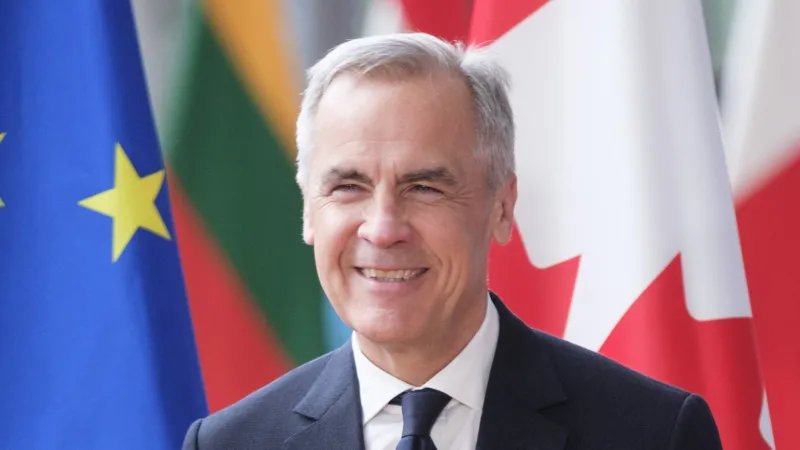


Canada’s federal government has officially enacted a transformative new law aimed at expediting large-scale national infrastructure and economic initiatives. The One Canadian Economy Act, championed by Prime Minister Mark Carney, passed through the Senate on Thursday and grants sweeping powers to the cabinet. These powers include the authority to override certain federal legislative hurdles and streamline approvals for major projects deemed vital to national interests.


While the government views the legislation as a necessary measure to stimulate economic growth and reduce reliance on the United States amid ongoing trade disputes, the bill has drawn sharp criticism from Indigenous communities and environmental groups, who worry that it could sideline public input and erode hard-won consultation rights.

I. A Strategic Push for Economic Autonomy
1. A Response to Growing Trade Friction
The One Canadian Economy Act emerges against the backdrop of persistent economic tension between Canada and the United States, particularly during Donald Trump’s administration. Trump’s imposition of tariffs on Canadian steel, aluminum, and the auto sector spurred calls for a stronger, more self-reliant economy. In response, Carney’s government introduced the bill to enable faster development of energy corridors, critical infrastructure, and resource projects that could enhance national productivity.
The prime minister previously stated that the act would help create pathways for pipelines, electric grids, mining operations, and expanded port facilities. “This act will eliminate trade bottlenecks, accelerate nation-building efforts, and drive economic momentum — all while placing Indigenous partnership at the core of this vision,” Carney asserted last week.

2. Removing Internal Barriers to Growth
Beyond international trade concerns, the act also targets long-standing interprovincial barriers that hinder economic coordination. The legislation includes provisions aimed at improving internal labour mobility and facilitating trade between provinces. These changes are intended to encourage investment and workforce movement, thus improving Canada’s overall competitiveness.
By delivering on a campaign promise to dismantle these obstacles before Canada Day on July 1, Carney scored a political victory and reaffirmed his administration’s commitment to economic revitalization in the face of global uncertainty.
II. Concerns Over Consultation and Oversight
1. Indigenous Leaders Voice Alarm
Despite government assurances that Indigenous voices will be heard, many Indigenous leaders remain wary of the bill’s potential to bypass meaningful consultation. Senator Paul Prosper, representing the Mi’kmaq community in Nova Scotia, attempted to add an amendment requiring Indigenous consent before fast-tracking any national project. His proposal was ultimately rejected.
Prosper voiced frustration at how rapidly the bill was pushed through Parliament, noting that a few additional months could have allowed for deeper engagement with affected communities. While he affirmed support for development, he emphasized that it must not come at the expense of Indigenous rights and well-being.
“No one wants our children to grow up in poverty, without clean drinking water, good jobs, or adequate healthcare. But progress should never be built on the backs of Indigenous Peoples,” Prosper declared in the Senate, as reported by CBC.
2. Environmental Concerns Remain
Environmental groups have echoed similar concerns, warning that accelerated project approvals could diminish environmental scrutiny. With the government now possessing the authority to override certain federal provisions in the name of economic growth, critics fear that projects with potentially harmful environmental impacts could proceed unchecked.
The legislation does state that consultation with Indigenous communities must occur before any project is fast-tracked. However, the lack of a requirement for formal consent has left many unconvinced about the robustness of these consultations.
3. Supporters Cite Urgency
Proponents of the bill, including Senator Hassan Yussuff, argue that Canada faces a pressing economic situation that demands immediate action. “This is a response to an urgent and immediate crisis,” Yussuff said, suggesting that the legislation is a necessary tool for swift recovery and progress.
Supporters argue that the benefits of job creation, improved infrastructure, and stronger internal trade networks outweigh the risks, especially if the government remains transparent and inclusive in its consultation processes.
Conclusion
The One Canadian Economy Act represents a pivotal shift in how Canada approaches economic development and national infrastructure planning. While the legislation delivers on Prime Minister Carney’s promise to reduce internal trade barriers and accelerate strategic projects, it also ignites concerns about transparency, environmental protection, and the rights of Indigenous communities.
The coming months will test the government’s ability to balance economic urgency with ethical governance. As Canada moves forward with implementing this law, all eyes will be on how inclusive and equitable the decision-making process proves to be — especially for those whose voices have often been marginalized in the past.








