





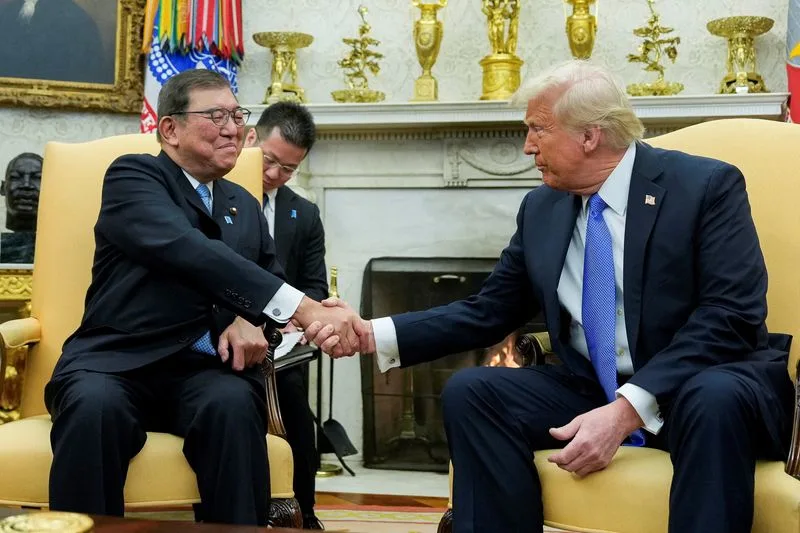


Japan is once again at the center of trade tension with the United States, as President Donald Trump voiced strong criticism over what he described as “unfair” trade practices. In a recent televised interview, Trump called out Japan’s automotive trade policies, claiming they heavily favor Japanese exports while restricting American products, especially cars and energy. The U.S. is urging Japan to increase imports of American energy and other goods as a step toward narrowing the persistent trade gap between the two countries.


I. Trump Targets Japan’s Auto Sector
1. U.S. Seeks Fairer Market Access
President Trump emphasized that the U.S. trade relationship with Japan is lopsided, especially in the automotive industry. While millions of Japanese cars enter the American market annually, U.S. auto exports to Japan remain minimal. Trump argued this imbalance is unjust and noted that Japanese officials are aware of the issue. He reiterated his position during an interview on Fox News’ “Sunday Morning Futures,” saying, “They won’t take our cars, and yet we take millions and millions of their cars into the United States.”

2. Tariff Threats Loom Over Japanese Automakers
The stakes are high for Japan’s auto manufacturers. Without a negotiated agreement, they face a steep 25% tariff on car exports to the U.S., a penalty that could severely impact the country’s export-driven economy. Additionally, Japan may be subject to a 24% reciprocal tariff starting July 9, further intensifying the pressure to reach a deal that satisfies both sides. Tokyo is currently exploring diplomatic avenues to avoid these economic penalties.
II. Economic Impact and Trade Deficit Concerns
1. Auto Exports Dominate Japan’s Trade with U.S.
Japan’s car industry plays a pivotal role in its trade relationship with the United States. Last year, approximately 28% of Japan’s total exports to the U.S.—valued at 21 trillion yen ($145 billion)—came from automobiles alone. This concentration in one sector has made the industry especially vulnerable to U.S. protectionist measures, and any disruption could ripple through Japan’s broader economy.

2. U.S. Calls for Increased Imports of Energy and Goods
In addition to pushing for more U.S. car sales in Japan, Trump also suggested that Japan should boost its imports of American oil and other goods. With the U.S. now a major energy producer, the administration sees Japan’s energy needs as a potential avenue for rebalancing the trade deficit. “Now we have oil. They could take a lot of oil, they could take a lot of other things,” Trump noted, hinting at the administration’s broader strategy to use energy exports as a trade negotiation tool.
III. Diplomatic Pressure and Future Negotiations
1. Japan’s Diplomatic Strategy
In response to the tariff threats, Japanese officials are urgently working to secure exemptions for their automotive sector. These efforts include high-level talks aimed at reinforcing the importance of Japanese investment in the U.S. economy and highlighting Japan’s role as a key strategic partner. The outcome of these negotiations could shape not only trade dynamics but also the future of U.S.-Japan diplomatic relations.
2. Potential Consequences for Global Supply Chains
The potential tariffs on Japanese automobiles could have a cascading effect across global supply chains. Japanese carmakers often rely on parts manufactured across several countries, including the United States. Any disruption caused by increased tariffs may not only affect Japan but also impact U.S. companies involved in these supply networks. This underscores the complexity of modern trade relationships and the potential unintended consequences of unilateral measures.
Conclusion
The U.S.-Japan trade dispute highlights a recurring theme in President Trump’s economic policy: the pursuit of more balanced trade relationships, particularly in sectors where the U.S. runs significant deficits. While Japan’s automotive industry remains a focal point, the call for increased energy and goods imports from the U.S. suggests a broader push to diversify trade flows. As July approaches and potential tariffs loom, Japan must navigate delicate negotiations to protect its critical export sector and maintain strong ties with one of its largest trading partners. The outcome will not only influence bilateral trade but also set a precedent for how other trade allies respond to U.S. economic pressure.








