





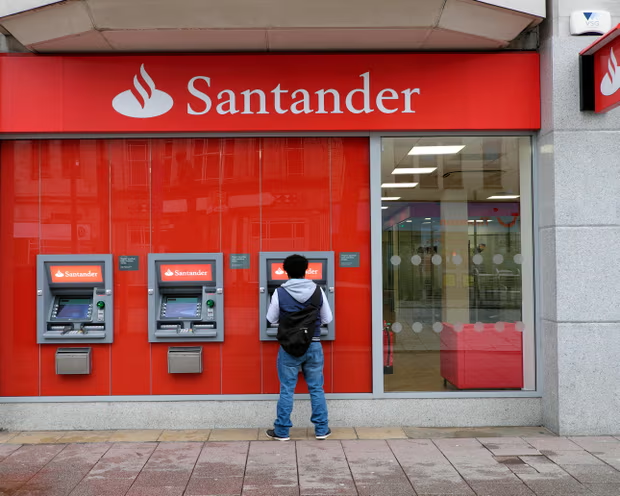


In a timely move that may ease political pressure, Santander’s £2.65 billion agreement to acquire TSB brings an end to ongoing speculation about the British lender’s uncertain future. The deal not only signals the Spanish-owned bank’s renewed commitment to the UK market but also delivers a political boost to Chancellor Rachel Reeves, who has faced rising concerns over foreign firms turning away from the City due to regulatory burdens. The acquisition, which could rise to £2.9 billion if performance targets are met, marks a significant development in both the banking and political landscapes.


I. Santander Reaffirms UK Commitment
1. Quashing Speculation of a UK Exit
Earlier this year, rumours suggested that Santander might be preparing to withdraw from high street banking in the UK, raising alarms across financial and political sectors. These concerns were exacerbated by Santander’s decision to cut 2,000 jobs, fueling talk of restructuring ahead of a potential sale. However, Tuesday night’s announcement quells those fears and confirms the UK remains a core market for the bank.

2. Political Implications for Rachel Reeves
For Chancellor Rachel Reeves, the takeover could not have come at a better time. Had Santander exited the UK, it might have sparked criticism over the government’s inability to retain investor confidence. Instead, the acquisition acts as a vote of confidence in the British banking sector — especially valuable as Reeves works to reinforce the City’s global appeal amid economic headwinds.
II. Behind the Deal: Tensions in Spain and Economic Strategy
1. Sabadell’s Motivation for Selling
The decision to sell TSB stems from pressures within Sabadell’s home country, as it faces a hostile €11 billion takeover bid from rival BBVA. Offloading TSB enables Sabadell to refocus and return capital to shareholders, potentially making BBVA’s bid less attractive. This internal struggle in Spain played a pivotal role in opening the door for Santander to step in.

2. Strengthening Market Position
The acquisition significantly enhances Santander’s competitiveness. With the addition of TSB’s 5 million customers, the bank becomes the UK’s third-largest holder of personal current account deposits and the fourth-largest mortgage provider. The deal helps Santander keep pace with competitors like Nationwide, which recently acquired Virgin Money for a similar amount.
III. Regulatory Pressures and Santander’s Frustrations
1. Complaints Over UK Regulation
Despite reaffirming its UK presence, Santander has not shied away from voicing concerns over local regulations. Executives in Madrid, including chair Ana Botín, have expressed frustration with post-crisis rules such as ring-fencing — designed to isolate customer deposits from riskier banking activities. These regulations, while aimed at consumer protection, are seen by some as financially restrictive and overly complex.
2. Fallout from Car Finance Commission Scandal
Santander has also been embroiled in the car loan commission controversy, which could cost the bank up to £1.9 billion in compensation. The financial strain and legal implications added to the Spanish bank’s growing discomfort with UK operations, making the TSB deal a critical strategic move to reinforce its market presence despite these headwinds.
IV. Labour’s Response and Proactive Measures
1. Reeves Takes Action on Regulation
Aware of growing unease among financial institutions, Reeves acted earlier this year to encourage regulatory bodies to promote growth and competition. She advocated for easing some financial crisis-era rules that were perceived to be excessive. Her intervention also extended to the legal front, as she attempted to influence a Supreme Court case regarding the car finance scandal, reflecting her commitment to balancing reform and market stability.
2. Diplomatic Reassurance from Ana Botín
At the World Economic Forum in Davos, Botín reinforced Santander’s dedication to the UK, stating unequivocally: “We love the UK, it is a core market and will remain a core market for Santander. Punto.” This declaration helped calm ongoing speculation and aligned with the bank’s decision to move forward with the TSB acquisition.
V. The Uncertain Future for TSB
1. Possible Job Cuts and Brand Disappearance
While the deal presents clear benefits for Santander, it has left TSB’s 5,000 staff and 175 branches in a precarious position. The integration may involve eliminating overlapping roles and branch closures. Executives confirmed on Tuesday that they were aware of “duplications,” suggesting difficult decisions ahead. The fate of the 215-year-old TSB brand also hangs in the balance and could be phased out entirely.
2. A History of Instability
TSB’s path over the past decade has been turbulent. Carved out of Lloyds Banking Group after the 2008 bailout, it became independent in 2013, floated on the London Stock Exchange in 2014, and was acquired by Sabadell a year later. However, a 2018 IT failure severely damaged its reputation, causing a mass customer exodus and regulatory scrutiny that culminated in a £48 million fine.
VI. From Recovery to New Ownership
1. Failed Sale Attempts and a Return to Profit
Despite the IT debacle, TSB made significant efforts to rebuild its credibility. Sabadell even rejected a £1 billion offer from the Co-operative Bank in 2022, signaling renewed confidence. But the BBVA bid forced a rethink, and TSB’s eventual sale to Santander now provides Sabadell an opportunity to deliver value back to shareholders.
2. Santander’s Strategic Win
Ultimately, the acquisition represents a well-timed opportunity for Santander to bolster its UK position. It also offers political capital for Reeves as she courts trust from the financial sector ahead of national elections. The deal could help restore confidence in the City and act as a counterweight to fears of investment outflows.
Conclusion
Santander’s acquisition of TSB is more than just a business transaction — it’s a strategic move that reverberates through banking, politics, and public confidence. While it solidifies Santander’s presence in the UK and offers political relief to Chancellor Reeves, it also brings uncertainty for TSB staff and branches. With integration ahead and regulatory challenges ongoing, how the deal unfolds will be closely watched. For now, it represents a rare win-win for both corporate and political players in a climate of uncertainty.








