





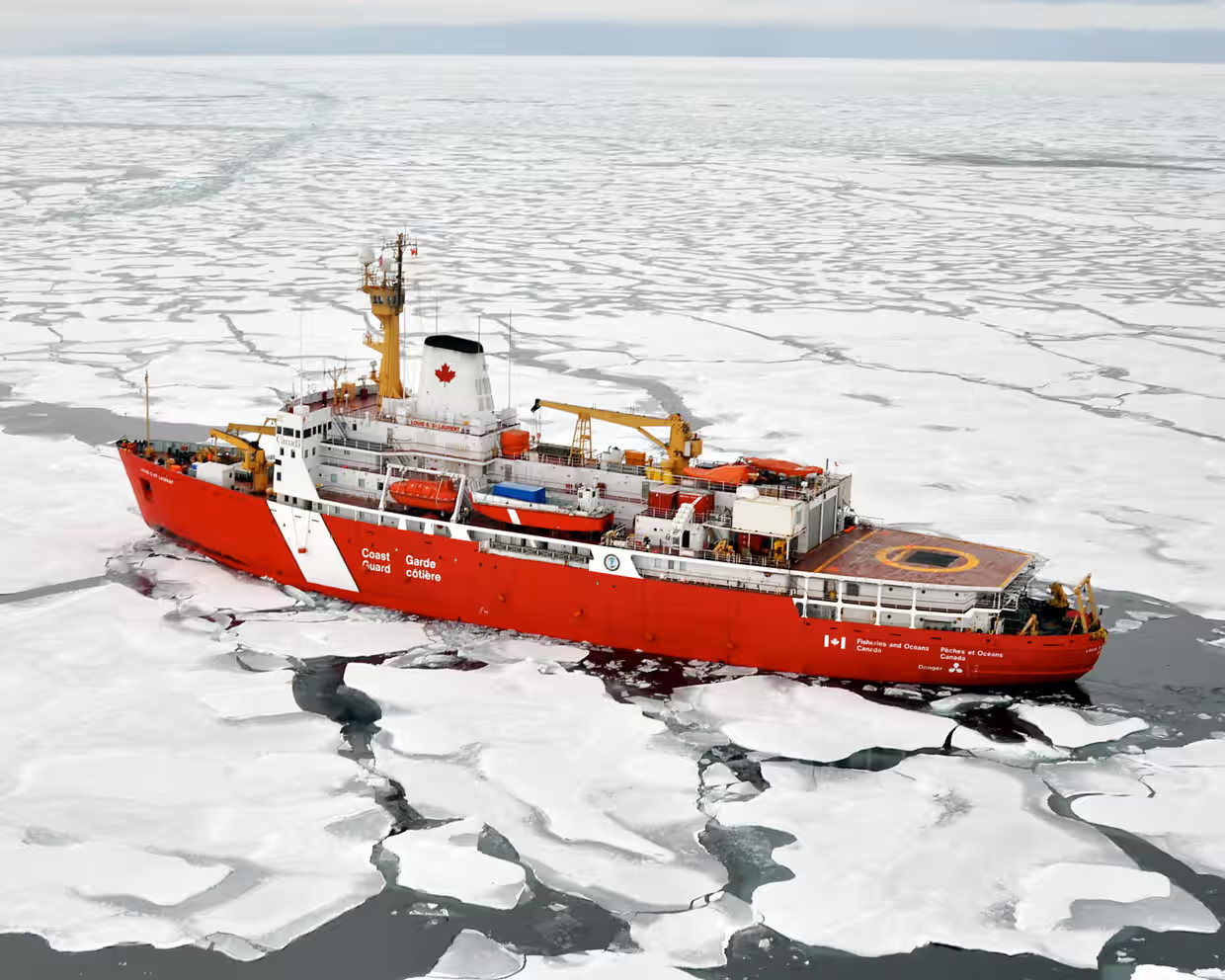
For centuries, the Beaufort Gyre—a swirling mass of Arctic sea ice—has followed a seasonal rhythm, shedding layers in the summer and expanding in winter, rotating between Russia, Canada, and Alaska. Once a critical area for the formation of dense, mature ice sheets, the gyre is now facing a dramatic transformation due to climate change. As permanent sea ice diminishes, shifting ocean currents are pushing fragmented ice into northern Canadian channels, complicating navigation and safety. The result: despite having less overall ice, the Arctic is becoming more hazardous—prompting a renewed demand for powerful icebreakers.


I. Shrinking Ice, Growing Challenges
1. The Beaufort Gyre’s Changing Nature
Once a stable environment for solidifying thick sea ice, the Beaufort Gyre is now disrupted by rising global temperatures. What remains of the ice is pushed by the gyre into narrow straits, turning them into chokepoints of broken, drifting ice.


2. The Paradox of Less Ice
According to Canada’s coast guard, fewer ice sheets do not translate into easier navigation. Arctic researcher Robert Huebert notes that climate change hasn’t reduced the need for icebreakers—it has intensified it. Navigating increasingly unstable and fragmented ice now demands more robust vessels than ever before.

II. Canada’s Icebreaker Ambitions
1. Construction Begins on a Modern Fleet
In North Vancouver, shipbuilders at Seaspan are working on a 520-foot polar-class icebreaker designed to function in temperatures as low as -50°C (-58°F). With an expected completion timeline of five years and a budget of C$3.15 billion (US$2.32 billion), the vessel is a flagship of Canada’s new Arctic naval strategy.
2. A Floating Fortress in the Making
Building a heavy icebreaker is no simple feat. Vice President of Production Eddie Schehr compares the process to assembling a floating city, full of potential flaws only revealed near the end. Even basic components, such as 60mm-thick steel panels, must meet stringent performance standards.

3. Overcoming Decades of Delays
Canada first proposed replacing its aging icebreaker, the Louis St. Laurent, in 1985. Several replacement plans failed to launch, including one under former Prime Minister Stephen Harper. Now, Seaspan is finally bringing the vision to life with a vessel called the John G. Diefenbaker, a name once assigned to a ship that never made it off the drawing board.
III. Multi-Ship Strategy and Production Struggles
1. Other Shipyards Join the Effort
In addition to Seaspan, Quebec’s Davie Shipyard has been tapped to build a second icebreaker. In 2024, Davie expanded by purchasing facilities in Helsinki and the U.S. to accelerate production and work around foreign shipping restrictions.
2. Questions of Efficiency and Compatibility
Huebert warns that splitting construction between two companies could prove costly and impractical. Having different designs for the same class of ships complicates training, repairs, and long-term maintenance—adding layers of inefficiency to an already expensive endeavor.
3. A Shift in Global Strategy
The recently formed “Ice Pact” between Canada, Finland, and the United States aims to accelerate the production of ice-capable vessels. Finland, with experience building 80% of the world’s Arctic-ready ships, brings key expertise. The deal foresees up to 90 new icebreakers being built across the three nations, signaling a serious push toward Arctic readiness.
IV. Global Icebreaker Race
1. Russia and China Scale Up
Russia reportedly possesses over 50 icebreakers, including more than a dozen capable of enduring the most extreme Arctic conditions. China maintains a smaller fleet, though its full seasonal operating range remains uncertain. Former President Donald Trump previously called for up to 40 U.S. icebreakers, underlining growing geopolitical interest.
2. Strategic and Economic Interests
The melting Arctic is opening new sea lanes like the Northwest Passage, drastically cutting shipping times between Europe and Asia. But the benefits come with risks, as Canada’s government increases investments not only in icebreakers but also in Arctic satellite surveillance, radar systems, and potentially submarines to project sovereignty.
V. Mixed Views on Arctic Militarization
1. Realistic Needs vs. Geopolitical Hype
Michael Byers, a political science professor at the University of British Columbia, believes the current push for Arctic vessels stems more from practical necessity than military escalation. With the Arctic becoming busier, Canadian ships must be able to operate safely alongside growing commercial traffic.
2. Arctic Dangers Persist
Byers argues that Russia’s expansive Arctic coast justifies its larger fleet. Yet, even as sea ice diminishes, conditions remain perilous. Strong winds and frigid spray can coat ships in ice, sometimes causing capsizing. Hence, reliable icebreakers remain indispensable tools—not only for defense but also for safety and scientific missions.
Conclusion
Climate change is reshaping the Arctic into a region of both opportunity and danger. As polar ice recedes, countries like Canada find themselves under pressure to reestablish naval dominance through the construction of next-generation icebreakers. While global cooperation and competition converge in shipyards across three continents, one fact remains clear: the Arctic is still one of Earth’s harshest environments—and it demands ships that can endure its extremes.








