





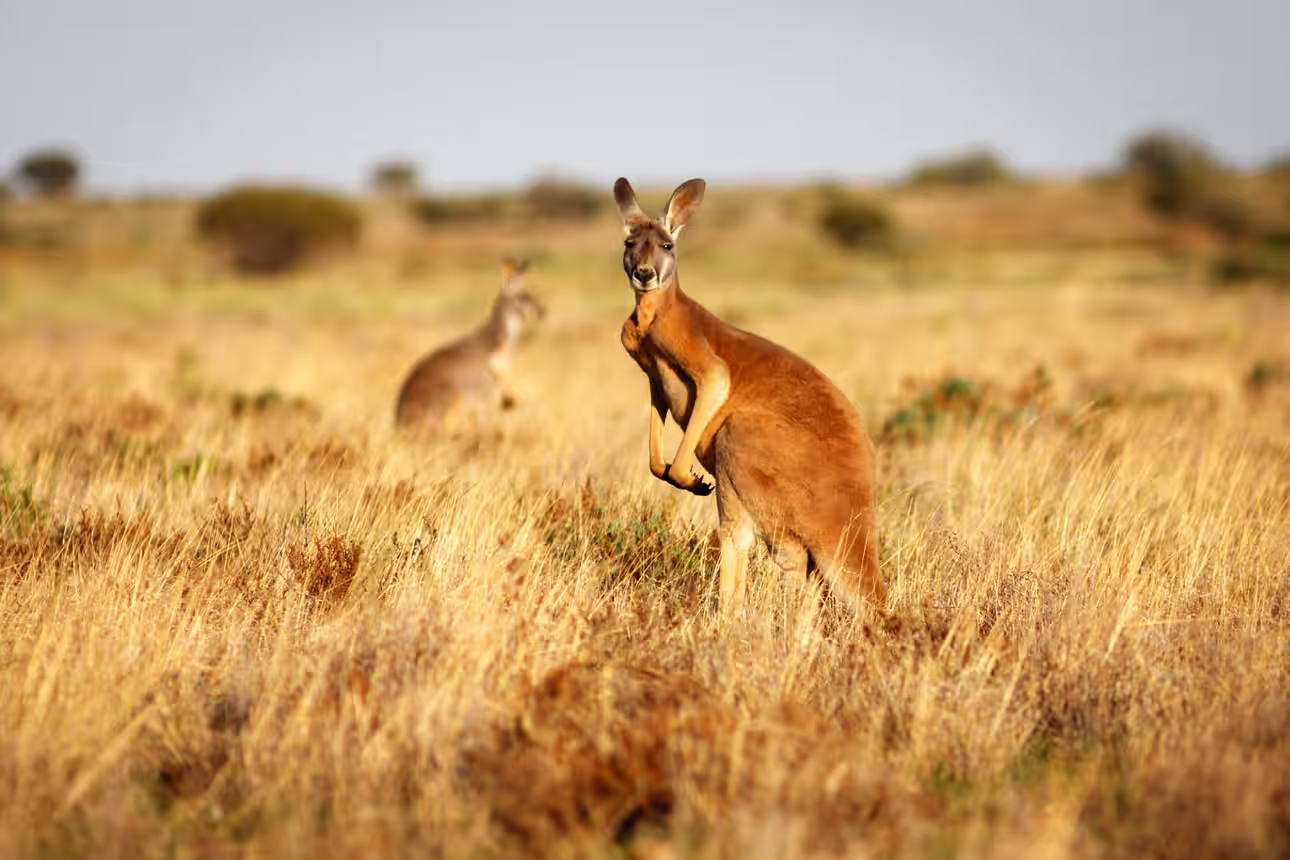
A recently proposed bill in the U.S. Senate has reignited debate around the commercial killing of kangaroos in Australia. Spearheaded by Democratic Senator Tammy Duckworth and co-sponsored by Senator Cory Booker, the Kangaroo Protection Act seeks to ban the sale and production of kangaroo-based goods in the U.S., describing the practice as both unnecessary and cruel. The legislation has gained traction with the support of animal welfare advocates, yet has stirred strong opposition from Australian ecologists and industry experts who argue the issue is more complex than it appears.


I. A U.S. Ban on Kangaroo Products
1. Senators Push for Ethical Reform
Senator Duckworth, with backing from Cory Booker, introduced the bill using emotionally charged language, calling for an end to what they describe as the inhumane killing of millions of kangaroos. They emphasize the need to protect not just adult kangaroos but also their dependent offspring.


2. Support from Animal Rights Campaigns
Organizations like the Center for a Humane Economy have rallied behind the effort, highlighting campaigns such as Kangaroos Are Not Shoes. As a result, brands like Umbro have joined other major sportswear companies—Nike, Adidas, Puma, and Asics—in eliminating kangaroo leather (“k-leather”) from their products.

II. Conservationists Push Back
1. Experts Call Out Misconceptions
Australian wildlife conservationist Prof. Chris Johnson argues that the opposition campaigns are misleading and lack scientific grounding. He believes that international critics misunderstand the ecological necessity of controlled kangaroo harvesting.
2. Political Criticism of Public Messaging
Shadow agriculture minister David Littleproud criticized the Australian government for failing to combat misinformation. He stated that kangaroo harvesting is not solely for commercial gain and that population control would still be needed even without a commercial industry.
3. Population Control as Environmental Management
Littleproud and other advocates point out that kangaroos are not endangered and can rapidly overpopulate, leading to environmental stress. Banning imports, they warn, could have unintended ecological consequences.
III. Understanding the Kangaroo Harvest
1. Human-Altered Landscapes Favor Kangaroos
Since European settlement, altered landscapes—such as manmade watering holes and cleared grazing land—have unintentionally benefited kangaroo populations. Additionally, predator control policies, such as limiting dingo populations, have allowed kangaroos to flourish.
2. Ecological Balance and Native Species
Johnson explains that unchecked kangaroo populations can harm biodiversity. Their overgrazing reduces vegetation needed by smaller native species for protection, increasing their vulnerability to predators like cats and foxes.
3. Annual Quotas and Harvest Rates
Commercial harvesting, regulated in multiple Australian states, operates under quotas set at roughly 15% of the estimated kangaroo population. However, government data shows that less than a third of this quota is usually met annually.
IV. Ethical Concerns and Criticism of Harvesting Practices
1. Methods of Killing Under Scrutiny
The national code of practice requires a bullet to the head for a humane kill during nighttime harvesting. However, critics like Ben Pearson from World Animal Protection argue that some animals suffer from non-fatal gunshots and prolonged pain due to lack of monitoring and oversight.
2. Treatment of Joeys Raises Ethical Alarms
If a female kangaroo is shot, her joey is often still alive in the pouch. The current code advises using blunt force trauma to euthanize joeys—a practice Pearson denounces as inhumane and brutal.
3. Aboriginal and Public Sentiment
A New South Wales parliamentary inquiry in 2021 uncovered distress within Indigenous communities over the killings and highlighted public discomfort with current culling practices. Despite 23 recommendations, only two were fully adopted by the state government.
V. Industry Defends Ethical Standards
1. Comparison with Global Practices
Neal Finch of the Australian Wild Game Industry Council insists that Australia’s code of practice is among the most ethical globally. He contrasts this with U.S. deer hunting, where chest shots are common and data transparency is lacking.
2. Defense of Regulated Harvest
Finch asserts that publishing detailed data on kangaroo kills demonstrates the industry’s commitment to accountability. He emphasizes that kangaroo management is essential for preserving ecological balance.
VI. Population Fluctuations and Natural Alternatives
1. Boom-and-Bust Dynamics
Kangaroo populations often rise dramatically during wet seasons and decline during droughts. Government figures from 2010 to 2023 show numbers ranging from 25 million to over 50 million, currently estimated at 34 million.
2. Starvation Versus Sustainable Harvest
According to Prof. Euan Ritchie, if kangaroo populations are not actively managed, mass starvation and environmental degradation become likely. Johnson adds that natural deaths by predation or starvation are far more painful than a quick, well-executed harvest shot.
Conclusion
While the call to end kangaroo product imports in the U.S. stems from concerns over animal welfare, Australian experts argue that regulated harvesting plays a critical role in ecological management. The ethical debate remains divided, pitting animal rights advocates against scientists and industry leaders who stress the practical necessity of population control. As legislation gains momentum abroad, Australia faces growing pressure to defend its approach on both environmental and ethical grounds.








