





In an era defined by constant innovation and digital transformation, the world is witnessing an unprecedented acceleration in the emergence of disruptive technology trends. From artificial intelligence reshaping industries to blockchain revamping financial systems, understanding these shifts is not merely beneficial but essential for anyone seeking to stay informed and competitive. Every day, the landscape evolves, demanding that we, as informed citizens and professionals, keep pace. This article delves into the core of these transformative technologies, exploring their profound impact across various sectors, from global politics and economies to the very fabric of our social culture. As a leading source for daily news, Worldnewsradar.id strives to provide comprehensive insights into these crucial developments, offering a detailed look at how these innovations are not just changing our gadgets but fundamentally altering the way we live, work, and interact. We’ll examine the driving forces behind these disruptions and analyze their implications for the future, highlighting key examples and outlining strategies for individuals and organizations to adapt and thrive in this rapidly evolving technological ecosystem.


The Ubiquitous Reach of Artificial Intelligence and Machine Learning
Artificial Intelligence (AI) and Machine Learning (ML) are no longer confined to the realms of science fiction; they are now cornerstone technologies driving profound changes across virtually every industry. From enhancing diagnostic capabilities in healthcare to optimizing supply chain logistics and personalizing customer experiences, AI’s applications are vast and varied. In the financial sector, AI algorithms analyze vast datasets to detect fraudulent transactions with remarkable accuracy and predict market trends, offering invaluable insights for investors. For instance, deep learning models are revolutionizing drug discovery, significantly shortening the time and cost associated with bringing new medications to market. Companies like AlphaFold, developed by DeepMind, have demonstrated unprecedented success in predicting protein structures, a critical step in understanding diseases and developing new treatments. Furthermore, AI-powered systems are making significant strides in automation, leading to increased efficiency in manufacturing and service industries. As a topic frequently covered in daily news outlets and global news reports, the ethical considerations and societal impact of AI are also under constant scrutiny, prompting discussions around job displacement, data privacy, and algorithmic bias. The continuous refinement of AI models, fueled by increasing computational power and massive datasets, promises even more sophisticated applications in the near future, making it एक critical component of any forward-looking economic or business strategy.


Blockchain Technology: Beyond Cryptocurrencies
While often associated primarily with cryptocurrencies like Bitcoin and Ethereum, blockchain technology’s potential extends far beyond digital currencies and is rapidly emerging as a disruptive force in numerous sectors. At its core, blockchain is a decentralized and distributed ledger that securely records transactions across a network of computers. This inherent security and transparency make it an incredibly powerful tool for maintaining incorruptible records and facilitating trustless interactions. In supply chain management, for example, companies are leveraging blockchain to track products from origin to consumer, ensuring authenticity, combating counterfeiting, and increasing transparency – a critical factor for quality control and ethical sourcing. IBM Food Trust, for instance, uses blockchain to trace food products, allowing retailers and consumers to know the exact origins and journey of their food items, drastically reducing response times in cases of recall. In healthcare, blockchain can securely manage patient records, ensuring data integrity while granting patients greater control over their own medical information. The real estate industry is exploring blockchain for faster, more transparent property transactions and ownership transfers, eliminating intermediaries and reducing costs. Moreover, the burgeoning field of Non-Fungible Tokens (NFTs) demonstrates blockchain’s capacity to verify ownership of unique digital assets, transforming industries like art, gaming, and entertainment. This fundamental shift towards verifiable digital ownership is a development that world news organizations are continually exploring for its economic and social implications, underscoring its pivotal role in the evolving digital economy.
The Metaverse and Immersive Technologies: Redefining Reality
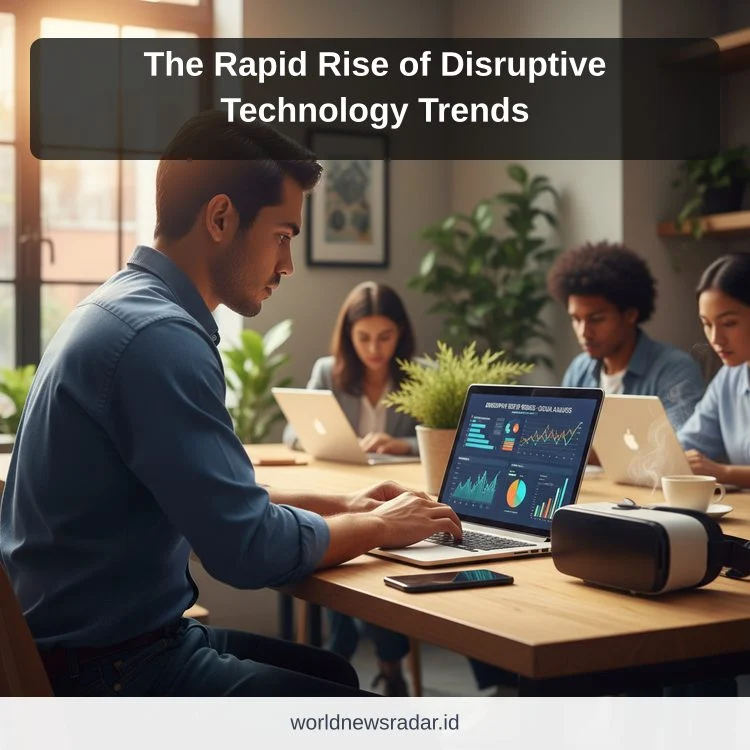
The concept of the metaverse, while still in its nascent stages, represents a profound shift towards a more immersive and interconnected digital experience, blurring the lines between the physical and virtual worlds. This interconnected network of 3D virtual worlds, accessible through VR (Virtual Reality) and AR (Augmented Reality) technologies, promises to redefine how we socialize, work, learn, and entertain ourselves. Major tech companies are investing billions into developing the foundational infrastructure and applications for the metaverse, envisioning a future where individuals can collaborate in virtual meeting rooms, attend concerts in digital arenas, or even shop in entirely immersive online stores. Architects and designers are already using VR to create realistic virtual walkthroughs of buildings before construction, allowing clients to experience spaces in an unprecedented way. In education, immersive learning environments are being developed to offer interactive and engaging experiences, such as virtual field trips to historical sites or simulated scientific experiments. The sports industry is exploring ways the metaverse can enhance fan engagement, offering virtual stadium experiences and new ways to consume content. While challenges remain in terms of hardware accessibility, interoperability, and ethical considerations surrounding digital identities and data privacy, the trajectory indicates a future where these immersive technologies, frequently featured in daily news and tech reports, will play a central role in our digital lives. The economic impact alone is projected to be enormous, creating new industries, job roles, and revenue streams within this expanding digital frontier, making it a critical area of focus for business strategists and policy makers alike.
Quantum Computing: The Next Frontier of Processing Power
Quantum computing, a revolutionary paradigm in computation, harnesses the principles of quantum mechanics to perform calculations at speeds and scales currently unimaginable with classical computers. Unlike traditional bits that represent information as either 0 or 1, quantum computers use “qubits” which can exist in multiple states simultaneously (superposition) and be entangled with one another. This allows them to process vast amounts of information in parallel, dramatically accelerating the solution of complex problems that are intractable for even the most powerful supercomputers today. The implications of this technology are staggering across various fields. In medicine, quantum computing could revolutionize drug development by accurately simulating molecular interactions, leading to breakthroughs in personalized medicine and new treatments for currently incurable diseases. For instance, simulating the behavior of complex molecules that are crucial for drug efficacy could be achieved in a fraction of the time. In finance, it could lead to more sophisticated algorithmic trading strategies, enhanced fraud detection, and unbreakable encryption methods through quantum cryptography. Material science stands to benefit immensely from quantum simulations, enabling the discovery of new materials with unprecedented properties, from superconductors to more efficient batteries. While still in its early stages of development and facing significant engineering hurdles, global news channels frequently feature updates on breakthroughs by institutions like IBM, Google, and various national research labs. The long-term impact of quantum computing could be as profound as the advent of the internet, fundamentally reshaping industries that rely on complex data analysis and optimization. Understanding its potential is paramount for businesses and governments preparing for the next wave of technological disruption.

The Global Impact of 5G and Edge Computing: Empowering Connectivity
The widespread deployment of 5G technology, coupled with the advancements in Edge Computing, is creating a new era of unprecedented connectivity and responsiveness, fundamentally altering how data is processed and utilized. 5G, the fifth generation of cellular technology, offers significantly higher bandwidth, ultra-low latency, and capacity for massive device connectivity compared to its predecessors. This means faster downloads, smoother streaming, and more reliable connections, but its true power lies in enabling more advanced applications. For instance, in manufacturing, 5G facilitates the development of smart factories by allowing thousands of sensors and machines to communicate in real-time, optimizing production lines and predictive maintenance. In healthcare, it empowers remote surgery and real-time monitoring of patients through connected medical devices, enhancing efficiency and patient care, a topic often highlighted in the global news when discussing cutting-edge medical advancements. Simultaneously, Edge Computing complements 5G by bringing computation and data storage closer to the data sources, rather than relying solely on centralized cloud servers. This reduces latency further and minimizes network congestion, which is crucial for applications demanding immediate responses, such as autonomous vehicles. Self-driving cars need instantaneous processing of sensor data to make critical decisions, and relying on distant cloud servers would introduce unacceptable delays. Smart cities also benefit immensely, with 5G and edge computing enabling real-time traffic management, smart grids, and enhanced public safety systems. As the world becomes increasingly interconnected through the Internet of Things (IoT), the combined force of 5G and edge computing will be instrumental in processing the immense volume of data generated, unlocking new possibilities for innovation across all sectors and making this a constant point of discussion for any newspaper or online news platform considering future infrastructure and technological development.
The Ethical Quandaries and Societal Implications of Rapid Tech Advancement
As we navigate the thrilling landscape of disruptive technology, it is imperative to confront the multifaceted ethical quandaries and profound societal implications that accompany these rapid advancements. The very innovations designed to improve lives often introduce complex challenges that demand careful consideration and proactive governance. For instance, while AI offers immense benefits, concerns about algorithmic bias, job displacement, and the ethical use of autonomous systems are becoming increasingly prominent in public discourse and daily news reports. The potential for AI to perpetuate or even amplify existing societal inequalities, if not developed and deployed responsibly, is a significant worry. Similarly, the widespread adoption of blockchain, while promoting transparency and security, also raises questions about data privacy, particularly concerning decentralized identities and immutable records, which can be difficult to manage or rectify if errors occur. The immersive nature of the metaverse, while promising new forms of interaction and commerce, sparks discussions about digital addiction, virtual harassment, and the psychological impact of spending extended periods in virtual environments. Quantum computing, with its immense processing power, presents a double-edged sword: while it can solve humanity’s most pressing problems, it also carries the potential to break current encryption standards, posing significant national security risks. These technological breakthroughs, while heralding progress, necessitate robust ethical frameworks, regulatory oversight, and extensive public dialogue to ensure they serve humanity’s best interests. Organizations like the AI Ethics global initiative and various UN bodies are actively working on developing guidelines and policies to address these challenges, striving to strike a balance between innovation and responsibility. It is a constant balancing act, ensuring that advancement does not come at the expense of fundamental human rights or societal well-being, a theme regularly explored by leading newspaper and online news platforms as they track global developments.
Conclusion
The rapid rise of disruptive technology trends, from artificial intelligence and blockchain to the metaverse and quantum computing, is fundamentally reshaping our world at an unprecedented pace. These innovations are not merely incremental improvements but represent paradigm shifts with far-reaching implications for politics, economy, business, and social culture. Understanding these forces is crucial for individuals, organizations, and governments alike to adapt, innovate, and thrive in the coming decades. As a dedicated source for world news, worldnewsradar.id strives to keep our readers informed about these critical developments, offering insights that empower you to make sense of a complex and rapidly evolving digital landscape. The ongoing conversation around these technologies, their benefits, and their challenges will define the future of human progress. Stay informed, stay engaged, and prepare for a future where technology continues to push the boundaries of what’s possible, creating new opportunities and challenges that demand our collective attention and adaptation. Continue to follow daily news and comprehensive analyses to navigate this transformative era effectively.
{“@context”:”https://schema.org”,”@type”:”Article”,”headline”:”The Rapid Rise of Disruptive Technology Trends”,”description”:”world news — In an era defined by constant innovation and digital transformation, the world is witnessing an unprecedented acceleration in the emergen…”,”datePublished”:”2026-06-07T01:54:39.635Z”,”dateModified”:”2026-06-07T01:54:39.635Z”,”author”:{“@type”:”Organization”,”name”:”worldnewsradar.id”,”url”:”https://worldnewsradar.id”},”publisher”:{“@type”:”Organization”,”name”:”worldnewsradar.id”,”url”:”https://worldnewsradar.id”},”image”:[“https://worldnewsradar.id/wp-content/uploads/2026/06/autoartikel-1780797270.webp”]}








