




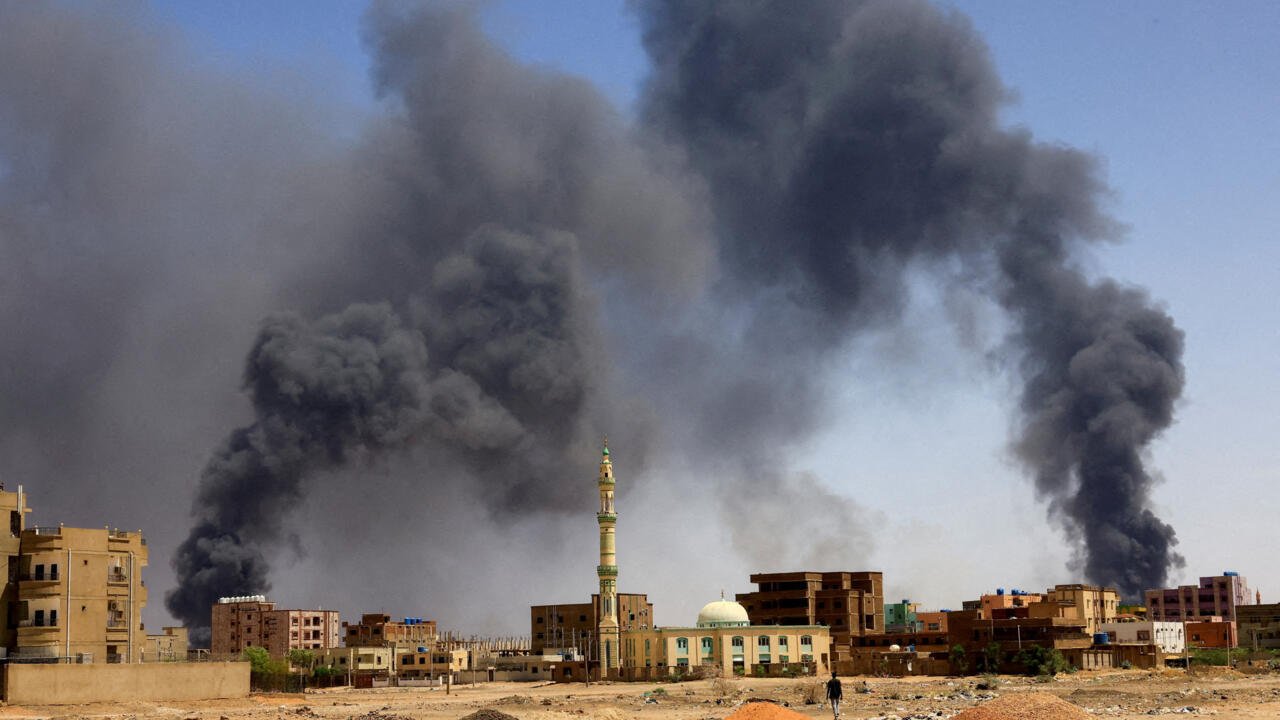


After weeks of painstaking negotiations and fleeting calm, the fragile ceasefire in Sudan has collapsed. The capital, Khartoum, once again reverberates with the sound of gunfire, explosions, and airstrikes as rival military factions clash in densely populated neighborhoods. The breakdown of this ceasefire—brokered with international pressure and optimism—has plunged Sudan back into the abyss of civil conflict, dealing a devastating blow to hopes for peace, stability, and humanitarian relief.


The renewed fighting has prompted urgent evacuations, overwhelmed hospitals, and triggered a new wave of displacement across urban and rural areas alike. As the international community scrambles to salvage diplomatic efforts, ordinary Sudanese citizens are left to navigate the consequences of another chapter of violence in a country already reeling from political upheaval, economic collapse, and social unrest.

Background: A Nation At The Crossroads
Sudan has been teetering on the edge of collapse since the ousting of longtime autocrat Omar al-Bashir in 2019. His removal, achieved through mass protests and military intervention, opened a fleeting window of hope. However, the transition to democratic governance has been fraught with setbacks.
Initially, a civilian-military transitional council was established to guide the nation toward elections. But infighting between key power centers—most notably the Sudanese Armed Forces (SAF), led by General Abdel Fattah al-Burhan, and the paramilitary Rapid Support Forces (RSF), commanded by General Mohamed Hamdan Dagalo, also known as “Hemedti”—sabotaged any progress.
What began as political rivalry escalated into open warfare in April 2023. Since then, multiple ceasefires have been negotiated, only to collapse within days or even hours. The most recent ceasefire, brokered by the United States and Saudi Arabia in Jeddah, was hailed as a tentative but critical pause in hostilities to allow for humanitarian aid and diplomatic dialogue. Its breakdown has now reignited full-scale conflict, particularly in Khartoum.
The Breakdown: How It Unfolded
Tensions began escalating just days after the ceasefire agreement was announced. Though both SAF and RSF pledged to uphold the ceasefire, sporadic skirmishes quickly emerged in strategic zones of the capital. Each side accused the other of violating terms, as ceasefire monitors struggled to verify claims amid conflicting reports and lack of access.
On the third day of the ceasefire, eyewitnesses in Khartoum reported heavy shelling near the presidential palace and artillery exchanges around the airport. RSF forces were seen digging defensive positions in key intersections, while SAF conducted aerial bombardments targeting RSF strongholds in residential areas.
By the end of the week, the ceasefire had effectively disintegrated. Neither side issued a formal withdrawal from the agreement, but fighting resumed at a scale comparable to the early weeks of the conflict. Communication blackouts, electricity outages, and fuel shortages followed, creating a chaotic and dangerous environment for civilians trapped in the capital.
Impact On Civilians
The breakdown of the ceasefire has had a catastrophic impact on the civilian population. Khartoum’s hospitals, already under severe strain, are now operating beyond capacity, with dwindling supplies and personnel. The World Health Organization has reported dozens of civilian casualties in the last 72 hours alone, with hundreds more injured and unable to access medical treatment.
Residential neighborhoods have become battlegrounds. Families remain barricaded in their homes, with little access to food, water, or medication. Schools, markets, and religious institutions have closed. Civil society organizations warn of a looming humanitarian catastrophe if hostilities persist.
“I have seen more bodies in the streets than I can count,” said Amina Suleiman, a teacher in Omdurman, a Khartoum suburb. “There are no safe zones anymore. The fighting is everywhere.”
The United Nations estimates that over 1.8 million people have been displaced internally since the conflict began, with thousands more fleeing to neighboring countries such as Egypt, Chad, and South Sudan. Refugee camps near the borders are now overwhelmed, and aid agencies are calling for urgent international assistance.
Humanitarian Challenges
With the ceasefire now defunct, humanitarian access has once again been blocked. Convoys delivering food, medical supplies, and water purification equipment have been turned away or caught in crossfire. Aid organizations report looting of warehouses and attacks on personnel.
The UN Office for the Coordination of Humanitarian Affairs (OCHA) has urged both factions to allow “unconditional and immediate” access to affected populations. However, in the absence of political will and security guarantees, humanitarian agencies face immense obstacles in delivering aid.
A UN spokesperson lamented, “We had a narrow window to bring relief to a desperate population. That window has slammed shut.”
Diplomatic Reactions
The international response to the ceasefire’s collapse has been swift and concerned. The United States, which played a key role in brokering the deal, issued a statement condemning the renewed violence and calling for restraint. “This is a betrayal of the Sudanese people’s aspirations for peace and stability,” said Secretary of State Antony Blinken.
Saudi Arabia, which hosted the negotiations in Jeddah, has urged the conflicting parties to return to the table and honor their commitments. The African Union and Intergovernmental Authority on Development (IGAD) have both announced emergency summits to address the crisis and potentially restart peace efforts.
Despite these efforts, diplomatic analysts warn that without enforcement mechanisms or international peacekeeping support, any new agreement may prove just as fragile as its predecessors.
Militarization And Urban Warfare
One of the most alarming trends in the renewed fighting is the increasing militarization of urban environments. Both SAF and RSF have turned civilian infrastructure into military assets. Apartment buildings are being used as sniper nests, schools as supply depots, and mosques as command posts.
Urban warfare is notoriously brutal and indiscriminate. In densely populated areas like Khartoum, even precision airstrikes risk massive collateral damage. Analysts fear the conflict could enter a protracted siege phase, similar to scenarios seen in Aleppo, Mosul, or Grozny.
“Urban combat favors entrenched paramilitary groups like the RSF,” noted military expert Dr. Hatem Mahjoub. “But it turns the city into a labyrinth of danger for civilians, aid workers, and even the military itself.”
Regional Implications
The collapse of the ceasefire and continuation of violence in Sudan has far-reaching implications beyond its borders. Sudan occupies a strategic position at the crossroads of the Arab world, Sub-Saharan Africa, and the Red Sea. Instability in Sudan risks creating spillover effects in neighboring nations already grappling with political and economic fragility.
Chad and South Sudan are facing surges in refugees. Egypt, which shares deep cultural and economic ties with Sudan, has called for international mediation and peacekeeping involvement. Ethiopia, still dealing with its own internal conflicts, has urged restraint but remains wary of border instability.
The potential for Sudan’s conflict to evolve into a regional crisis—fuelled by arms smuggling, militant movements, and cross-border displacement—is a growing concern among security analysts.
Voices From The Ground
Amid the chaos, Sudanese citizens are raising their voices through social media, satellite phones, and underground networks. Hashtags like #SaveSudan and #KhartoumBurning are trending as people document atrocities, plea for help, and call on world leaders not to look away.
Civil society groups, many operating from exile or clandestinely within Sudan, continue to advocate for civilian-led governance and peace.
“We didn’t ask for this war,” said Dr. Reem Khalifa, a human rights lawyer now displaced in Port Sudan. “We want democracy, dignity, and the right to live without fear. The world must not abandon us.”
The Path Forward: Is Peace Still Possible?
As the guns roar again in Khartoum, the dream of peace feels distant. Yet, experts argue that the only path forward is negotiation—however difficult that road may be.
For any ceasefire to succeed, it must be monitored and enforced by neutral international actors. Humanitarian corridors must be protected, and perpetrators of war crimes held accountable. The long-term solution must involve a genuine power-sharing agreement that prioritizes civilian rule over military dominance.
The African Union has proposed the deployment of a stabilization force, though details remain vague. Western nations have expressed willingness to increase diplomatic pressure, but military intervention is unlikely without UN consensus.
Ultimately, the fate of Sudan lies with its people. They are the ones bearing the heaviest burden, showing courage in the face of unimaginable hardship, and continuing to dream of a better future—even as gunfire cracks the air around them.
Conclusion
The breakdown of the ceasefire in Sudan is more than a failed political agreement—it is a humanitarian tragedy, a blow to fragile diplomacy, and a stark reminder of how quickly hope can turn to horror in the absence of sustained peace. As Khartoum burns once more, the world watches, waits, and wonders whether Sudan will ever find a way out of this deadly impasse.
The time for action—diplomatic, humanitarian, and moral—is now.