





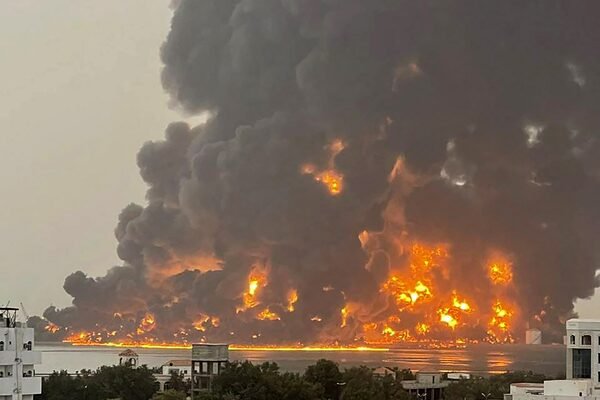


A devastating explosion rocked the port city of Aden in southern Yemen this week, claiming the lives of at least 25 individuals and injuring dozens more. The blast, which occurred in the early evening hours, sent shockwaves across the city and plunged the war-torn country further into turmoil. Authorities, humanitarian workers, and international observers have described the scene as catastrophic, with images of burning debris, twisted metal, and screaming civilians flooding global news outlets.


While the exact cause of the explosion remains under investigation, preliminary reports suggest that it originated from a storage area within the port that may have been used to house fuel, ammunition, or other volatile materials. The incident has raised significant concerns regarding safety protocols at the port, the vulnerability of Yemen’s critical infrastructure, and the broader security implications in a country already grappling with years of civil war.

The Explosion: What We Know So Far
According to eyewitness accounts, the explosion took place shortly after 6:30 PM local time, just as workers at the Aden port were completing their shifts. Residents living in nearby neighborhoods reported hearing a deafening blast followed by a wave of heat and shrapnel. Buildings as far as 3 kilometers from the site were damaged, and windows shattered from the shockwave. A dense column of black smoke rose into the air, visible from miles away.
Emergency services were quickly dispatched to the scene, but efforts were hampered by damaged roads, fire, and secondary explosions. Local hospitals were soon overwhelmed with the influx of wounded civilians, many suffering from burns, shrapnel injuries, and trauma-related conditions. Among the dead were port workers, nearby residents, and several bystanders.

Port of Aden: A Strategic Yet Vulnerable Lifeline
The Port of Aden, once one of the busiest ports in the Arabian Peninsula, has become a vital lifeline for humanitarian aid and commercial goods in a country crippled by conflict and blockade. Located along a critical international shipping route, the port is a logistical cornerstone for both the Yemeni government and international NGOs.
In recent years, control over Aden has been contested between government forces backed by Saudi Arabia and southern separatist groups. This power struggle has undermined security and operational coherence at the port. The explosion has thus reignited debate over the militarization of civilian infrastructure and the inadequate safety oversight in such contested areas.
Human Cost and Humanitarian Fallout
The human toll of the explosion cannot be overstated. Families have been shattered by the sudden loss of loved ones, while survivors now face a long road to recovery. Dozens of victims remain in critical condition, and medical officials fear the death toll could rise further in the coming days.
Beyond the immediate casualties, the blast has caused severe disruptions to food shipments, fuel deliveries, and humanitarian aid. For a country already facing one of the world’s worst humanitarian crises—with over 20 million people in need of assistance—this event is a major setback. Aid organizations have warned that the interruption of port services could delay essential supplies, including food, medicine, and fuel, for weeks.
The explosion also destroyed several warehouses used by humanitarian organizations, compounding logistical challenges. Relief groups such as Médecins Sans Frontières (Doctors Without Borders), the International Committee of the Red Cross, and the World Food Programme have issued urgent appeals for support and access.
Government Response and Investigation
The internationally recognized Yemeni government, which is based in Aden, condemned the explosion as a tragic and preventable disaster. Prime Minister Maeen Abdulmalik Saeed called for an immediate and thorough investigation into the cause, stating that negligence or foul play would be met with the “full weight of the law.”
Preliminary investigations are exploring multiple scenarios, including the accidental ignition of stored fuel, sabotage, or even a targeted attack using explosives. Given the volatile security environment in southern Yemen, no possibility has been ruled out. However, no group has claimed responsibility, and officials are urging patience as forensics teams conduct their work.
The local authorities have promised to tighten security and inspect all storage areas within the port. Security forces have been deployed in large numbers, and the port has been temporarily closed to civilian and commercial traffic, further stoking fears of a wider humanitarian fallout.
International Reactions
The international community has responded with alarm and sympathy. The United Nations issued a statement expressing deep condolences to the victims’ families and reiterated its commitment to supporting Yemen through its humanitarian agencies. Martin Griffiths, the UN Special Envoy for Yemen, stated that “this tragedy highlights the urgency of a sustainable peace and the protection of civilian infrastructure in Yemen.”
The European Union, the United States, and several Middle Eastern governments, including Saudi Arabia and the United Arab Emirates, offered condolences and urged renewed efforts toward conflict resolution. Western embassies in the region also called for heightened security for humanitarian operations.
China and Russia, both of which have commercial and strategic interests in the region, expressed concern over the incident and called for a thorough international investigation. Human Rights Watch and Amnesty International have urged transparency and warned against the use of the disaster to justify further militarization or political crackdowns.
Historical Context: Yemen’s Long Crisis
Yemen has been in a state of near-continuous conflict since 2015, when Houthi rebels seized control of the capital, Sana’a, prompting a military intervention led by Saudi Arabia. The conflict has divided the country into competing power centers, collapsed the economy, and triggered a humanitarian disaster.
Aden, as a southern stronghold, has seen intermittent violence, power struggles between the government and southern separatists, and sporadic terrorist activity. The explosion at the port adds another layer of complexity to a region already teetering on the brink.
Safety lapses, corruption, and the overlap of military and civilian infrastructure have long plagued Aden’s port. Experts warn that unless these structural issues are addressed, similar incidents may occur in the future.
Voices From the Ground
Survivors and residents of Aden have shared harrowing stories. One dockworker described the moment the blast occurred: “It was like the earth opened up. I saw bodies thrown into the air. I don’t know how I survived.” Another man searching for his missing brother sobbed outside a hospital, pleading for information amid the chaos.
Hospital staff have worked tirelessly with limited resources to tend to the wounded. “We don’t have enough beds or blood,” said a doctor at Al-Jumhuriya Hospital. “We’re treating people on the floors and in the hallways. It’s heartbreaking.”
Volunteers and community members have also mobilized to provide water, food, and shelter to the affected families. Mosques and schools have opened their doors to accommodate the displaced, and local businesses are donating supplies. In the face of tragedy, a fragile but powerful spirit of solidarity is emerging.
Looking Ahead: Recovery and Reflection
Rebuilding after the explosion will not be easy. In addition to physical reconstruction, restoring trust, improving security, and ensuring safety at critical infrastructure sites will be paramount. Experts have urged the international community to provide both emergency aid and long-term investment in port safety and governance.
For Yemenis, the explosion is a stark reminder that even in the few functioning areas of the country, peace remains fragile and life is precarious. Many are now calling for the port to be placed under neutral international supervision to ensure transparency and security.
The incident may also serve as a turning point—an opportunity for Yemeni factions and their international backers to reassess priorities. As one resident put it, “We don’t want more war or more weapons. We just want to live.”
Conclusion
The massive explosion at the Yemeni port of Aden is a tragic chapter in a country already besieged by suffering. It has taken innocent lives, deepened humanitarian challenges, and exposed the vulnerabilities of vital infrastructure. Yet it has also united a fractured community in mourning and mutual support, and it has drawn the world’s attention back to a conflict that too often fades from the headlines.
If the international and domestic responses can channel grief into meaningful action—greater safety, better governance, and renewed diplomacy—then perhaps this disaster can serve as a painful but powerful catalyst for change.








