




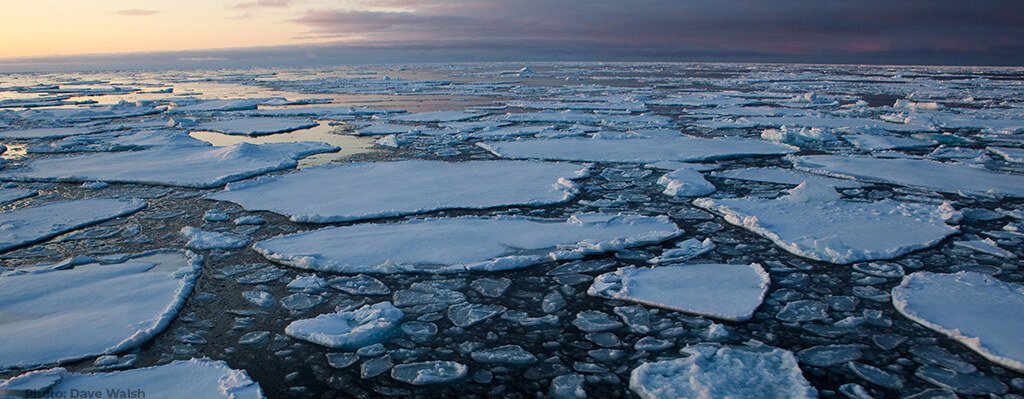


The Arctic, once a remote expanse of white untouched by human activity and environmental disruption, has now become the epicenter of an alarming climate crisis. In a series of recently published studies and scientific briefings, climate scientists from around the globe are raising urgent warnings about the accelerated rate of ice loss in the Arctic region. This transformation is not just a regional concern—it is a global red flag, with consequences that reverberate far beyond the polar circle.

Accelerated ice loss in the Arctic signals a profound and dangerous shift in Earth’s climate system. As sea ice retreats, glaciers melt, and permafrost thaws, the Arctic is warming at nearly four times the global average—a phenomenon referred to as “Arctic amplification.” These changes, driven by anthropogenic greenhouse gas emissions, have sparked widespread concern among climatologists, oceanographers, policymakers, and indigenous communities alike.

The State Of The Arctic: A Fracturing Ice Shield
The Arctic region includes the Arctic Ocean and parts of several countries including the United States (Alaska), Canada, Russia, Norway, and Greenland. Traditionally covered with vast stretches of sea ice, this region has long served as a crucial component of Earth’s climate balance.
According to the latest satellite data collected by NASA and the European Space Agency (ESA), Arctic sea ice extent has dropped by more than 40% since satellite monitoring began in 1979. Summer sea ice has been shrinking drastically, reaching record lows in years such as 2012, 2016, and 2020. More worryingly, it’s not just the extent of the ice that is decreasing—its thickness and age are declining as well. Multi-year ice, which is more stable and resistant to melting, is rapidly being replaced by fragile, first-year ice that melts more easily during summer months.

Glaciologists are particularly concerned with Greenland, home to the second-largest ice sheet in the world. Greenland’s ice sheet is losing mass at an unprecedented rate—estimated at approximately 270 billion metric tons annually. In 2019 alone, scientists recorded an ice loss of over 530 billion tons, enough to raise global sea levels by over 1.5 millimeters in a single year.
Arctic Amplification: The Science Behind the Acceleration
The Arctic is warming nearly four times faster than the global average—a phenomenon known as Arctic amplification. This occurs due to several interlinked feedback mechanisms:
-
Albedo Effect Reduction: Ice and snow reflect much of the sun’s radiation back into space. As ice melts, it exposes darker ocean and land surfaces, which absorb more heat, accelerating further warming and melting.
-
Latent Heat of Melting: As more ice transitions to water, the surrounding environment retains more heat, reducing the natural buffering effect of ice.
-
Atmospheric and Oceanic Circulation Changes: The loss of sea ice alters wind and ocean current patterns, which in turn bring more warm air and water into the Arctic, enhancing melt rates.
-
Cloud Cover Feedback: Changes in ice coverage affect cloud formation, which can trap heat and further influence regional temperatures.
These processes create a vicious cycle—once the ice begins to melt, multiple mechanisms reinforce and accelerate the loss.
Impacts On Global Climate And Sea Levels
Accelerated ice loss in the Arctic does not remain a localized phenomenon; it has cascading impacts on global climate systems. One of the most immediate and visible consequences is sea level rise. The melting of the Greenland Ice Sheet alone has contributed to roughly one-third of the global sea level rise in the last two decades. This poses a growing threat to coastal cities and island nations, where infrastructure, ecosystems, and communities are increasingly vulnerable to flooding and erosion.
Additionally, changes in Arctic conditions influence weather patterns worldwide. The jet stream—a high-altitude band of fast-moving air that affects weather in the Northern Hemisphere—is being disrupted by Arctic warming. A weakened jet stream leads to prolonged weather extremes such as heatwaves, cold spells, and heavy rainfall. Europe, North America, and parts of Asia have already experienced anomalous climate events that scientists partially attribute to these Arctic-induced disruptions.
Ecological Disruption In The Arctic
The Arctic ecosystem, finely balanced and adapted to cold extremes, is undergoing unprecedented stress. Species such as polar bears, walruses, Arctic foxes, and certain seabirds depend on sea ice for survival. As ice habitats shrink and break apart, food chains are collapsing, migration patterns are shifting, and survival rates are declining.
One iconic victim of the ice loss is the polar bear. Forced to swim longer distances between ice floes in search of food, these apex predators are experiencing higher mortality rates, lower cub survival, and increased human-wildlife conflict as they venture closer to human settlements.
Meanwhile, marine ecosystems are also under threat. The loss of sea ice changes ocean salinity and temperature, which can lead to shifts in plankton blooms, fish populations, and predator-prey dynamics. Indigenous communities that rely on traditional hunting and fishing practices find their food security and cultural heritage at risk.
The Role Of Permafrost Thawing
Beneath the Arctic tundra lies permafrost—frozen soil that has remained solid for thousands of years. As Arctic temperatures rise, this permafrost is beginning to thaw, releasing massive quantities of greenhouse gases, primarily methane and carbon dioxide, previously trapped underground.
Permafrost contains approximately 1,500 billion tons of carbon—nearly twice the amount currently in the Earth’s atmosphere. The release of even a fraction of this carbon could significantly exacerbate global warming, creating a feedback loop that accelerates climate change. Additionally, thawing permafrost threatens infrastructure such as roads, pipelines, and buildings, leading to both economic and safety concerns across the Arctic.
Indigenous Communities On The Frontlines
For Arctic indigenous peoples—such as the Inuit, Sámi, Chukchi, and others—climate change is not a future threat but a daily reality. These communities have lived in harmony with the Arctic environment for generations, relying on its resources for sustenance, cultural identity, and spiritual connection.
Melting ice disrupts hunting routes, endangers traditional ways of travel, and undermines housing built on permafrost. Rising sea levels and increased coastal erosion force some communities to consider relocation, raising ethical and logistical challenges. Yet, indigenous knowledge systems offer crucial insights into ecological change and adaptation strategies, and many scientists are now advocating for closer collaboration with local populations in environmental monitoring.
Global Policy And Scientific Response
The warnings from climate scientists have sparked a series of international responses, though many experts argue they remain insufficient. The Paris Agreement, signed in 2015, set targets to limit global temperature rise to well below 2°C, ideally 1.5°C. However, current emissions trajectories suggest the world is on track for 2.5°C to 3°C of warming by the end of the century—levels that would devastate Arctic ice.
Scientific initiatives such as the Arctic Monitoring and Assessment Programme (AMAP) and the Intergovernmental Panel on Climate Change (IPCC) continue to collect data and publish assessments to inform decision-making. Recent Arctic expeditions—including the year-long MOSAiC (Multidisciplinary drifting Observatory for the Study of Arctic Climate) mission—have gathered unprecedented data on polar systems.
Policymakers are also being urged to reduce black carbon emissions, a short-lived pollutant that accelerates ice melt by darkening snow and ice surfaces. Transitioning away from fossil fuels, enhancing climate finance for developing nations, and expanding marine protected areas in the Arctic are among the key strategies being proposed.
Technological Monitoring And Innovation
Modern technology is playing an essential role in monitoring Arctic changes. High-resolution satellites, autonomous drones, underwater sensors, and climate modeling software enable scientists to track ice movement, thickness, temperature, and salinity with precision.
In addition, AI-powered predictive models are improving the forecasting of sea ice patterns, aiding both shipping navigation and scientific research. There is also growing investment in clean energy technology in Arctic nations, particularly wind, solar, and green hydrogen projects, aimed at reducing regional dependence on oil and gas extraction.
What The Future Holds
The most optimistic scientific models suggest that if global emissions are drastically reduced within the next decade, some ice loss may stabilize by mid-century. However, a complete reversal is unlikely. The window to prevent catastrophic ice loss is rapidly closing, and urgent action is needed on multiple fronts—science, policy, industry, and society.
If current trends continue, the Arctic could see ice-free summers as early as 2035, a scenario once thought impossible until late in the 21st century. This would not only disrupt global climate systems but also open the Arctic to increased commercial activity, including shipping, oil exploration, and tourism, raising new environmental and geopolitical risks.
Conclusion: A Global Wake-Up Call
The accelerated loss of Arctic ice is one of the clearest indicators of a planet in distress. What happens in the Arctic does not stay in the Arctic—it affects weather, sea levels, ecosystems, economies, and human lives across the globe. Scientists are warning that we are approaching irreversible tipping points that could plunge the Earth into a state of climate instability for centuries to come.
Yet, the Arctic crisis also presents a powerful opportunity to unite global efforts in climate science, renewable energy, sustainable development, and indigenous partnership. As the ice melts, it uncovers not just the bones of a changing world—but the truth that humanity’s future depends on the choices we make today.
The Arctic is sounding the alarm. It is up to the world to listen—and act.