






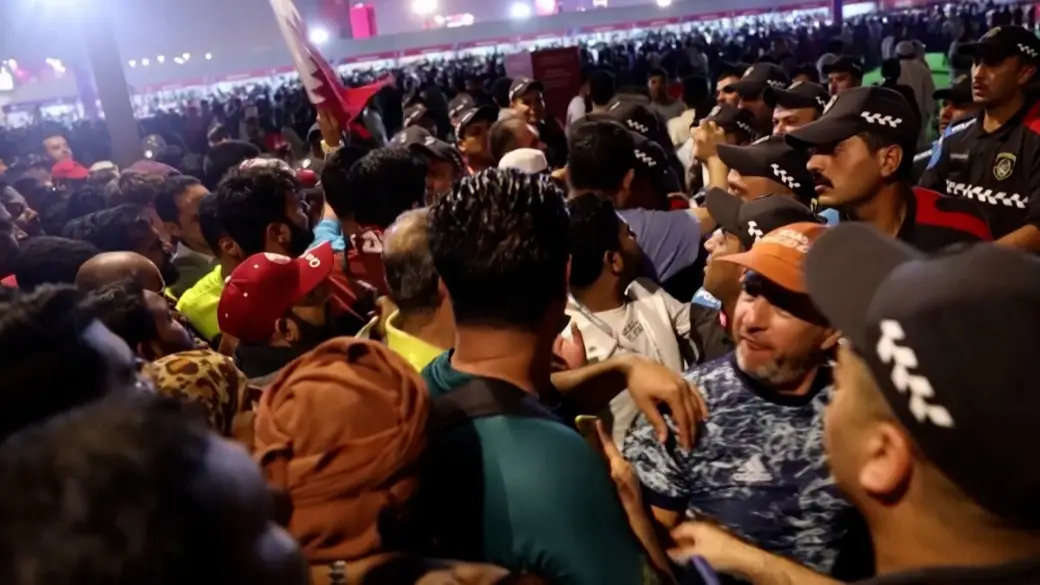

The eyes of the world were firmly fixed on Qatar as it prepared to host the grand finale of the FIFA World Cup, but just hours before kickoff, disaster nearly struck. A sudden fire broke out at Lusail Stadium, the venue scheduled to host the most anticipated football match of the year, plunging the event into a temporary state of chaos and uncertainty. Although the blaze was quickly contained and no fatalities were reported, the incident raised serious questions about safety, crisis preparedness, and the immense logistical demands of hosting a global sporting event.

This unexpected disruption occurred on what was meant to be a historic and celebratory day for both Qatar and football fans worldwide. Instead, the day began with emergency sirens, smoke plumes, and a flurry of emergency personnel converging on one of the most modern stadiums in the world.
The Incident Unfolds
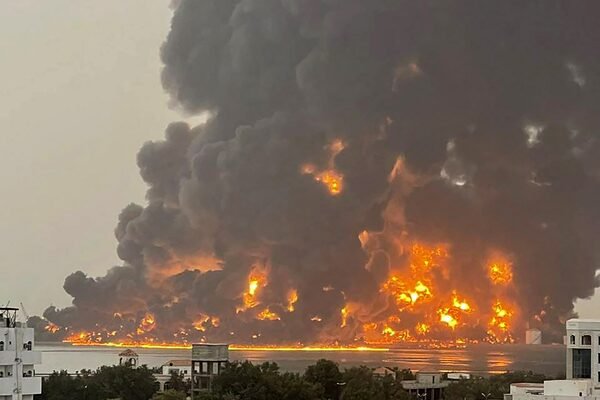
At approximately 10:45 AM local time on the morning of the World Cup Final, smoke was seen rising from the northeast corner of Lusail Stadium, a venue known for its striking architecture and state-of-the-art facilities. Eyewitnesses initially believed it was a controlled fire or smoke effect, possibly part of the elaborate opening ceremonies scheduled for later in the day. However, it quickly became apparent that this was no rehearsal.
Within minutes, thick black smoke engulfed part of the stadium’s exterior, triggering panic among early-arriving staff, security personnel, and broadcast crews. The Qatar Civil Defense was immediately dispatched to the scene, with dozens of fire engines and emergency vehicles mobilized from across the capital, Doha.
By 11:15 AM, emergency responders had begun evacuating the stadium and surrounding perimeters, instructing staff and media personnel to vacate the premises while they assessed the severity of the blaze. Helicopters hovered overhead as firefighters worked tirelessly to prevent the fire from spreading to the main arena.
Initial Response and Containment
Qatar’s Ministry of Interior released a preliminary statement at noon, confirming that a localized fire had broken out in a utility section of the stadium’s lower levels, possibly related to a short circuit in the stadium’s electrical control systems. Fortunately, the fire had not reached the seating areas, the pitch, or critical broadcasting zones. Firefighters successfully contained the blaze by 12:30 PM, roughly two hours after the first signs of smoke.
“The situation is under control,” said Brigadier General Salem Al-Kuwari, spokesperson for Qatar Civil Defense. “There were no casualties or major structural damage. We are conducting a thorough inspection to ensure there are no residual hazards.”
Emergency medical services treated several individuals for mild smoke inhalation, but no one required hospitalization. Stadium officials quickly moved to assess the impact on the scheduled match and the possibility of delaying or relocating the final. The stakes were extraordinarily high: billions of people were expected to watch the match live, and tens of thousands of fans had already arrived in Qatar for the historic finale.
Global Attention and Speculation
News of the fire spread like wildfire across social media platforms. Videos of the smoke pouring out of the stadium and emergency teams rushing to the scene went viral within minutes, prompting widespread concern and speculation. Hashtags like #QatarStadiumFire and #WorldCupFinal began trending globally on platforms like X (formerly Twitter) and Instagram.
International media outlets scrambled to verify information, and rumors quickly emerged suggesting sabotage, terrorism, or negligence. Authorities swiftly dismissed these claims, emphasizing that early investigations pointed to an electrical malfunction and not foul play. Still, the timing of the fire—on the most significant day of the tournament—fueled debates about infrastructure safety, event management, and even the suitability of Qatar as host.
The Stakes: More Than Just a Game
The 2025 World Cup Final was more than just a football match—it was a geopolitical, cultural, and economic statement for Qatar. Having spent over $220 billion on infrastructure, including seven new stadiums, high-speed metro systems, and luxury accommodations, Qatar aimed to showcase its global ambitions and emerging role as a Middle Eastern powerhouse.
Hosting the final at Lusail Stadium, the country’s largest and most technologically advanced arena, was meant to symbolize this transformation. The stadium, capable of holding over 88,000 spectators, features an innovative cooling system, smart surveillance, and architectural designs inspired by traditional Arab craftsmanship.
The fire, although contained, cast a temporary shadow over these achievements. Questions began to arise: How did such a high-tech facility suffer a fire hours before a global event? Were safety checks thorough enough? What impact would this have on the match itself, and Qatar’s international reputation?
Reassurances and Recovery
By early afternoon, FIFA issued a joint statement with the Qatari Supreme Committee for Delivery and Legacy, confirming that the final would proceed as scheduled. After a comprehensive safety sweep and technical inspection, engineers and officials declared the stadium structurally sound and electrically stable.
“FIFA and Qatari authorities are committed to the safety of all participants,” the statement read. “We thank the emergency services for their rapid response and confirm that the final will commence at 8:00 PM local time as planned.”
Massive cleanup efforts took place in the following hours. Damaged sections were cordoned off, power systems were re-routed, and replacement equipment was flown in by helicopter from nearby logistical hubs. Volunteer crews, engineers, and technicians worked in synchrony to restore order and confidence.
Fans React
Fans arriving later in the day were met with heightened security and an air of nervous anticipation. Many expressed concern but were ultimately relieved to hear the situation had been contained.
“It was frightening when we saw the news this morning,” said Alejandro Torres, a supporter from Argentina. “But I trust they wouldn’t let us in if it wasn’t safe.”
Others praised the efficiency of the emergency response. “They handled it professionally and quickly,” said Sarah Williamson, a visitor from the UK. “It’s impressive that the final is still happening.”
Still, for many, the incident was a reminder of the risks and unpredictability involved in organizing an event of such magnitude.
The Final Goes On
As the sun set over the Qatari desert, Lusail Stadium gleamed once more, seemingly untouched by the earlier chaos. The opening ceremony, slightly modified due to logistical constraints, featured musical performances, drone shows, and a tribute to the resilience of the human spirit.
The match itself was a thrilling affair between Brazil and France, delivering a spectacle worthy of the World Cup. Fans and players alike seemed to forget the day’s earlier anxieties as goals were scored, cheers echoed through the stadium, and the world watched in awe.
Brazil ultimately emerged victorious in a penalty shootout, lifting their sixth World Cup trophy amid an explosion of fireworks, music, and celebratory chants.
Post-Event Investigations and Future Considerations
In the days following the final, a full investigation was launched into the cause of the fire. Early findings suggested that a power surge in one of the stadium’s sub-stations led to overheating and the ignition of nearby insulation materials. Maintenance protocols, contractor performance, and electrical system designs are now under scrutiny.
Qatar’s Ministry of Infrastructure vowed to conduct a review of all World Cup facilities, despite the tournament’s conclusion. “We are grateful no lives were lost, but this must be a lesson,” said Minister Fahd Al-Rashid. “Every effort will be made to ensure such incidents never happen again.”
FIFA also hinted at the possibility of revising its stadium inspection and certification standards for future tournaments.
International Reactions and Media Discourse
Globally, the incident sparked debate on multiple fronts. While some praised the rapid response and the resilience of event organizers, others criticized the lack of transparency and perceived overconfidence in Qatar’s readiness.
Commentators across Europe and the United States questioned whether the fire was indicative of deeper systemic issues. “This wasn’t just an accident,” wrote one editorial in The Guardian. “It’s a signal that even the most modern architecture is vulnerable if oversight is compromised.”
On the other hand, media from the Middle East and Asia praised Qatar’s swift handling, describing the successful staging of the final despite adversity as a diplomatic victory.
Conclusion: A Day to Remember for All Reasons
What was supposed to be a perfect day of global celebration instead became one of high tension, rapid action, and eventual triumph. The fire at Lusail Stadium may not have altered the final score, but it changed the narrative of the 2025 World Cup forever.
In the end, the game went on, the fans rejoiced, and the champions lifted the trophy. But the memory of the smoke, the sirens, and the sudden fear served as a sobering reminder that even the grandest of stages are not immune to disruption. It is a story of resilience, vigilance, and the unpredictable intersection of spectacle and reality.