





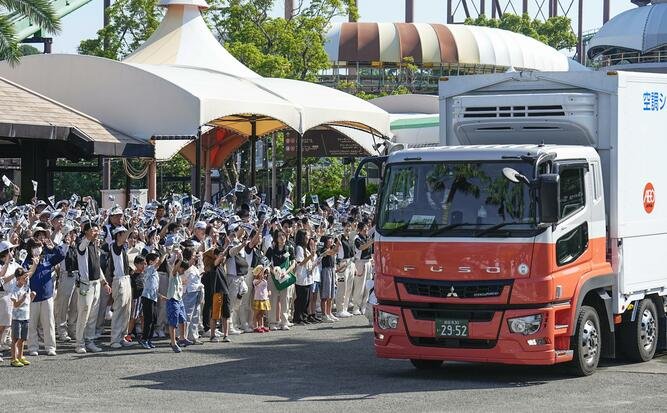

In a heartfelt farewell that captured national attention, Japan said goodbye to four giant pandas on Saturday as they returned to their homeland of China. Rauhin, a 24-year-old female, and her three offspring—Yuihin, Saihin, and Fuhin—departed from Kansai International Airport aboard a chartered flight bound for the Chengdu Research Base of Giant Panda Breeding in Sichuan Province. Their departure marks a significant moment in Japan-China wildlife collaboration and leaves only two pandas remaining in the country.


I. Departure of the Pandas from Japan
1. Final Moments in Wakayama Prefecture
The four pandas were housed at Adventure World amusement park in Shirahama, Wakayama Prefecture, where they were seen off by around 300 people, including emotional staff members and zoo director Koji Imazu. They were transported to the airport in two trucks after final health checks confirmed they were fit for travel. Zookeeper Yuka Nakaya stated that all pandas were in excellent condition, and preparations for the journey had gone smoothly.


2. Emotional Farewell and Public Sentiment
The farewell stirred strong emotions among visitors and panda enthusiasts. On Friday, approximately 1,400 people queued before the park opened to catch a final glimpse of the pandas, while 3,000 guests attended a formal send-off event. Many shared their sadness over the simultaneous departure of all four pandas. Chisato Noda from Nagoya remarked on the emotional weight of the moment, while Yumi Yokoyama from Saitama expressed her desire to visit China to see the pandas again.

II. History of Panda Conservation Cooperation
1. Long-Standing Japan-China Breeding Partnership
The Adventure World zoo began its collaborative panda breeding program with China’s Chengdu base in 1994. Over the course of nearly three decades, the program achieved notable success, having raised 17 panda cubs—the highest number born outside of China. This achievement underscores Japan’s vital role in global panda conservation efforts.
2. End of an Era and Hope for Future Exchanges
Although the current breeding program has officially concluded, zoo director Koji Imazu emphasized that the door remains open for future cooperation. “The breeding project is finished for now, but we are willing to prepare to accept new pandas in future,” he stated, highlighting continued commitment to wildlife conservation and international collaboration.

III. The Pandas’ New Home in China
1. Destination: Chengdu Research Base of Giant Panda Breeding
The four pandas are now en route to the Chengdu Research Base in China’s Sichuan Province—a globally renowned center for panda conservation and breeding. The facility will serve as their new home, where they will join a broader initiative focused on preserving and expanding the population of this endangered species.
2. Continued Quarantine and Reintegration Process
Before their departure, the pandas spent their final month in Japan in quarantine facilities, away from the public. This measure was part of standard international protocols to ensure their health and smooth reintegration upon arrival in China. Their time at Chengdu will likely include further health assessments and gradual acclimatization to the new environment.
IV. China’s Remarks and Future Collaboration
1. Strengthening Diplomatic and Conservation Ties
Chinese Foreign Ministry spokesperson Guo Jiakun highlighted the significance of the panda partnership during a press conference in Beijing. He praised the “sound cooperation ties” between China and Japan in the realm of wildlife protection and emphasized Beijing’s readiness to continue working with Japan and other nations to safeguard endangered species.
2. A Model for International Conservation Efforts
The ongoing exchange of giant pandas between China and countries like Japan serves as a model for international cooperation in biodiversity conservation. These symbolic ambassadors help foster goodwill and deepen diplomatic relations while playing a vital role in raising global awareness about endangered animals.
V. Japan’s Remaining Pandas and the Road Ahead
1. Two Pandas Remain in Tokyo
Following the departure of Rauhin and her offspring, only two pandas—Lei Lei and Xiao Xiao—remain in Japan. Housed at the Ueno Zoological Gardens in Tokyo, they are scheduled to return to China by February of next year, as per their loan agreement. This timeline signals a brief period during which Japan will be panda-free, pending future agreements.
2. Public Fascination and Cultural Impact
Giant pandas hold a special place in Japanese hearts, not just as zoo attractions but as beloved symbols of peace and friendship. Their presence has consistently drawn large crowds and sparked media attention, making their departure all the more poignant. With the departure of the Shirahama pandas, Japan’s deep-rooted public affection for these animals has been unmistakably on display.
3. Anticipating Future Panda Arrivals
Despite the emotional farewells, there is optimism about future exchanges. Given the strong track record of the breeding program and the enduring diplomatic rapport between Japan and China, there is hope that new pandas may one day return to Japanese zoos—bringing renewed joy and engagement with conservation efforts.
Conclusion
The return of four giant pandas from Japan to China represents more than just a logistical transfer of animals—it symbolizes decades of successful collaboration between two nations committed to wildlife preservation. As Japan bids farewell to Rauhin, Yuihin, Saihin, and Fuhin, the country reflects on a legacy of conservation, diplomacy, and deep affection for one of the world’s most iconic endangered species. While their departure leaves a temporary void, the groundwork has been laid for future exchanges, ensuring that the bond between Japan, China, and these gentle giants remains unbroken.