







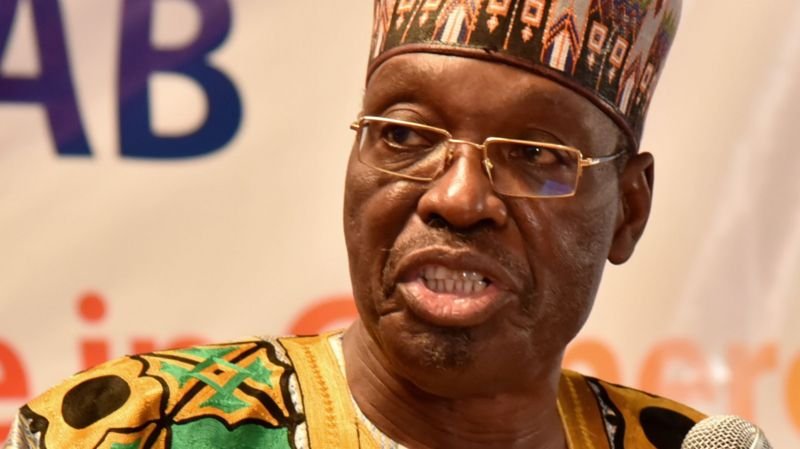


Just months before Cameroon heads to the polls, longtime government ally and former minister Issa Tchiroma Bakary has sent shockwaves through the country’s political landscape by resigning from President Paul Biya’s government. Tchiroma, once a loyal spokesperson and cabinet member, now openly criticizes the regime he long defended, pledging to dismantle what he calls a system of “abuse, contempt, and the confiscation of power.” With this dramatic departure and a fresh presidential bid, Cameroon’s 2025 elections may mark a pivotal turning point in the country’s post-independence history.


I. Tchiroma’s Resignation: A Calculated Break or a Bold Stand?
1. A Former Loyalist Turns Critic
Issa Tchiroma Bakary’s political career has spanned nearly two decades within Biya’s administration. As communications minister, employment minister, and government spokesman, he was once among the loudest defenders of the status quo. One controversial moment that still lingers in the public memory was his denial—later reversed—of a viral video showing Cameroonian soldiers executing women and children, which was authenticated by BBC Africa Eye. This incident has haunted his legacy.
But in a stunning reversal, Tchiroma now claims the Biya regime has “broken public trust” and failed to serve the nation. “A country cannot exist in the service of one man,” he declared shortly after resigning from his post in June.
2. A Manifesto for Change
A day after his resignation, Tchiroma released a 24-page political manifesto that offers a scathing critique of the current regime. In it, he asserts that Cameroon has been ruled for decades by a single, outdated model that has stifled innovation, paralyzed public institutions, and alienated citizens.
One of the most discussed proposals in his platform is the introduction of federalism, including a national referendum to devolve more power to Cameroon’s ten regions. This is a significant policy shift aimed at addressing the long-standing Anglophone crisis, in which English-speaking communities have complained of marginalization in a Francophone-dominated government.
II. Key Themes in Tchiroma’s Campaign for the Presidency
1. Addressing the Anglophone Crisis
The conflict in Cameroon’s North-West and South-West regions—home to most of the country’s English-speaking population—has raged for nearly a decade. Tchiroma has taken a bold stance, directly addressing Anglophone communities by stating, “You do not need people to speak for you—you need to be listened to.” He argues that centralization has failed, and that federalism offers a path toward healing and inclusion.
2. Tackling Economic Instability and Youth Unemployment
Cameroon’s economic challenges are another focal point of Tchiroma’s campaign. With high youth unemployment, inflation, and a rising cost of living, many citizens are struggling. Tchiroma has framed his presidential bid as an effort to restore trust, modernize the economy, and bring opportunities to underserved regions, particularly in the Far North, where he maintains a strong political base.
3. Fighting Political Repression and Strengthening Democracy
As Tchiroma launched his campaign, the government banned political activities by his Cameroon National Salvation Front (CNSF) in a sub-region of the Far North—raising immediate concerns about political suppression. This followed other recent incidents, including the house arrest-like stakeout of fellow opposition leader Maurice Kamto in Douala, underscoring the growing authoritarian tendencies of the Biya administration.
III. Reaction from the Public and Political Class
1. Mixed Reactions Across Cameroon
Public reaction to Tchiroma’s departure from Biya’s camp has been deeply divided. Some view it as a courageous, late-stage awakening from a seasoned politician. Others remain skeptical, especially the youth, who see him as part of the old guard.
Abdoulaye Harissou, a prominent legal expert and former political detainee, stated: “He cannot embody change… He was part of the system for too long. The youth do not trust him.”
Opposition voices like Jean Michel Nintcheu of the APC coalition were even more dismissive: “We don’t see Tchiroma as a potential winner.”
2. Political Analysts Weigh In
Cameroonian political analyst Jules Domshe provided a more nuanced take. He argued that Tchiroma’s move is “canny,” noting:
“By positioning himself as the elder statesman who ‘saw the fire coming,’ Tchiroma is hedging that his break with Biya will be seen as bold—not opportunistic.”
According to Domshe, the timing of Tchiroma’s break is strategically aligned with rising public discontent over issues like insecurity, youth unrest, and regional tensions, suggesting that Cameroon is ripe for change.
IV. A Nation at a Crossroads
At 92 years old, Paul Biya remains the world’s oldest head of state and has been in power since 1982. Despite rumors of his declining health—so persistent that reports on his health were banned last year—he has yet to announce whether he will run for an eighth term. His administration faces growing criticism over:
- Corruption and elite capture
- Deteriorating security due to separatist and jihadist violence
- Delayed parliamentary elections, now postponed until 2026
- Restrictions on media freedom and political expression
The government’s repressive tactics, especially during election season, have heightened concerns from human rights groups, who accuse Biya’s regime of crushing dissent and manipulating the electoral process.
V. The Federalism Debate: A Real Solution or Political Rhetoric?
Federalism has long been proposed as a solution to the Anglophone crisis, yet successive governments have resisted it. Tchiroma’s proposal to hold a national referendum could reignite hopes among English-speaking Cameroonians who have long felt excluded from governance.
However, critics argue that without trustworthy leadership and credible institutions, any referendum or reform could fall flat. The question remains: Will Tchiroma truly deliver, or is this yet another political ploy?
Conclusion: Can Tchiroma Lead Cameroon to a New Era?
As Cameroon inches closer to its October 2025 presidential election, the stakes have never been higher. With economic turmoil, regional strife, and political fatigue mounting, Issa Tchiroma Bakary’s exit from Biya’s orbit represents more than a personal decision—it may be the beginning of a broader realignment in Cameroonian politics.
Whether Tchiroma’s move is perceived as bold reform or political reinvention will depend on how voters—and the political establishment—respond to his message of federalism, accountability, and inclusion.
Still, with growing calls for transparency, youth empowerment, and institutional reform, the country seems ready for change. Whether that change will come through Tchiroma or another opposition figure remains to be seen, but one thing is clear: Cameroon’s political future is no longer certain, and that in itself is historic.








