






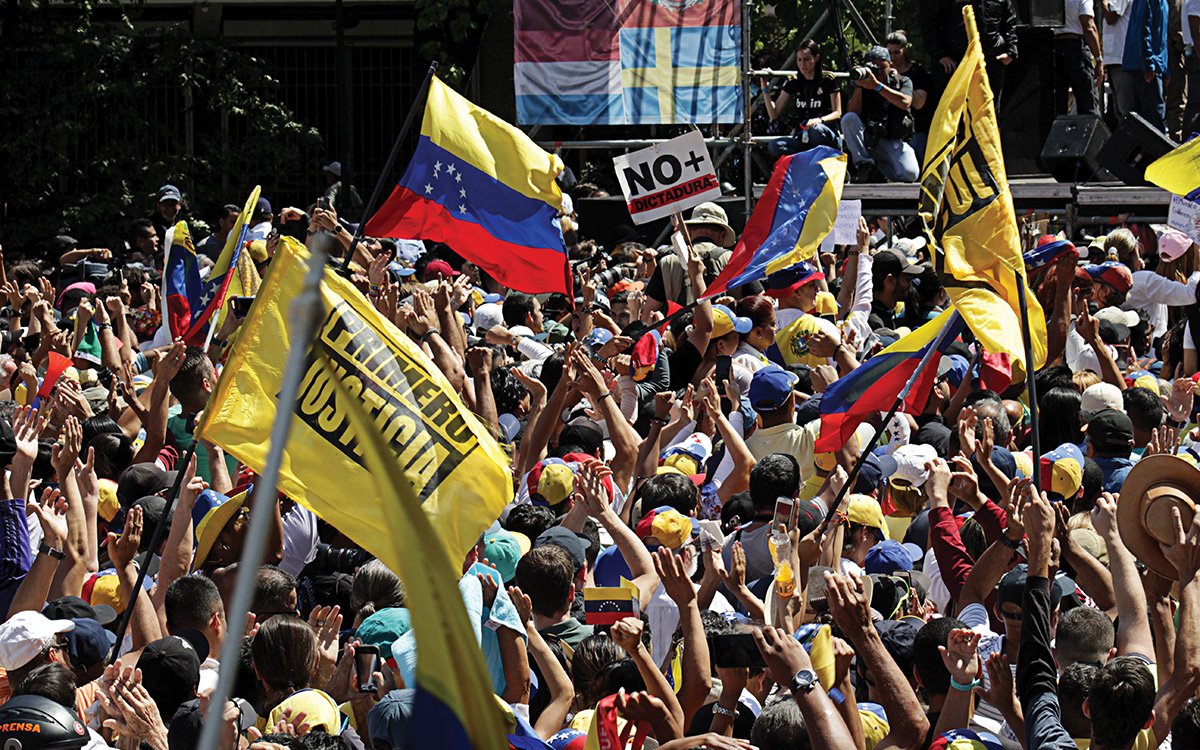

Venezuela, once one of the richest nations in Latin America and home to the world’s largest proven oil reserves, is now gripped by one of the most severe political, economic, and humanitarian crises in modern history. What began as an economic slowdown has evolved into a complex and multidimensional catastrophe that has affected millions of people and sent geopolitical shockwaves across Latin America and beyond.

This essay analyzes the roots of Venezuela’s crisis, examining its economic, political, and social dimensions, and explores its far-reaching global consequences.
1. The Historical Roots: From Boom To Bust
To understand Venezuela’s crisis, one must begin with the country’s oil-dependent economy. Since the 20th century, oil has been both Venezuela’s blessing and curse. The discovery of vast petroleum reserves transformed it into one of the region’s wealthiest nations by the mid-20th century, but it also laid the foundation for resource dependence, economic mismanagement, and political populism.
a. The Oil Boom
During the 1970s oil boom, Venezuela enjoyed extraordinary revenues, which were used to finance ambitious social programs and infrastructure. However, little was done to diversify the economy or build sustainable institutions. Oil accounted for over 90% of exports and a significant portion of government income, creating a fragile economic structure vulnerable to price fluctuations.
b. Rise Of Chavismo
The modern roots of the crisis are closely tied to the presidency of Hugo Chávez, who took power in 1999 with a populist, socialist agenda. Under the “Bolivarian Revolution,” Chávez restructured the state, centralized power, and nationalized key industries, including oil. While poverty initially declined due to generous social spending, the economy became increasingly vulnerable to oil prices and political manipulation.
Chávez’s death in 2013 marked a turning point. His successor, Nicolás Maduro, inherited an unsustainable system amid falling oil prices, growing inflation, and deteriorating institutions.
2. Economic Collapse
The economic crisis in Venezuela is one of the most dramatic in peacetime history. Once a regional economic leader, the country now faces extreme poverty, hyperinflation, and economic contraction rivaling wartime economies.
a. Hyperinflation And Currency Collapse
Venezuela’s inflation reached astronomical levels—over 1,000,000% in 2018—decimating purchasing power. The government printed money to cover deficits, eroding the value of the national currency (the bolívar), and forcing people to rely on barter or foreign currency (mostly U.S. dollars) for transactions.
b. Oil Industry In Decline
The national oil company, PDVSA, once the country’s lifeline, collapsed under mismanagement, corruption, and lack of investment. Oil production dropped from over 3 million barrels per day in the late 1990s to under 1 million in the 2020s. U.S. sanctions further restricted the government’s access to global oil markets, worsening the situation.
c. Food And Medicine Shortages
The combination of import restrictions, currency devaluation, and declining production led to widespread shortages of food, medicine, and basic goods. Malnutrition soared, hospitals lacked supplies, and public services such as electricity and water became unreliable.
3. Political Crisis And Authoritarianism
In parallel with economic collapse, Venezuela descended into authoritarianism. Elections became increasingly flawed, opposition parties were repressed, and democratic institutions were hollowed out.
a. Erosion Of Democratic Institutions
The Supreme Court and National Electoral Council became tools of the ruling party. The 2017 formation of the Constituent Assembly, which bypassed the opposition-controlled National Assembly, effectively nullified legislative oversight.
b. Disputed Presidency
In 2018, Nicolás Maduro claimed victory in a widely contested election, condemned by international observers as fraudulent. In response, opposition leader Juan Guaidó declared himself interim president in 2019, citing constitutional provisions. Over 50 countries, including the U.S. and many EU nations, recognized Guaidó as Venezuela’s legitimate leader—triggering a dual-power conflict that persists.
c. Repression And Human Rights Abuses
The government has employed harsh repression to stifle dissent. Security forces and pro-government militias have been accused of extrajudicial killings, torture, arbitrary detention, and censorship. According to the UN Human Rights Office, thousands of political opponents have faced persecution or exile.
4. Humanitarian Catastrophe And Mass Migration
Venezuela’s crisis is not only political and economic—it is profoundly humanitarian. Over 7 million Venezuelans have fled the country since 2015, making it one of the largest displacement crises globally, comparable only to those in Syria and Ukraine.
a. Regional Refugee Crisis
Neighboring countries like Colombia, Brazil, Peru, and Ecuador have absorbed millions of Venezuelan migrants, straining public services and social cohesion. While some nations have offered temporary protections, others have imposed restrictions, sparking diplomatic tensions.
b. Impact On Families
Millions of families have been torn apart, with children left behind, professionals forced into menial jobs abroad, and communities disrupted. The exodus has particularly affected the working-age population, creating a brain drain that further hinders recovery.
c. Health And Nutrition Emergency
Once among the best in Latin America, Venezuela’s health system is now in shambles. Diseases like measles, malaria, and tuberculosis have resurged. Maternal and infant mortality have spiked. The UN has declared Venezuela’s crisis a complex emergency requiring urgent international response.
5. Regional And Global Geopolitical Implications
The Venezuelan crisis has far-reaching implications for regional stability and global politics.
a. Proxy Conflicts And Foreign Alliances
The power struggle in Venezuela has become a proxy conflict between rival global powers. While the U.S. and European allies back the opposition, countries like Russia, China, Iran, and Turkey support Maduro’s regime—either for ideological reasons, economic interests, or strategic leverage.
-
Russia has provided military assistance, loans, and oil-related investments.
-
China is a major creditor and seeks influence through Belt and Road diplomacy.
-
Cuba has reportedly sent intelligence agents to help suppress dissent.
This alignment has deepened Venezuela’s isolation from the West and complicated diplomatic efforts.
b. U.S. Sanctions And Policy
The U.S. has imposed successive sanctions targeting Venezuela’s oil exports, financial sector, and individual officials. While sanctions aim to pressure the regime and protect democratic principles, critics argue they have also worsened the humanitarian crisis by limiting government revenue and access to international markets.
Washington’s approach has varied between “maximum pressure” under the Trump administration and more negotiation-based engagement under the Biden administration, including limited sanctions relief tied to democratic reforms.
6. The Role Of International Organizations And Mediation Efforts
Multiple international bodies have attempted to mediate the crisis, with mixed results.
a. The Lima Group And OAS
Regional coalitions like the Lima Group (led by Canada and Latin American countries) and the Organization of American States (OAS) have condemned Maduro’s government and pushed for democratic solutions. However, political divisions within Latin America have limited their effectiveness.
b. United Nations And EU
The UN has focused on humanitarian assistance, while the European Union has supported dialogue and sanctions. Norway has facilitated peace talks between the government and opposition, but breakthroughs remain elusive.
c. Humanitarian Aid Obstacles
Delivering aid to Venezuela is politically fraught. The government has rejected offers it sees as foreign interference, while aid agencies face logistical challenges and security risks. In 2019, a high-profile attempt to deliver aid across the Colombian border ended in clashes and political controversy.
7. Domestic Resistance And Civil Society
Despite state repression, Venezuelan civil society has shown resilience. Journalists, students, healthcare workers, and community leaders continue to speak out and organize. Independent media outlets, though restricted, strive to inform the public.
Mass protests—especially between 2017 and 2019—demonstrated widespread dissatisfaction, but they failed to bring about regime change. The population, increasingly fatigued and focused on survival, has shifted toward emigration or local survival strategies.
8. Future Scenarios: Paths Forward
The road to recovery is uncertain, but several scenarios could unfold:
a. Negotiated Transition
A best-case scenario would involve a negotiated political transition, supported by international actors and leading to free elections, sanctions relief, and phased reconstruction. However, mistrust and entrenched interests remain major barriers.
b. Status Quo Continuation
The regime may continue to consolidate power, relying on repression, foreign allies, and a partial economic rebound through informal markets and limited oil exports to China and others. This path would maintain crisis conditions and deepen emigration.
c. Fragmentation Or Collapse
In the worst-case scenario, further economic and political deterioration could lead to state failure, internal conflict, or even territorial fragmentation, creating security risks for the entire region.
9. Rebuilding Venezuela: Economic And Political Prerequisites
Long-term recovery in Venezuela would require:
-
Restoring the rule of law and judicial independence;
-
Reviving oil production while diversifying the economy;
-
Rebuilding democratic institutions with checks and balances;
-
Combating corruption and empowering civil society;
-
Securing foreign investment and international aid under transparent frameworks.
International support will be essential, but Venezuelans themselves must lead the process, grounded in inclusivity, justice, and reconciliation.
Conclusion
Venezuela’s crisis is one of the defining challenges of 21st-century Latin America—rooted in economic mismanagement, authoritarianism, and geopolitical confrontation. Its impact is not confined to its borders; it affects regional stability, migration trends, global oil markets, and international norms on democracy and sovereignty.
The world must not turn away. Venezuela’s tragedy offers lessons about the dangers of unchecked populism, institutional decay, and foreign interference. But it also offers a glimmer of hope—of how resilience, diplomacy, and international solidarity can potentially pave the way for recovery.
Only through sustained engagement, principled dialogue, and a commitment to human dignity can Venezuela reclaim its future and restore the promise it once held as a vibrant and prosperous nation.