








In the ever-evolving landscape of cryptocurrency, one peculiar category continues to gain momentum despite countless financial losses—memecoins. These digital tokens, often inspired by internet humor or controversial figures, are being widely traded and hyped. But beneath the surface of this seemingly amusing financial trend lies a grim reality: very few people profit, and most lose. In this article, we’ll delve into how memecoins function, who truly benefits, and why the majority of investors walk away empty-handed.

I. The Rise of Memecoins
1. From Joke to Financial Ecosystem
Initially, memecoins were viewed as a rebellious take on traditional finance—an ironic nod to Wall Street through digital satire. Tokens like Dogecoin gained traction by mocking the very idea of investing. The appeal lay in their cultural relevance rather than inherent value. As Sander Lutz from Decrypt put it, memecoins are “stocks in cultural phenomena,” representing attention, not utility.

2. Crypto’s Most Volatile Frontier
Unlike Bitcoin or Ethereum, memecoins thrive purely on hype. The market reacts to memes, livestreams, and viral moments. One example featured journalist Matt Shea becoming the subject of hundreds of newly minted memecoins, their prices skyrocketing and crashing in real-time based on comments made by influencer Andrew Tate during a livestream. These momentary highs often vanish within hours, leaving behind financial carnage for those who bought into the joke too late.
II. The Mechanics Behind the Scam
1. Rug Pulls and Pump-and-Dump Schemes
Most memecoin scams follow predictable patterns. First, a developer creates a coin and retains the majority of its supply. Through online buzz and influencer backing, the token gains perceived value. Once enough unsuspecting investors buy in, the creators “pull the rug”—they sell off their holdings at the peak, crashing the market and leaving everyone else at a loss. Alternatively, influencers promote existing coins, pump up prices, then dump them in mass sell-offs. Either way, the results are the same: a small group profits, and the rest lose.
2. Manufactured Hype, Real Money Loss
People are often lured into memecoins believing they’ve discovered the next big thing. In reality, the liquidity pools are often manipulated. According to David Gerard, author of Attack of the 50 Foot Blockchain, it’s a negative-sum game where “someone else has to lose for you to win.” Memecoins represent little more than Monopoly money with real financial consequences.
3. Insider Access—Or So They Think
Some traders join exclusive Telegram or Discord groups, hoping for early access to insider information. These so-called “alpha chats” sell the illusion of control and insight, but in reality, they often serve to exploit those very members. Many think they’re ahead of the scam, only to find they were the target all along.
III. The Influencer Effect and Cultural Shift
1. Attention as Currency
Memecoins have monetized online attention. Influencers like Elon Musk, Andrew Tate, and Donald Trump have been central to their growth. Their followers trust their endorsements, but that trust is repeatedly exploited. The more outrageous the influencer, the more viral the coin becomes. In one extreme case, developers even staged a fake suicide on livestream to attract interest.
2. Exploiting Frustrated Youth
According to Pew Research, 42% of men aged 18–29 have engaged with crypto. Many of them feel alienated by a financial system that seems rigged against them. For these individuals, memecoins provide a fast-track fantasy of wealth. Unfortunately, it often ends in disillusionment or worse—financial ruin.
3. Normalizing the Scam
What’s shocking is the normalization of being scammed. In some memecoin communities, losing money is just “part of the game.” People applaud successful scammers as if it were a rite of passage. This twisted culture further perpetuates the cycle of loss and manipulation.
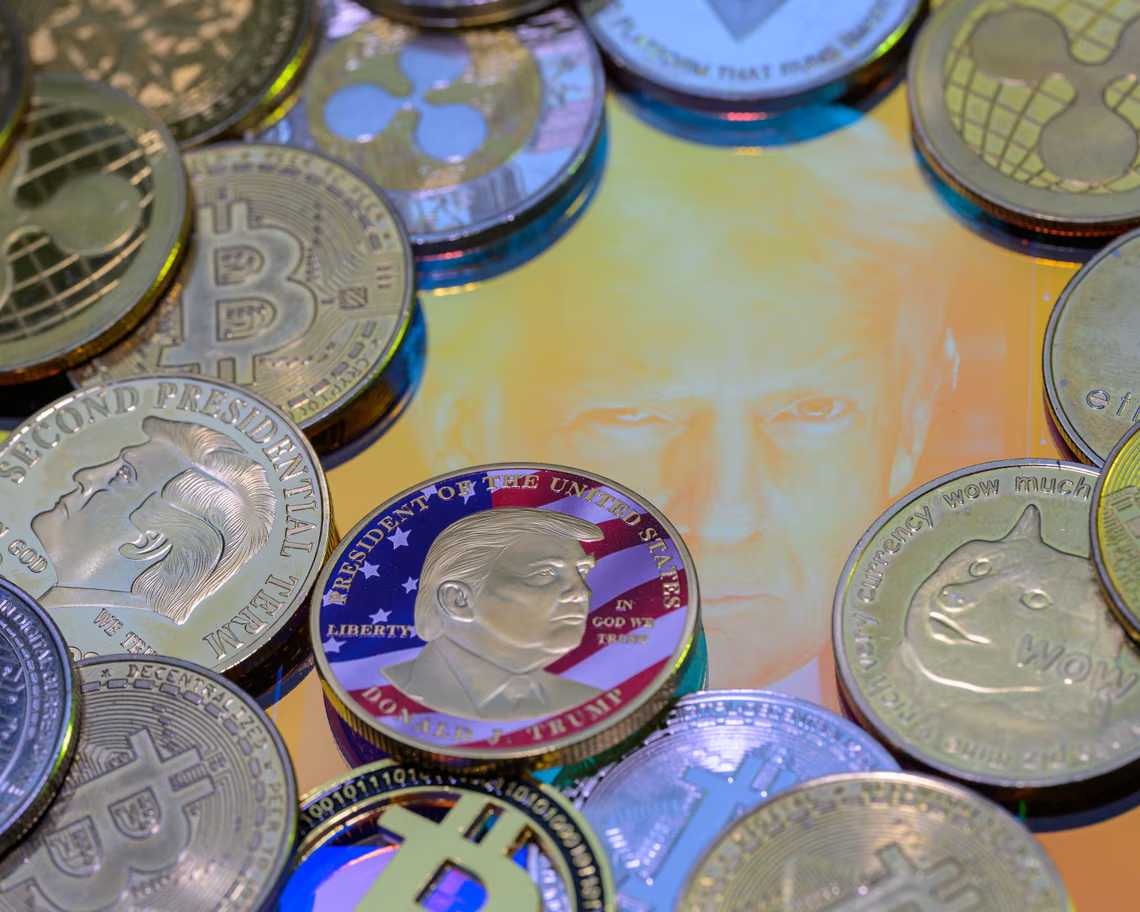
IV. Trump’s $TRUMP Coin: The Political Face of Memecoins
1. Selling Access, Not Value
In January, Donald Trump introduced his own memecoin, $TRUMP. Unlike most tokens, it came with real-world perks—such as dinner and a White House tour for top holders. This gave the coin legitimacy in the eyes of many supporters. However, the majority of tokens are held by Trump and his associates, and they’re only released in tranches controlled by arbitrary rules. The result? Insiders continue to profit massively while average holders suffer losses.
2. Regulatory Capture
Since launching his memecoin, Trump has overhauled the SEC, replacing regulators with pro-crypto allies. Many crypto investigations and lawsuits have been dropped. His administration is now pushing for legislation—the Stable Bill and the Genius Bill—that could skyrocket the value of his own stablecoin. Critics, including Gerard, argue this is a blatant conflict of interest that could devastate ordinary investors.
3. A System Built to Exploit
The Trump coin is textbook memecoin manipulation: a few insiders make billions while most others lose money. Profits are also made on every transaction through fees, raking in over $100 million so far. Meanwhile, investors still hold tokens that may never regain their purchase value.
V. The Illusion of Wealth and the Reality of Loss
1. Rare Winners, Many Losers
While headlines feature success stories—like the trader who turned $800 into $10 million with a hippo-themed coin—these are anomalies. On Pump.fun, the primary memecoin trading platform, only 0.4% of users have earned more than $10,000. The vast majority either break even or incur steep losses.
2. The False Promise of Early Entry
Many investors believe they can beat the system by getting in early. But timing a memecoin pump is nearly impossible without insider info. The people who consistently profit are usually those with connections, capital, or the ability to sway public opinion.
3. Gambling Without a Safety Net
Unlike traditional gambling, memecoin trading lacks support systems. There are no hotlines, no regulations, no restrictions. People can lose their life savings with no recourse. As Lutz observed, the culture doesn’t even try to prevent loss—it often embraces it.
Conclusion
Memecoins might look like harmless fun or a fast way to wealth, but they are often anything but. These digital assets are built on attention, hype, and deception—leaving most participants worse off than when they began. While influencers and insiders rake in millions, average traders are left with worthless tokens and empty wallets. The smart move? Stay informed, stay skeptical, and stay far away.








