






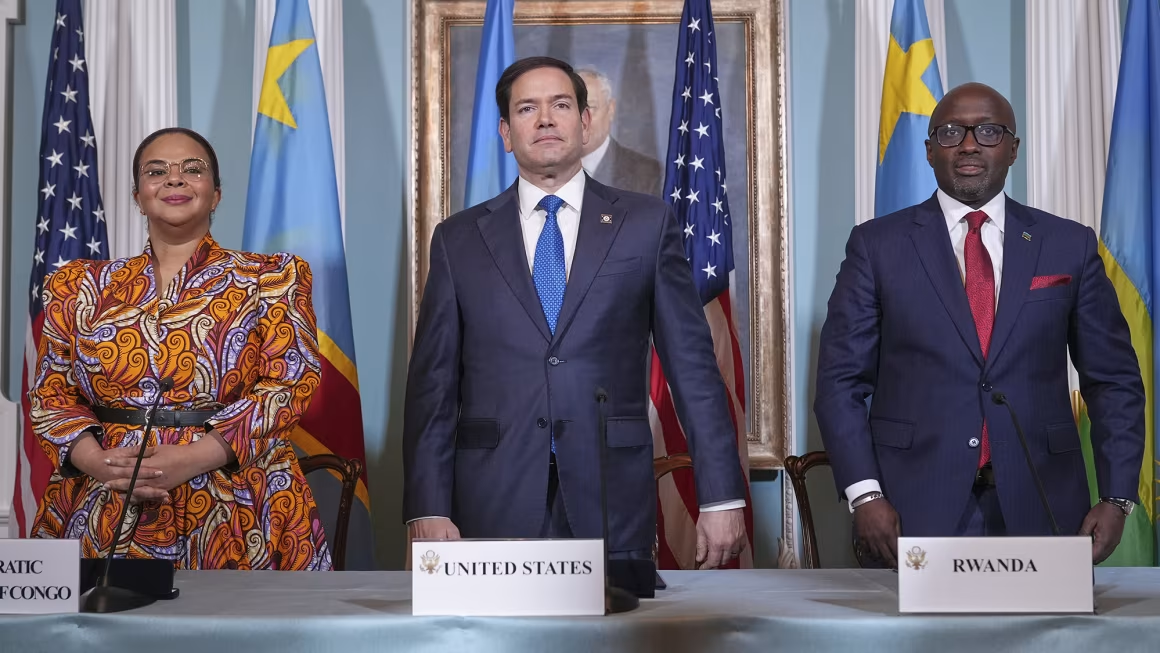

The Democratic Republic of Congo (DRC) and Rwanda recently signed a peace accord in Washington, D.C., with hopes of ending decades of conflict in eastern Congo. Brokered by the United States and praised by President Donald Trump as a major achievement, the agreement comes amid ongoing violence, widespread displacement, and fierce international criticism of Rwanda’s alleged support for rebel militias. Despite the celebratory tone from Washington, many analysts remain unconvinced that the deal will bring lasting peace to a region mired in complex historical, political, and economic tensions.

I. The Context of the Washington Agreement
1. Renewed Conflict in Eastern DRC
The eastern region of the DRC has witnessed a brutal resurgence of conflict in recent months. The M23 militia, widely believed to receive backing from Rwanda, has seized major cities and committed severe human rights abuses, including executions and sexual violence, according to humanitarian groups.
Over 7,000 people have been killed since January, and more than one million have been displaced, triggering a humanitarian crisis that has drawn global concern.
2. Trump’s Role in the Peace Deal
President Trump, touting himself as a global peacemaker, expressed optimism about the potential impact of the treaty. He described the event as a “great day for Africa and the world” on his social media platform, though he lamented that he would not receive recognition such as the Nobel Peace Prize for his efforts.

The signing ceremony was overseen by U.S. Secretary of State Marco Rubio and involved high-ranking officials from both nations, including DRC’s Foreign Minister Thérèse Kayikwamba Wagner and her Rwandan counterpart Olivier Nduhungirehe.
II. Examining the Root Causes of the Crisis
1. Historical and Ethnic Tensions
The DRC-Rwanda conflict is deeply rooted in unresolved disputes dating back to colonial-era borders and the aftermath of the 1994 Rwandan genocide. After the genocide, numerous Hutu militias fled into eastern Congo, which Rwanda now claims as an existential threat.
The Congolese military’s alleged alliance with some of these groups has further exacerbated tensions. In response, Rwanda supports M23, a Tutsi-dominated rebel group that claims to protect Rwandophone minorities in Congo.
2. Struggle for Mineral Wealth
Beyond political and ethnic strife, the DRC’s vast mineral wealth—especially its reserves of cobalt and coltan—lies at the heart of the conflict. These resources are essential to global industries, including electronics and electric vehicles, and have turned eastern Congo into a battleground for economic control.
A December UN report found evidence of illicit mineral exports from the DRC into Rwanda. While Rwandan President Paul Kagame denied stealing resources, he admitted the country has served as a transit hub for such materials.
III. What’s in the U.S.-Mediated Agreement?
1. Key Provisions
The signed agreement addresses core issues, including respect for territorial boundaries, disarmament of armed groups, and reintegration plans for non-state combatants. It also outlines frameworks for trade and investment, especially around critical minerals, suggesting increased U.S. economic interest in the region.
Despite these inclusions, the deal does not explicitly mention the transfer of mineral rights to the U.S. Instead, it opens the door to enhanced U.S. involvement in regional supply chains and resource development through partnerships and investments.
2. Humanitarian and Economic Clauses
The peace accord also promotes the return of refugees and displaced populations, guarantees humanitarian access, and introduces a new regional economic cooperation model aimed at attracting foreign investment, particularly from the U.S.
IV. A Missing Piece: The Role of M23 and AFC
1. Exclusion from the Talks
Significantly, the M23 militia and its broader coalition, the Alliance Fleuve Congo (AFC), did not participate in the Washington negotiations. Instead, they remain engaged in a separate peace process in Doha, led by Qatar.
AFC spokesperson Victor Tesongo told reporters that the group is not ready to disarm, pending the outcomes of the Doha talks. The rebels continue to control strategic airports and mining towns, and their exclusion raises doubts about the enforceability of the U.S.-led treaty.
2. Failed Ceasefires and Previous Attempts
History casts a shadow over the current peace effort. A previous truce reached in April through Qatar’s mediation collapsed within days. Similarly, efforts by Angola’s President João Lourenço had failed earlier in the year, suggesting that diplomatic promises alone may not be enough to halt the violence.
V. Public Reactions and Criticism
1. Activists and Experts Question the Deal
Congolese Nobel laureate Denis Mukwege has sharply criticized the accord. He argued that it fails to address Rwanda’s alleged aggression and accused the deal of legitimizing the exploitation of Congo’s natural resources under the guise of economic cooperation.
Likewise, local political analyst Dady Saleh and activist Daniel Kubelwa expressed skepticism. They warned that any peace process ignoring key structural issues—such as wealth inequality, institutional fragility, and the suppression of dissent—will likely prove temporary.
2. Calls for a Comprehensive Solution
For Kubelwa, the path to lasting peace must involve more than ceasefires and investment promises. It requires a national dialogue inclusive of all Congolese citizens, justice for past crimes, fair distribution of mineral wealth, and reform of governance systems.
Without addressing these deeper issues, he warned, any peace agreement will remain “a fragile illusion.”
Conclusion
While the U.S.-brokered peace deal between Rwanda and the DRC is a diplomatic milestone, it faces serious challenges. Excluding major rebel factions, glossing over Rwanda’s controversial role, and overlooking the systemic causes of conflict may ultimately undermine the treaty’s effectiveness. Lasting peace in eastern Congo requires more than political gestures—it demands inclusive, transparent, and equitable solutions that benefit the people most affected by decades of war.