









The election of President Joe Biden in 2020 signaled a significant shift in American foreign policy. Following four years of the Trump administration’s “America First” approach—characterized by transactional diplomacy, skepticism toward multilateralism, and strained alliances—the Biden administration prioritized rebuilding traditional alliances and reasserting U.S. leadership on the world stage. This strategic pivot, while welcomed by many global partners, has faced both successes and challenges. Assessing the United States’ post-Trump strategy to rebuild global alliances requires a close examination of policy initiatives, diplomatic efforts, regional dynamics, and the evolving global geopolitical environment.

A Strategic Reset: The Biden Administration’s Core Foreign Policy Goals
President Biden entered office with a clear foreign policy message: “America is back.” His administration sought to restore trust, consistency, and values-based diplomacy, emphasizing the importance of alliances as “force multipliers” for American influence. The strategy was built around several key pillars:
-
Revitalizing Multilateralism
The U.S. immediately rejoined the Paris Climate Agreement and the World Health Organization, signaling a renewed commitment to global governance. Multilateral forums such as the United Nations, NATO, G7, and G20 were re-engaged with vigor. -
Reassuring Traditional Allies
Biden prioritized outreach to NATO members, the European Union, and key Indo-Pacific partners such as Japan, South Korea, and Australia. He aimed to repair relationships frayed under the Trump era, especially over trade disputes, defense spending, and unilateral actions. -
Confronting Strategic Rivals through Collective Action
The strategy pivoted toward managing competition with China and Russia through coalitions, rather than unilateral pressure. This included efforts to align democracies against authoritarian influence and to coordinate sanctions, especially concerning human rights and security threats. -
Promoting Democracy and Human Rights
Rebuilding alliances also involved reaffirming shared democratic values. The Biden administration launched initiatives such as the “Summit for Democracy” to build ideological cohesion among like-minded nations.
Rebuilding Transatlantic Ties: The NATO and EU Dimensions
Under President Trump, NATO was frequently criticized for being outdated and for placing an unfair burden on the United States. Biden reversed this stance, affirming Article 5 (the collective defense clause) and increasing U.S. engagement in NATO military exercises and policy coordination.
Key actions included:
-
Restoring U.S. troop commitments in Germany, which Trump had previously ordered reduced.
-
Enhancing NATO’s Strategic Concept to address cyber threats, climate security, and China’s influence.
-
Cooperating on Ukraine by providing military and diplomatic support alongside European allies.
With the EU, the Biden administration sought to resolve trade tensions, such as disputes over steel and aluminum tariffs and Airbus-Boeing subsidies. The creation of the U.S.-EU Trade and Technology Council signaled a long-term partnership focused on digital standards, supply chain security, and innovation.
However, transatlantic relations were not entirely smooth. The AUKUS defense pact (between the U.S., UK, and Australia) caused significant diplomatic friction with France, which was not informed in advance and lost a major submarine deal. Though the incident was later de-escalated, it highlighted the lingering trust issues after the Trump era.
Indo-Pacific Strategy and the “Quad” Reinforcement
Rebuilding alliances in Asia was another priority. The Indo-Pacific region is central to U.S. strategy, especially in counterbalancing China’s rise. The Biden administration expanded cooperation through the Quadrilateral Security Dialogue (Quad) with India, Japan, and Australia, emphasizing:
-
Maritime security and freedom of navigation.
-
Vaccine diplomacy and pandemic recovery.
-
Climate resilience and infrastructure investment.
In parallel, the U.S. deepened security ties with South Korea and Japan while emphasizing trilateral cooperation. Biden hosted key leaders in Washington, promoting alignment on North Korea, China, and regional stability.
Nonetheless, the withdrawal from Afghanistan in 2021—while popular domestically—raised doubts about U.S. reliability among Asian partners. The chaotic exit, rapid Taliban takeover, and lack of allied consultation exposed gaps between rhetoric and execution.
Middle East Realignment and Strategic Ambiguities
The Middle East has seen a recalibration rather than a full alliance revival. The U.S. reduced its military footprint while emphasizing diplomacy, especially concerning Iran. Efforts to revive the Joint Comprehensive Plan of Action (JCPOA) were central to this strategy, though progress has been mixed due to Iranian intransigence and regional concerns.
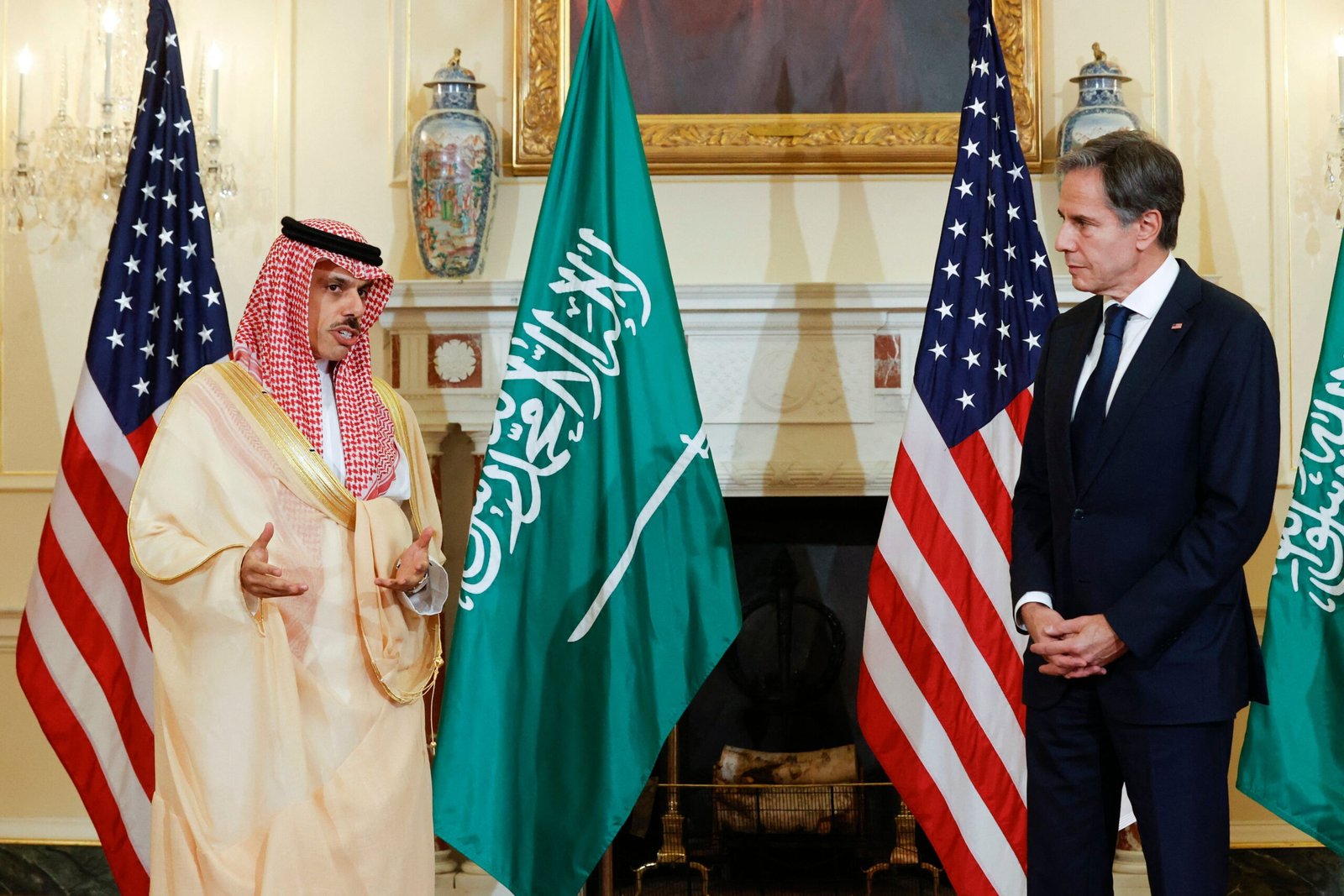
U.S. ties with Israel, Saudi Arabia, and the UAE were tested over human rights issues and weapons sales. The Biden administration walked a tightrope: promoting accountability (e.g., the Khashoggi report) while maintaining strategic partnerships.
Abraham Accords signatories were encouraged, and normalization between Israel and more Arab states remained a priority. However, the Israel-Gaza conflict in 2023 and 2024 reignited global criticism and complicated U.S. diplomacy.
The administration’s approach in the region reflects a tension between realpolitik and values-based diplomacy, a duality that complicates alliance management.
Latin America and Africa: Engagement or Neglect?
In Latin America, the Biden administration faced criticism for continuity rather than change. The migration crisis at the U.S.-Mexico border, unrest in Haiti, and authoritarian backsliding in Nicaragua and Venezuela were met with limited new strategies. The Summit of the Americas in 2022 aimed to rekindle regional diplomacy but was marred by boycotts and policy ambiguity.
In Africa, the administration attempted to re-engage by hosting the U.S.-Africa Leaders Summit, promising investment, health cooperation, and security assistance. Yet, many African leaders remain skeptical, viewing U.S. involvement as episodic compared to China’s sustained engagement through the Belt and Road Initiative (BRI).
While the Prosper Africa initiative and climate-focused partnerships signaled interest, rebuilding alliances in Africa demands consistent presence and mutual respect—a work still in progress.
Multilateral Forums: Climate, Trade, and Health
One of the strongest elements of the U.S. alliance-building effort has been in multilateral issue-based arenas.
-
Climate Leadership: The U.S. re-entered the Paris Agreement and played a key role in COP26 and COP27. Special Envoy John Kerry engaged in shuttle diplomacy, encouraging global emissions commitments and green technology cooperation. Alliances with the EU, UK, and developing nations have grown around clean energy and climate finance.
-
Global Health: COVID-19 diplomacy included major vaccine donations through COVAX and global funding for pandemic preparedness. However, criticism lingered over vaccine nationalism and patent waivers, where U.S. and EU interests sometimes diverged.
-
Trade Policy: Though the Biden administration has not returned to the Trans-Pacific Partnership (TPP), it launched the Indo-Pacific Economic Framework (IPEF) as a non-traditional economic partnership focused on digital trade, clean energy, and anti-corruption. However, many Asian allies want greater market access, not just regulatory cooperation.
These efforts underscore a more cautious and targeted multilateralism—less ideological than Obama’s era but more cooperative than Trump’s.
Soft Power, Public Diplomacy, and Democratic Values
The Biden strategy emphasizes rebuilding not just governmental alliances but also people-to-people ties and U.S. credibility. This includes:
-
Restoring visa programs and educational exchanges.
-
Supporting press freedom and civil society.
-
Promoting transparency in governance through USAID and State Department initiatives.
The Summit for Democracy in 2021 and 2023 showcased U.S. efforts to align like-minded countries around common values, though critics noted inconsistencies (e.g., continued arms sales to authoritarian regimes).
Soft power remains a critical tool in regaining influence lost during the Trump era, where diplomatic vacancies, controversial appointments, and combative rhetoric damaged the State Department’s reputation.
Domestic Constraints and International Perceptions
Despite outward optimism, U.S. allies remain wary of domestic political volatility. The possibility of another Trump presidency—or a similarly isolationist successor—casts a shadow over alliance durability. Questions persist: Can U.S. commitments be trusted beyond a single administration? Will future leaders uphold multilateral principles?
Additionally, internal challenges—polarization, racial injustice, and democratic backsliding—undermine America’s image as a global model. Allies watch not just what the U.S. promises abroad, but how it governs at home.
Strategic Results and Long-Term Outlook
So far, the Biden administration has succeeded in restoring dialogue, institutional trust, and collaborative initiatives. Allies generally welcome the change in tone and approach. Yet, some core challenges remain:
-
Durability: Can alliances be made resilient to future U.S. political shifts?
-
Coherence: Can the U.S. align values with strategic interests consistently?
-
Execution: Can ambitious rhetoric be matched by sustained action?
In a multipolar world, U.S. alliances must evolve. They must be based not just on shared threats, but on shared opportunities—green energy, digital innovation, global health, and inclusive development. This will require agility, investment, and humility.
Conclusion
Rebuilding global alliances after the Trump era is an ongoing process, not a completed mission. The Biden administration has made tangible progress in re-establishing trust, reinforcing international institutions, and fostering common purpose among allies. But the global order is more complex, contested, and dynamic than ever.
The U.S. cannot simply return to a pre-2016 world. It must adapt to new realities—rising regional powers, digital geopolitics, transnational crises—and rebuild alliances not as hierarchies, but as partnerships. This demands more listening, mutual respect, and a sustained commitment to multilateral engagement.
In this context, the U.S. strategy is both a restoration and a reinvention of global leadership. Whether it will endure depends not only on policy but on the credibility, consistency, and conviction with which America shows up in the world.








