







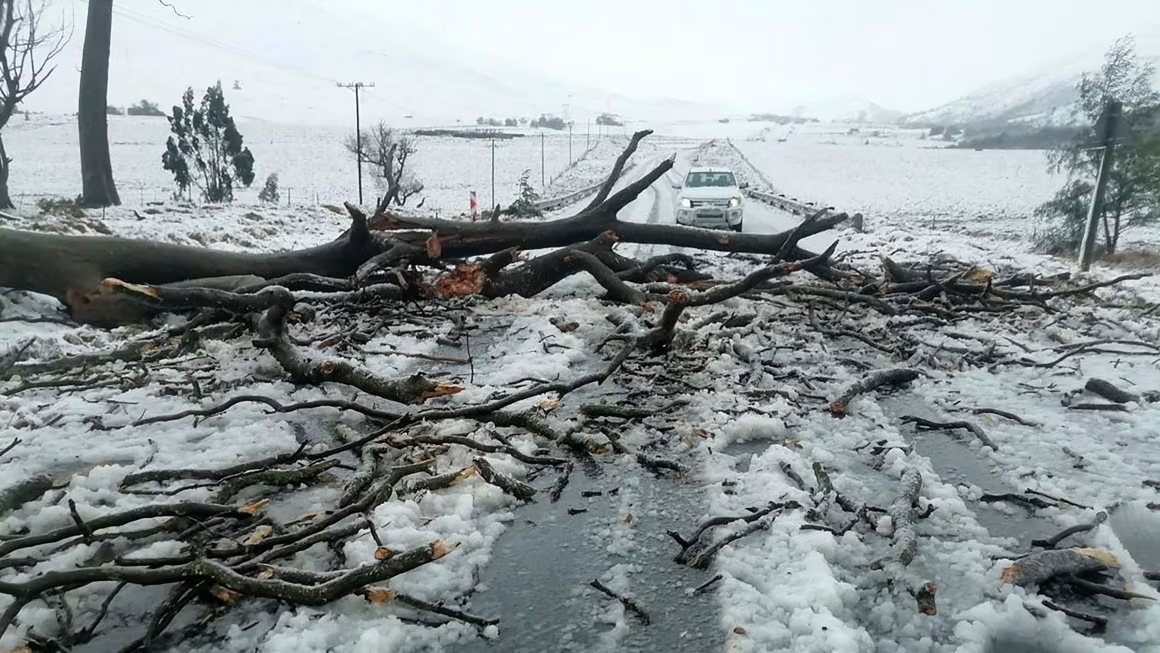


South Africa is mourning the loss of dozens of lives after severe floods swept through parts of the country this week, triggered by a powerful cold front that brought heavy rainfall and snow. Among the victims were schoolchildren who tragically died when their bus was swept into a river in the Eastern Cape province. As the death toll rises to at least 49, emergency services continue their efforts to search for those still missing.


The disaster has once again exposed the country’s vulnerability to extreme weather events, prompting renewed calls for improved infrastructure and climate resilience.
I. DEADLY WEATHER SWEEPS ACROSS SOUTH AFRICA
1. Flooding Causes Widespread Destruction
An intense cold front battered several regions in South Africa, unleashing torrential rain and snowfall that led to flash floods in both urban and rural areas. The Eastern Cape province, one of the hardest-hit regions, witnessed substantial damage as floodwaters forced families out of their homes, damaged roadways, and caused widespread power outages.
Local authorities in the Eastern Cape described the situation as “devastating,” with dozens of communities cut off due to impassable roads. Emergency shelters have been set up for displaced residents, while relief operations are underway to distribute food, water, and essential supplies.
2. School Bus Tragedy in Decoligny Village
A heart-wrenching incident added to the disaster’s toll when a school bus carrying students was swept into a river on Tuesday morning in the village of Decoligny. The vehicle was transporting 13 individuals, including several learners, the bus driver, and his assistant.
Eastern Cape Premier Lubabalo Oscar Mabuyane confirmed during a Wednesday briefing that six people had died in the accident, including four students, the driver, and the conductor. Rescue teams are still searching for four individuals who remain missing. Three children were pulled alive from the submerged vehicle and are now recovering.
II. GOVERNMENT RESPONSE AND NATIONAL IMPACT
1. Presidential Condolences and Emergency Action
President Cyril Ramaphosa expressed his deep sorrow following the incident, particularly addressing the families affected by the school bus tragedy. His office released a statement highlighting the government’s commitment to supporting recovery and providing assistance to the impacted communities.
Ramaphosa’s administration has pledged to increase resources for disaster response and to support ongoing search operations. Additionally, the president has called for a review of emergency preparedness strategies at the local level.
2. Ongoing Search and Rescue Operations
Rescue efforts are continuing in flooded areas, with specialized teams deployed to locate those still missing. Emergency personnel, supported by local volunteers, have been navigating dangerous and unstable terrain in their efforts to reach stranded residents and recover bodies.
With weather conditions remaining unpredictable, authorities have urged citizens to avoid traveling in affected areas and to follow safety guidelines.
III. A HISTORY OF WEATHER-RELATED DISASTERS
1. Past Floods Have Left Devastating Impacts
This is not the first time South Africa has suffered the consequences of extreme weather. In 2022, the KwaZulu-Natal province and the coastal city of Durban experienced some of the worst flooding in decades. Triggered by prolonged heavy rains, the disaster resulted in the deaths of nearly 400 people and displaced tens of thousands.
Those floods destroyed homes, infrastructure, and livelihoods, prompting widespread humanitarian efforts and drawing global attention to the country’s climate vulnerabilities.
2. Rising Frequency of Climate-Linked Events
Scientists and environmental experts warn that such events are becoming more frequent and severe due to climate change. South Africa’s mix of coastal and inland regions makes it particularly susceptible to both flooding and drought.
Experts stress the need for long-term adaptation strategies, including improved drainage systems, early warning technologies, and reinforced infrastructure, especially in poorer, high-risk communities.
IV. COMMUNITY RESPONSE AND HUMANITARIAN SUPPORT
1. Local Efforts to Aid the Affected
Communities in the Eastern Cape and surrounding areas have come together in response to the disaster. Local non-profits, religious groups, and volunteers are working hand in hand with government agencies to deliver food, blankets, and medical aid to those displaced by the flooding.
Emergency shelters have been overwhelmed by the number of evacuees, and calls for public donations of food and supplies have surged in the past 48 hours.
2. Trauma and Loss Among Survivors
For families who lost children in the school bus accident, the grief is immeasurable. Local counselors and social workers have been dispatched to provide psychological support to survivors and bereaved families.
“This is not just a physical disaster—it’s an emotional catastrophe for many,” said a representative from the provincial health department, stressing the importance of mental health care in the aftermath of such events.
V. A CALL FOR STRONGER PREVENTION MEASURES
1. Calls for Improved Infrastructure
Urban planners and disaster management experts argue that poor infrastructure and inadequate stormwater systems have exacerbated the impact of recent floods. In many rural and peri-urban areas, drainage systems are either outdated or non-existent, increasing the risk of sudden flooding during heavy rainfall.
They call for urgent investment in climate-resilient infrastructure, including better roadways, embankments, and flood warning systems, especially for schools and public transportation routes.
2. Strengthening Disaster Preparedness
In light of the growing threat posed by extreme weather, authorities are being urged to prioritize disaster education and preparedness. Community-based response plans, school safety protocols, and timely weather alerts could significantly reduce fatalities in future incidents.
Environmental experts also advocate for integrating climate risk management into national development policies to ensure future resilience.
Conclusion
The deadly flooding that struck South Africa has once again revealed the country’s deep vulnerabilities in the face of climate-related disasters. With at least 49 lives lost, including children on their way to school, the tragedy underscores the urgent need for better preparedness, stronger infrastructure, and a national commitment to climate resilience. While search efforts continue and communities begin to rebuild, the emotional and material toll of this catastrophe will be felt for a long time. The challenge now lies in learning from this tragedy to prevent others like it in the future.








