







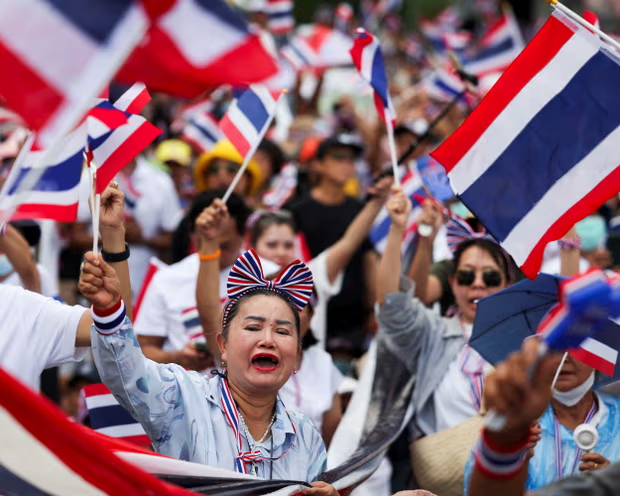


Thousands of demonstrators filled the streets of Bangkok over the weekend, calling for the resignation of Prime Minister Paetongtarn Shinawatra. The protest, sparked by a leaked audio recording of a phone conversation between the Thai leader and Cambodia’s former Prime Minister Hun Sen, has intensified public outrage and reignited nationalist sentiments. The controversy comes amid heightened tensions over a fatal border incident between the two nations and has plunged Paetongtarn’s government into political turmoil.

I. Growing Public Discontent
1. Leaked Call Triggers Political Firestorm
The political crisis began after an audio clip surfaced of Prime Minister Paetongtarn speaking with Hun Sen, Cambodia’s long-serving former leader. In the recording, Paetongtarn refers to Hun Sen as “uncle” and promises to “take care of anything” he may need. She is also heard making disparaging remarks about a senior Thai military officer. The recording quickly circulated online, drawing criticism from nationalist groups and the public alike.
2. Surge of Nationalist Protests
By Saturday afternoon, over 6,000 people had joined the demonstration in Bangkok, with estimates predicting the crowd would exceed 10,000 by evening, according to the Bangkok Post. Protesters carried Thai flags and chanted slogans like “Ung Ing, get out,” referencing Paetongtarn’s popular nickname. Some demonstrators displayed signs labeling her a “traitor” and a “sell-out,” accusing her of undermining Thailand’s national interests.
II. Political Fallout and Legal Challenges
1. Cracks in the Coalition
The leaked call has severely undermined Paetongtarn’s political standing. A key coalition partner exited the government shortly after the recording became public, reducing her parliamentary majority to a fragile margin. The nationalist group behind the protest, United Force of the Land, has since demanded that all coalition partners withdraw their support from the ruling Pheu Thai party.
2. Judicial Scrutiny Intensifies
Paetongtarn’s troubles extend beyond public protests and political instability. Petitions have been submitted to Thailand’s Constitutional Court, accusing her of violating ethical standards and breaching the constitution. The court is scheduled to meet on Tuesday to consider whether to accept the case, which could lead to her suspension during the investigation. A final ruling, however, may take several months.
III. Historical Context and Ongoing Border Dispute
1. Centuries-Old Tensions Reignite
The diplomatic strain between Thailand and Cambodia dates back more than 100 years, stemming from colonial-era border delineations established during France’s occupation of Cambodia. The recent escalation occurred in May when a Cambodian soldier was killed in a brief exchange of gunfire along the border, reigniting longstanding territorial disputes between the neighboring nations.
2. Cambodia Responds with Outrage
In a speech on Saturday marking the 74th anniversary of Cambodia’s ruling party, Hun Sen condemned the Thai military’s recent actions near the border as a severe breach of Cambodia’s sovereignty. “This poor Cambodia has suffered from foreign invasion, war and genocide… but now Cambodia has risen on equal footing with other countries,” Hun Sen stated, reaffirming national pride and warning against perceived Thai aggression.
IV. A Legacy of Political Controversy
1. The Shinawatra Family’s Tumultuous History
Many of the groups opposing Paetongtarn today are the same ones that rallied against her father, Thaksin Shinawatra, who was ousted from office in a 2006 military coup. Her aunt, Yingluck Shinawatra, also faced a similar fate when she was removed from power by a court ruling and subsequent coup in 2014. The Shinawatra family has long been a polarizing force in Thai politics, often clashing with the country’s conservative and military-aligned establishment.
2. Apology Fails to Quell Dissent
Despite issuing a public apology for the contents of the leaked phone call, Paetongtarn has been unable to stem the rising tide of criticism. Her attempts to frame the conversation as a diplomatic strategy have failed to convince many Thais, particularly those who see her language as overly deferential to Cambodia’s former strongman.
V. Nationalist Sentiment and Sovereignty Concerns
1. Protesters Rally to “Protect the Nation”
Jade Donavanik, a legal scholar and prominent protest speaker, addressed the crowd by emphasizing the importance of defending Thailand’s sovereignty. “We are united here by the force of nature to safeguard our national and territorial integrity,” he declared. Many demonstrators echoed similar sentiments, viewing the current leadership as compromising the nation’s dignity and independence.
2. Escalation Risks Diplomatic Fallout
The border flare-up and inflammatory rhetoric have raised fears of further deterioration in Thai-Cambodian relations. While both governments have taken tit-for-tat actions, the broader regional impact of this diplomatic rift remains uncertain. Analysts warn that escalating nationalist fervor could hinder constructive dialogue and lead to prolonged instability at the border.
Conclusion
The unfolding crisis in Thailand—fueled by a leaked phone call, a fatal border incident, and intensifying nationalist anger—has placed Prime Minister Paetongtarn Shinawatra in an increasingly precarious position. With protests growing, her parliamentary support eroding, and judicial proceedings looming, her political future hangs in the balance. As the Constitutional Court prepares to deliberate on the accusations against her, Thailand faces not only a leadership challenge but also a renewed reckoning with the deep-rooted divisions that have long defined its political landscape. Whether Paetongtarn can weather the storm or becomes the latest Shinawatra to be ousted remains to be seen.








