








In a landmark achievement that signals China’s rapid ascent as a spacefaring superpower, Beijing has successfully added new modules to its Tiangong Space Station, marking a major step forward in the country’s ambitious space exploration roadmap. The completion of this phase not only enhances China’s scientific capabilities in orbit but also reflects its growing influence in the global space race, traditionally dominated by the United States and Russia.


This recent expansion of Tiangong — which means “Heavenly Palace” in Mandarin — cements China’s status as one of only three nations to operate a permanently crewed space station. As the world watches, the Middle Kingdom is rewriting the script of human presence in space, combining innovation, self-reliance, and long-term vision.

The Structure of the Tiangong Space Station
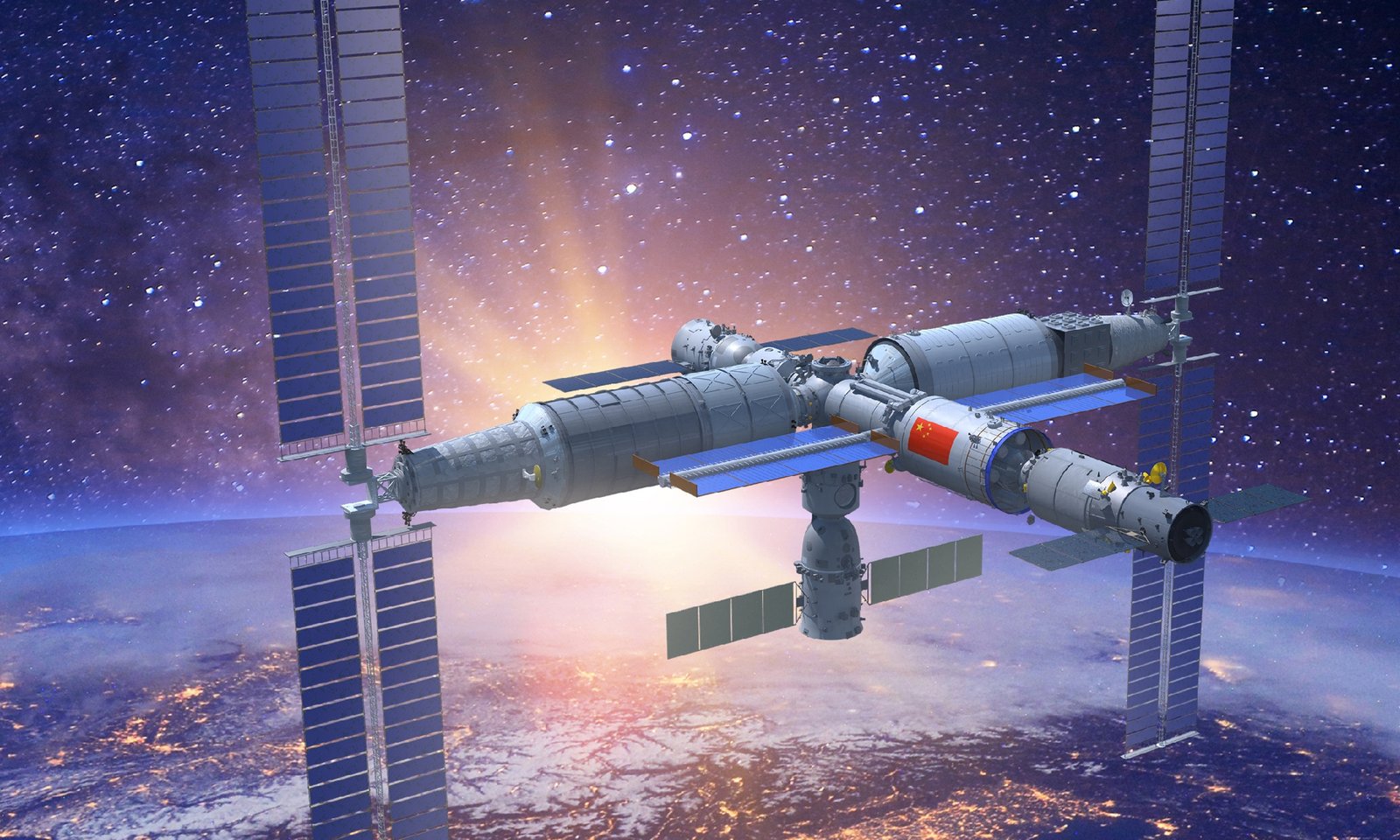
The Tiangong Space Station, officially known as the Tiangong Orbital Complex, is composed of a central core module named Tianhe (“Harmony of the Heavens”) and two laboratory modules, Wentian (“Quest for the Heavens”) and Mengtian (“Dreaming of the Heavens”). These modules together form a T-shaped structure, which has now been expanded further with two newly added modules that provide enhanced research facilities, improved crew quarters, and docking ports for visiting spacecraft.
Core Module – Tianhe
Launched in April 2021, Tianhe is the heart of Tiangong. It provides life support, propulsion, and control for the entire station. Housing the astronauts’ living quarters, kitchens, exercise areas, and command systems, it serves as the central node for scientific activities and data transmission.

Laboratory Modules – Wentian and Mengtian
Wentian was launched in July 2022, followed by Mengtian in October of the same year. These modules are dedicated to microgravity experiments, space medicine, fluid physics, and new materials research. Each module contains multiple scientific racks, robotic arms, and external payload adaptors for Earth and deep-space observation.
The New Additions
The latest expansion includes the Shuntian Logistics Module, a supply and storage hub, and the Xuntian Space Telescope Docking Bay, which will support China’s upcoming Xuntian Space Telescope — designed to rival NASA’s Hubble and James Webb telescopes. These additions reflect not just operational maturity but a clear vision for scientific expansion and long-term orbital habitation.
Technological and Engineering Excellence
The Tiangong project has been lauded for its engineering precision, rapid development timeline, and self-sufficiency. Unlike the International Space Station (ISS), which required decades of multinational collaboration and over 15 nations, the Chinese station was designed, constructed, and launched solely by China within a span of about 10 years.
Key technological highlights include:
-
Autonomous docking systems for cargo and crewed spacecraft
-
Modular assembly using robotic arms and astronaut-guided procedures
-
Advanced solar energy systems, providing consistent power for long-duration missions
-
Radiation shielding and climate control for long-term human survival in space
-
AI integration in monitoring systems, data analytics, and experiment management
China’s space agency — the China National Space Administration (CNSA) — has demonstrated its ability to rival traditional space giants through indigenous innovation and consistent investment in R&D.
Human Presence and Crewed Missions
Since the first crewed mission to Tiangong, Chinese astronauts, known as taikonauts, have conducted multiple long-duration missions. These include:
-
Shenzhou-12 (2021): The first crewed mission to Tianhe
-
Shenzhou-13 (2021–2022): First female taikonaut, Wang Yaping, conducted a live science lecture from orbit
-
Shenzhou-14 & 15 (2022): Coordinated the final assembly and module installation in orbit
-
Shenzhou-16 to 18 (2023–2025): Ongoing rotation crews expanding scientific output and conducting EVA (extravehicular activity) missions
Each mission has increased in complexity, duration, and scientific scope, laying the groundwork for potential interplanetary crewed missions in the future.
Scientific Research and Experiments
One of the core missions of Tiangong is to advance scientific knowledge in conditions only achievable in space. The newly added modules expand Tiangong’s capacity to support up to 100 onboard experiments simultaneously, covering fields such as:
-
Fluid dynamics in microgravity
-
Protein crystallization and drug development
-
Space agriculture and closed-loop ecosystems
-
Cosmic ray and dark matter detection
-
Quantum communication and optics
China has invited global participation, allowing scientists from countries including Germany, Russia, Pakistan, and Italy to propose and conduct joint research aboard Tiangong. This move signals Beijing’s soft power strategy in fostering international cooperation outside the orbit of Western-led projects.
The Xuntian Telescope and Beyond
Scheduled for launch in 2026, the Xuntian Space Telescope will orbit in close coordination with Tiangong. It will feature a 2-meter aperture and a field of view 300 times larger than the Hubble Space Telescope. Its mission includes:
-
Mapping the large-scale structure of the universe
-
Investigating the acceleration of cosmic expansion
-
Studying dark energy and exoplanets
What makes Xuntian unique is its ability to dock with Tiangong for repairs and upgrades, ensuring operational longevity and technological adaptability — a model NASA and ESA are now considering for future missions.
Strategic and Geopolitical Implications
The expansion of Tiangong is not merely a scientific feat; it carries deep geopolitical implications. With the ISS expected to retire by 2030, Tiangong could soon become the only operational space station in orbit, potentially giving China exclusive access to continuous microgravity research, Earth observation, and orbital diplomacy.
Several developing nations — excluded from the ISS due to political alliances or technical constraints — are now turning toward China for space partnerships. Beijing has already signed agreements with multiple countries across Asia, Africa, South America, and the Middle East to provide training, payload opportunities, and even future astronaut participation.
The CNSA’s openness to international collaboration offers a counter-narrative to the exclusivity of Western-led missions, reinforcing China’s image as a space science leader willing to share its platform for global development.
Lunar and Mars Ambitions
Tiangong is not the endpoint — it is the launchpad for further exploration. China has laid out detailed plans to establish a permanent lunar base in the 2030s in cooperation with Russia, known as the International Lunar Research Station (ILRS). The experience gained from Tiangong in terms of life support, propulsion, docking, and crew safety will directly inform lunar infrastructure and sustainability strategies.
Beyond the Moon, CNSA has already successfully landed rovers on both the Moon (Chang’e missions) and Mars (Tianwen-1). Its long-term objective includes:
-
Sample return missions from Mars by 2030
-
Asteroid mining feasibility studies
-
Crewed Mars missions post-2040
Tiangong acts as a proving ground for technologies and missions critical for these ambitious targets.
Domestic Impact and Public Engagement
The Tiangong program has also sparked a surge in STEM education and public interest in China. Televised launches, real-time orbital updates, and space lectures from taikonauts have captivated millions of students. Universities across the country have launched new aerospace programs, and Chinese tech companies are increasingly investing in private satellite and launch vehicle technologies.
This domestic momentum has ensured political and financial stability for CNSA, further accelerating progress.
Global Reactions and Opportunities
While some Western analysts express concern over the strategic implications of China’s growing space dominance, many international scientists and space organizations view Tiangong as an opportunity rather than a threat. There is increasing recognition that Earth’s challenges — from climate change to planetary defense — require global cooperation beyond geopolitical rivalries.
Opportunities for synergy between Tiangong, future U.S. projects like the Lunar Gateway, and European-led robotic missions are being discussed in scientific circles. Bridging these platforms could mark a new era of collaborative space science.
Challenges Ahead
Despite its successes, China’s space program faces considerable challenges:
-
Space debris management in increasingly congested orbits
-
Sustainable life support systems for longer-duration missions
-
Securing stable international partnerships amid political tensions
-
Ensuring transparency to avoid suspicion and misinformation
However, the CNSA has shown resilience and adaptability, continuously refining its strategies to ensure mission success.
Conclusion
The addition of new modules to the Tiangong Space Station marks not just a technical milestone but a symbolic one — China is no longer merely participating in space exploration; it is helping to define its future. Tiangong represents a fusion of science, sovereignty, and strategic foresight.
As China continues to launch, expand, and explore, its presence in space will become an enduring feature of the 21st century. For humanity, this means more data, more discoveries, and more dreams realized among the stars. Whether in orbit, on the Moon, or on Mars, China’s footprint in space is growing — and the world must decide whether to compete, collaborate, or both.








