



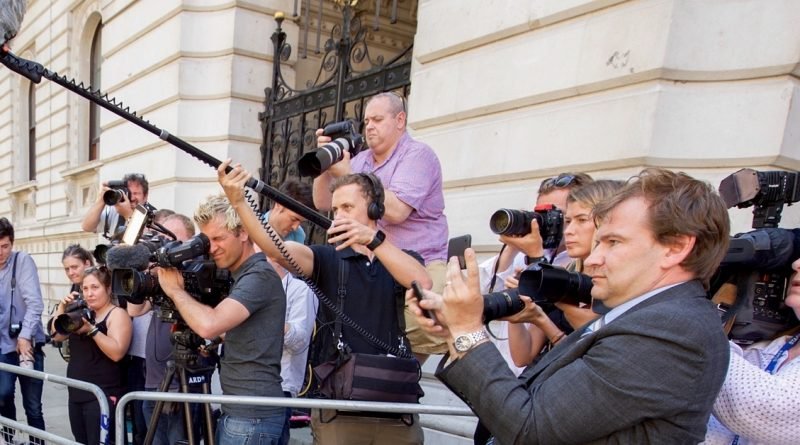


In recent years, the European Union (EU) has positioned itself as a global defender of democratic values, with press freedom at the heart of its foundational principles. Yet, recent legislative moves by some member states have raised deep concerns in Brussels, prompting EU institutions to sound the alarm over what they see as growing threats to independent journalism.
Laws introduced in countries such as Hungary, Poland, and more recently Slovakia and Greece have sparked accusations of media suppression, censorship, and political interference. In response, Brussels has criticized these measures as undermining the core democratic values enshrined in the Treaty on European Union, particularly Article 11 of the Charter of Fundamental Rights, which guarantees freedom of expression and information.
This essay explores how these legislative developments are viewed by the EU, examines the broader trend of media crackdowns across Europe, and considers the implications for press freedom, democratic resilience, and EU unity.
The Role of Press Freedom in the EU Framework
The European Union sees freedom of the press as essential for transparent governance, accountability, and informed public debate. As stated by the European Commission President Ursula von der Leyen, “A free press is the cornerstone of any democracy.”
The EU has long funded independent journalism, created policy instruments such as the European Democracy Action Plan, and established monitoring mechanisms like the Rule of Law Report to ensure press freedom remains protected across member states.
Yet, while the Union promotes these principles at the supranational level, media policy remains largely a national competence, making enforcement complex. This tension between EU norms and national sovereignty lies at the heart of current controversies.
Hungary: A Case Study in Media Control
No discussion of press freedom in Europe can ignore Hungary, which has become a symbol of media capture under Prime Minister Viktor Orbán.
Since returning to power in 2010, Orbán’s government has systematically reshaped Hungary’s media landscape through:
-
State capture of public broadcasters
-
Consolidation of private media into government-friendly conglomerates
-
Targeted taxation and regulation of critical outlets
-
Harassment of independent journalists
In 2018, the creation of the KESMA media foundation, which brought over 500 pro-government outlets under one umbrella, was seen by critics as the final blow to media pluralism.
Brussels has repeatedly criticized these moves. The European Parliament passed resolutions condemning Hungary’s erosion of democratic norms, while the Commission launched Article 7 proceedings—the EU’s most serious political sanction mechanism.
Nevertheless, Hungary’s actions have emboldened other governments to test the limits of press control.
Poland: Legal Intimidation and Political Takeovers
In Poland, the ruling Law and Justice Party (PiS) has undertaken a subtler but equally concerning campaign to influence the media.
Key developments include:
-
Efforts to transform public broadcasters into “government mouthpieces.”
-
Attempts to pass laws that would force the sale of foreign-owned media outlets, particularly TVN24, a U.S.-owned news channel critical of the government.
-
The use of SLAPPs (Strategic Lawsuits Against Public Participation) to burden journalists and media companies with expensive legal battles.
Although Poland has recently undergone a change in government following 2023 elections, the legacy of these policies remains. Brussels continues to press for structural reforms to restore journalistic independence.
New Fronts: Slovakia, Greece, and Italy
While Hungary and Poland remain at the center of EU concern, similar trends are emerging in other member states.
Slovakia
In 2024, Slovak lawmakers proposed a new media defamation law that would criminalize the publication of content deemed “damaging to national identity or security.” Journalists, media unions, and international observers raised alarms, arguing the law was vague and open to abuse.
The European Centre for Press and Media Freedom (ECPMF) called it a “thinly veiled attempt to silence dissent.” Brussels quickly issued a formal warning, urging Slovakia to revise the legislation to comply with EU norms.
Greece
Greece has faced increasing scrutiny over state surveillance of journalists, especially following the revelation that investigative reporters were targeted using predator spyware. In one high-profile case, journalist Thanasis Koukakis was monitored by Greece’s National Intelligence Service.
Though the Greek government denied wrongdoing, these revelations—combined with the unresolved murder of journalist Giorgos Karaivaz in 2021—have created a chilling environment for the press.
Italy
In Italy, Prime Minister Giorgia Meloni has been accused of attempting to consolidate control over RAI, the public broadcaster. Changes in RAI leadership, cuts in critical programming, and complaints from unions about censorship have added to concerns.
Though the situation in Italy is less severe than in Hungary or Poland, the trajectory worries Brussels, which sees a regional pattern forming.
Brussels’ Response: From Diplomacy to Legislation
The European Commission, under pressure from civil society and press organizations, has stepped up its response to these threats.
1. Rule of Law Reports
The annual Rule of Law Reports monitor media pluralism in each member state. Countries with declining press freedom are called out publicly, a form of “naming and shaming” meant to create political pressure.
2. Media Freedom Act
In 2022, the Commission proposed the European Media Freedom Act (EMFA)—a groundbreaking piece of legislation designed to:
-
Protect editorial independence from political or economic interference.
-
Increase transparency in media ownership.
-
Prevent the misuse of spyware against journalists.
-
Safeguard public service media from government manipulation.
The EMFA is currently undergoing negotiations between the European Parliament and the Council of the EU, with hopes of becoming law by 2025.
3. Financial and Legal Support
The EU has also increased funding for independent journalism through programs like Creative Europe and EU4FreeMedia, while providing legal aid to journalists facing harassment or lawsuits.
Despite these efforts, critics argue that enforcement mechanisms remain weak, especially when national governments actively undermine the rule of law.
Civil Society’s Role and Rising Resistance
Journalists, NGOs, and press organizations have not stood idly by. Across Europe, resistance to repressive media laws is mounting.
-
Reporters Without Borders (RSF) regularly ranks EU countries in its World Press Freedom Index, exposing declines and pressuring governments.
-
The International Press Institute (IPI) runs emergency support programs for endangered journalists.
-
Domestic protests, petitions, and public campaigns in Hungary, Greece, and Slovakia have rallied support for free speech.
The Fridays for Press Freedom movement, inspired by youth climate protests, has also emerged as a pan-European call for journalistic rights.
The Dangers of Normalizing Repression
One of Brussels’ deepest concerns is that ongoing media repression could become normalized—a slow erosion of standards that goes unnoticed by the public.
This is dangerous for several reasons:
-
Democratic backsliding becomes harder to reverse once institutions are weakened.
-
A fragmented information space undermines public trust in both domestic and EU authorities.
-
If voters no longer have access to objective reporting, elections lose legitimacy.
Moreover, authoritarian regimes outside the EU—such as Russia, Turkey, or China—watch these developments closely. A Europe unable to defend its values at home has less moral authority abroad.
A Test for EU Unity and Identity
Brussels’ criticism of repressive media laws is not just about policy—it’s about European identity. The Union is built on shared values: democracy, freedom, and human rights. When these are threatened, the EU’s credibility is at stake.
Yet, the Union must tread carefully. Aggressive intervention could trigger accusations of interference in national sovereignty, fueling populist backlash. Indeed, leaders like Viktor Orbán frame EU criticism as “imperial overreach” meant to undermine national culture.
Balancing firm defense of democratic norms with respect for subsidiarity remains a delicate act. But inaction carries greater risks: a silent slide toward illiberalism.
The Path Forward: What Brussels Must Do
To protect press freedom in the face of rising repression, Brussels must take a multi-pronged approach:
-
Adopt the European Media Freedom Act with teeth—ensuring enforcement, transparency, and protection for journalists.
-
Tie EU funding to media pluralism benchmarks—making it costly for governments to violate press freedom.
-
Empower the European Public Prosecutor’s Office (EPPO) to investigate cross-border threats against journalists, especially in corruption cases.
-
Support grassroots journalism—especially in rural or marginalized areas, where local media is often the first to disappear.
-
Engage citizens directly—raising awareness about why independent media is essential for democracy, especially in the digital age.
Conclusion
Brussels’ criticism of new media laws in member states reflects a broader existential challenge: can the EU remain a beacon of democratic values in an age of rising authoritarianism?
The struggle over press freedom is more than a legal debate—it is a battle for the soul of Europe. Laws that silence journalists or intimidate media outlets are not just national concerns—they undermine the shared foundation upon which the EU is built.
If the Union fails to uphold freedom of the press, it risks losing the trust of its citizens, the integrity of its institutions, and the moral authority it claims on the world stage.
Defending press freedom is not optional. It is essential to the survival of democracy—in Brussels, in Budapest, and beyond.