






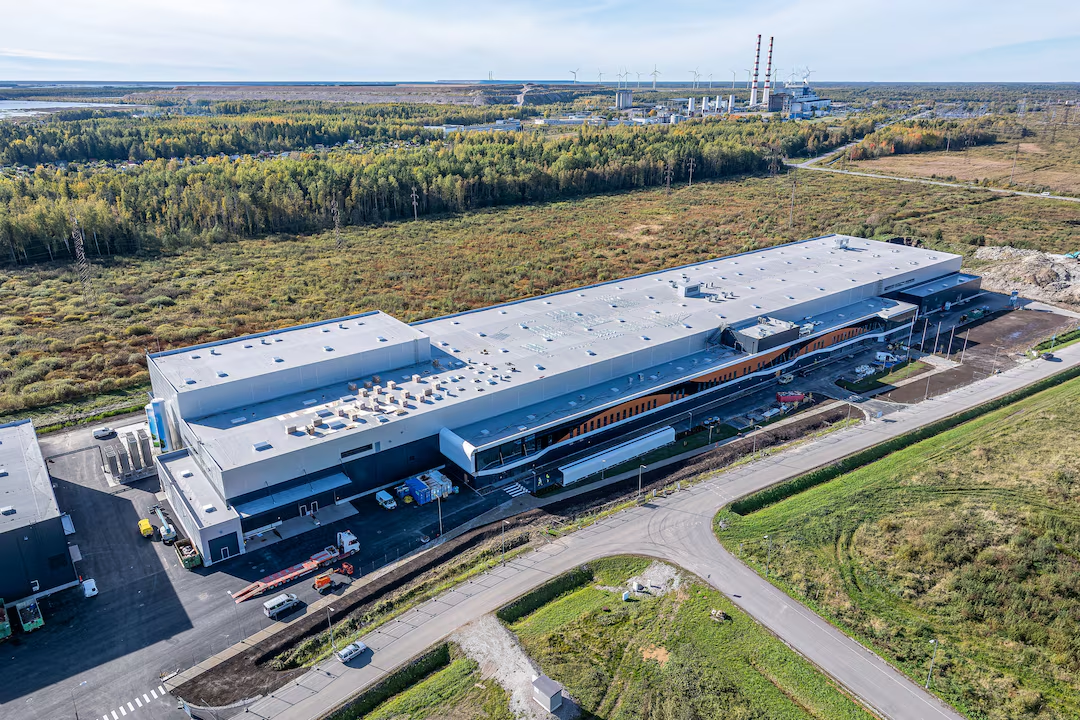


A seismic shift is underway in the global rare earth magnet market following China’s decision to tighten its export controls. For Rahim Suleman, CEO of Neo Performance Materials, who had spent years pitching his Estonia-based magnet plant to automakers and manufacturers, everything changed on April 4. When Beijing imposed new export restrictions on rare earth magnets—crucial components in electric vehicles (EVs) and wind turbines—demand surged almost overnight. Now, instead of chasing clients, Suleman is fielding constant inquiries as companies race to secure alternative supplies outside of China.

I. China’s Controls Spark Supply Chain Crisis
1. From Cold Calls to Constant Inquiries
Before China’s export controls, Suleman’s Estonia project was one of only a few rare earth magnet facilities outside China. Despite offering a strategic alternative, it struggled to compete with China’s low-cost advantage—thanks to government subsidies, cheaper labor, and vast production scale. But with China now throttling its magnet exports amid escalating trade tensions with the U.S., automakers and other industries have rushed to secure deals elsewhere, many abandoning previous resistance to higher prices.

2. Supply Disruption and Industry Panic
The sudden scarcity of Chinese magnets disrupted global supply chains, even forcing temporary shutdowns at some auto plants. Although some shipments have resumed, industry players remain wary of future disruptions. Suleman said Neo’s Estonia plant began production in May, and interest has skyrocketed. “Everyone now wants to know how they can meet their magnet demand from our facility,” he explained. He expects customers will willingly pay a premium—$10 to $30 per kilogram more than China’s rate—to ensure stable, non-Chinese supply.
II. Rising Investments and Regional Diversification
1. Vietnam Emerges as a New Production Base
NovaTech, a company currently producing magnets in China, reported that its Korean customers are willing to pay 15%–20% more for magnets made in Vietnam. Recognizing the urgency of diversification, NovaTech is investing over 10 billion won (approximately $7.4 million) in a new Vietnamese facility, which will use locally processed rare earths. The plant is expected to begin operations early next year.

2. Europe Expands Rare Earth Capabilities
In the UK, Less Common Metals (LCM), one of the few firms outside China involved in the critical step of transforming rare earths into metals and alloys, is also seeing unprecedented interest. Chairman Grant Smith likened the post-April 4 surge in demand to “someone sticking a cattle prod into the whole industry.” LCM is now exploring expansion into France and other European locations to meet rising demand from magnet users seeking alternative suppliers.
III. Balancing Premiums and Market Sustainability
1. The Challenge of Pricing Outside China
While many customers are now open to paying more for magnets produced outside of China, industry insiders caution that the right pricing balance is critical. Premiums that are too high may lead customers to cut back on rare earth usage, while prices that are too low won’t support the capital required to build new production facilities.
2. Automakers Walk a Tightrope
Automotive manufacturers are at the heart of the rare earth debate. Though they recognize the importance of diversifying away from China, they are also caught in a price war in the EV market, which is already squeezing margins. According to one rare earth company executive, automakers have expressed willingness to pay $80 per kilogram for neodymium-praseodymium oxide (NdPr)—a 30% markup over China’s $62 price, per Fastmarkets data.
Project Blue, a consultancy specializing in critical minerals, estimates that a price range of $75–$105 per kilogram for NdPr is necessary to support sufficient supply. Meanwhile, Australian investment bank Barrenjoey suggests a steeper range of $120–$180 per kilogram to enable development of around 20 mining projects worldwide.
IV. Automakers’ Diverse Approaches to Raw Material Challenges
1. Sustainable Sourcing and Lower Premium Deals
One executive at a European carmaker shared that their company has signed deals for other vital materials with 5%–10% price premiums, contingent on sustainability certifications. While willing to support ethical sourcing, he added that excessive premiums are unsustainable for companies with global operations and tight profit margins.
2. Reducing Rare Earth Dependency — But Not Eliminating
Some manufacturers, such as BMW, have launched EVs that avoid rare earths altogether, while others have reduced the quantities used in their vehicles. However, analysts argue that completely removing rare earths isn’t feasible in the medium term due to performance and energy efficiency constraints in electric motors.
V. Toward a Stable Rare Earth Supply Chain
1. A Coordinated Industry Response
Suleman of Neo Performance Materials emphasized that creating a stable supply of rare earth magnets outside China requires industry-wide collaboration. “It’s not about opening the floodgates and charging whatever we want,” he said. Instead, the industry must strike a responsible balance. While customers now accept a price premium, excessive markups could ultimately reduce demand.
2. Demand Is High, But Patience Is Crucial
Even with strong demand and growing willingness to pay more, building new supply chains will take time—possibly decades. China still controls 90% of global permanent magnet production. The current market shift may offer an opportunity, but real independence from Chinese dominance will require sustained investment, innovation, and global coordination.
Conclusion
China’s April export restrictions have forced a fundamental reassessment of how the world sources rare earth magnets, with manufacturers across sectors scrambling to secure new suppliers. While this has opened doors for projects in Estonia, Vietnam, and beyond, the industry must carefully manage pricing and collaboration to ensure long-term sustainability. The race is on to build a robust, diversified supply chain—but doing so without triggering demand destruction or unsustainable premiums will be key to lasting change in the global rare earth market.